

4 French Wine Rules American Tourists Break Within 10 Minutes At Restaurants
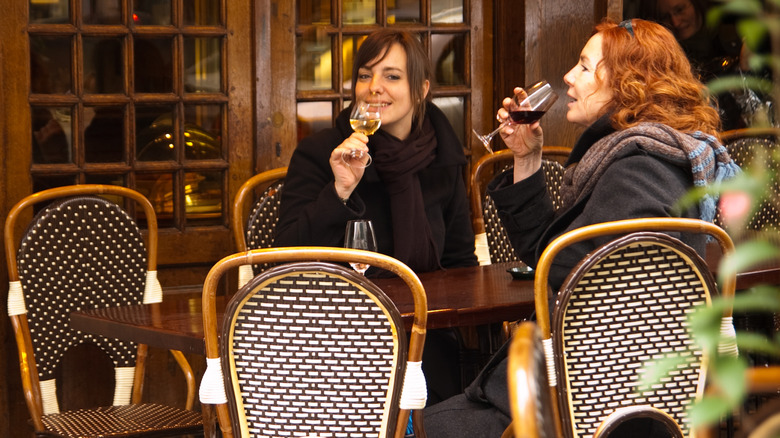
As someone who has lived in France, I can attest to the fact that the French take their wine very seriously. Unlike in the U.S. where we tend to look at the wine menu and order the glass or bottle that's easiest on the wallet, that's not the case in France. Because it's such an inherent part of their heritage, when it comes to ordering wine, it's more about flavor and, most importantly, whether or not it complements the meal being had, than about price.
Although fewer French people are drinking wine every day, with the number of daily drinkers plummeting from around 50% in 1980 to 11% in 2022, wine is still a very important part of being French, and has been for thousands of years. Because of this, in France, wine is savored and treated with respect, not something that one guzzles as a means of getting drunk. Drinking wine in France is an art form, one with its own set of rules that American tourists tend to break within 10 minutes of being in French restaurants.
We can't fault Americans for not knowing French wine rules, because their relationship with drinking alcohol is very different than that of most of Europe, especially France — after all, Americans can't even legally drink until they're 21. But we can at least give American tourists some pointers. Whether you're planning a trip to France to check out the most overlooked natural wonders in the country or heading to Paris to finally cross it off your bucket list, to avoid sticking out like a sore thumb in a French restaurant when the wine comes out, here are some wine rules you should keep in mind.
Drinking wine before everyone arrives
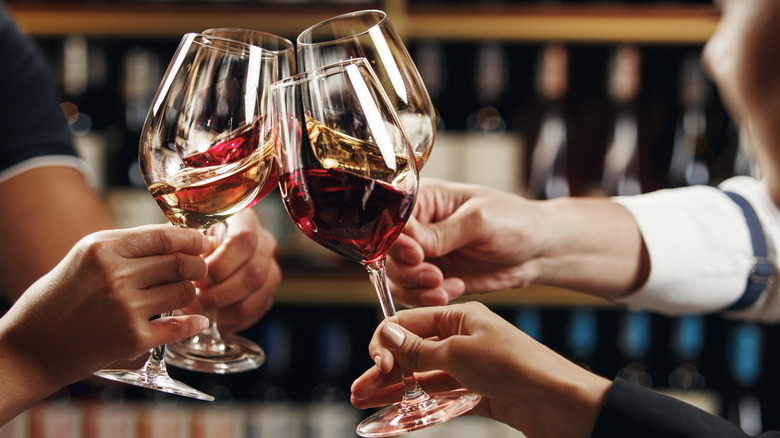
If you're meeting a friend for drinks in the U.S. and they happen to be running late, many people have no qualms about ordering a glass of wine or a cocktail in the meantime. In France, this isn't going to fly. It doesn't matter if you're meeting one friend or 15, you must wait for everyone to get there before even sipping your wine. When whomever you're meeting arrives, wait for them to order their wine and have it in hand before even thinking about drinking your wine. It's not just a matter of etiquette, but leaning into the "savoir vivre" lifestyle of the French, in which they "know how to live," and that means not rushing a good thing.
Drinking before everyone has assembled isn't just rude, but you're missing out on the toast, something that many French people practice before having their wine. If there is no toast, you can drink once everyone has a glass and the wine-drinking is underway, but if there's going to be a toast, wait for it. Once the toast has been made and everyone has raised their glasses, then you can start drinking.
In casual settings, a toast consists of "à ta santé," meaning "to your good health," or "tchin-tchin," which is the French equivalent to "cheers." If you want, you can make your toast a bit more personal. For example, when I'm with my close friends in France, we say "à nous toujours," meaning "to us always," or "always ours." Then we adhere to the unspoken rule tourists should know about drinking alcohol in Europe: we sip our wine.
Not making eye contact when you clink your wine glass
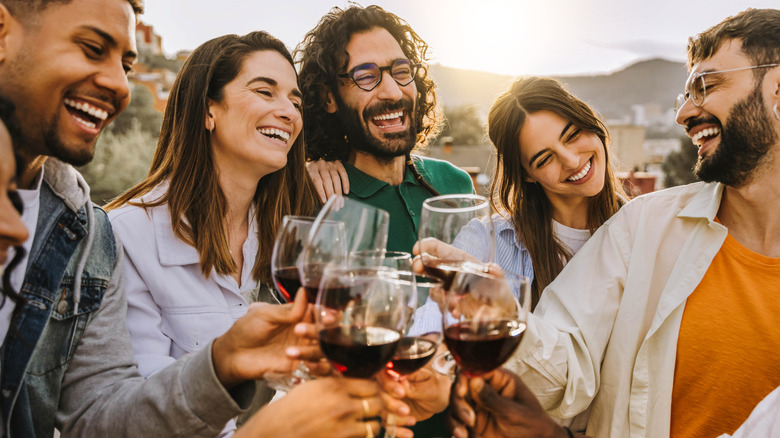
Before you get to drinking that fabulous Beaujolais, hold up, because there's even more to know about the wine-toasting process in France. When you clink glasses with everyone at the table, it's important that your arms never cross while doing so, and that you make eye contact with whomever's glass you're clinking. If you're thinking this sounds too intense or strange, there's actually a reason tourists shouldn't break this tradition while toasting. Why? To avoid seven years of back luck, of course! Or, even worse, seven years of bad sex.
Like a lot of things, this practice began back in the Middle Ages. One theory is that when people dined with someone they didn't trust, perhaps an enemy, they kept eye contact during the clinking process so everyone could keep tabs on the behavior of those around them. There's also the possibility that if one were being poisoned, the clinking of glasses could result in a few drops of the poisoned wine making its way into the glass of the poisoner. If this happened, the eye contact would reveal a facial response that would allow someone to know that it's not safe to drink their wine.
Although a fear of being poisoned may not be as common now, eye contact is still important. If you don't make eye contact during the glass-clinking, don't be surprised if those around you start chanting, "Eyes! Eyes!" so you keep the tradition alive. Eyes are the window to the soul, after all, saying more than we're willing to say with words.
Drinking wine without food — or at 5 p.m.
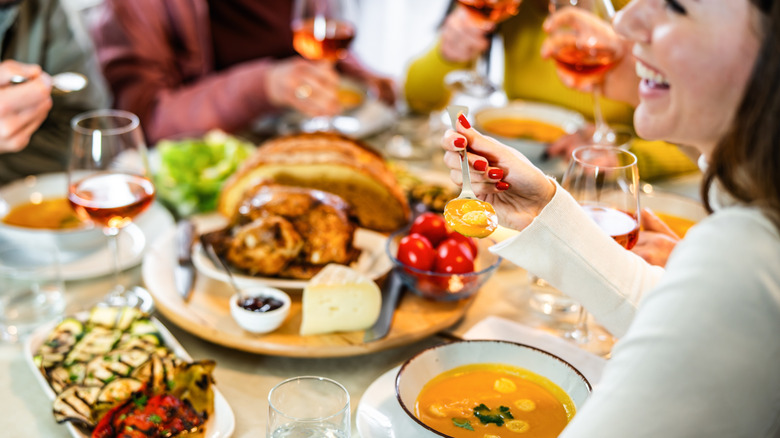
While rolling into a bar after work to have a glass of wine at around 5 or 6 p.m. is completely acceptable in the U.S., that's usually not the case in France. In fact, doing such a thing could immediately confirm your tourist status. Also, if you're enjoying that early evening glass of wine sans food, then you're also committing a faux pas in France, because wine is meant to be consumed with meals. This is especially the case when it comes to red wine, which is rarely drunk on its own.
If you want a drink before dinner, which is usually somewhere between 7:30 and 8:30 p.m. in France (often a little later in Paris), it's best to have an aperitif. This could be a glass of champagne or a cocktail, or even a light wine, that allows you to relax — without getting drunk — before dinner. Because both wine and food are so important in the French culture, getting drunk before dinner may prevent you from enjoying your meal to the fullest extent — and no one wants that.
When it's time for dinner, wine is paired with what's being eaten. For example, red wine is served with red meat, because the flavors work well together (red wine and certain cheeses are also a match), while white wine is served with seafood or poultry dishes. With more people drinking rosé, this has also found its way onto dinner tables alongside what's considered a "lighter fare," like grilled summer dishes and spreads like a charcuterie board that's chock-full of meats, cheeses, fruits, and veggies.
Drinking something other than wine with dinner
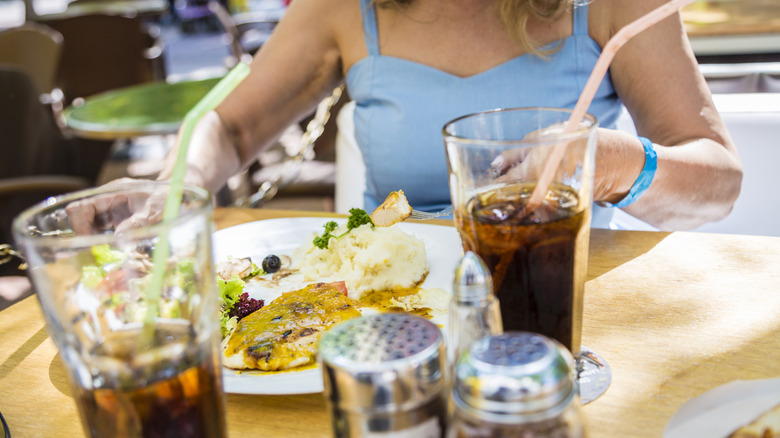
Because the connection between wine and food runs so deep in France, wine is the most acceptable drink to consume with dinner. While the French enjoy beer as well, in France, beer is more something that's had at lunch or if you're out with your buddies, or even as an aperitif. It's not something that should accompany dinner — unless you're eating foods meant to be served with beer.
If you're not a fan of wine, and not everyone is, then opt for water — something that's usually already on every French dinner table – when trying to decide what you'll drink with your dinner. Although Americans may have no qualms about having soda, juices, or milk with their dinner, this is also something the French typically don't do. These types of beverages don't complement the food as well, which can negatively affect the entire dining experience. However, tastes have changed, and fewer people are drinking wine daily in France. Younger people especially tend to drink wine only on special occasions, and in a 2022 survey, 19% of French people said they don't drink alcohol at all.
When you sit down to enjoy your meal and honor the French wine heritage, you also want to avoid a common, unspoken etiquette mistake when drinking wine: Don't hold the wine glass by the bowl, but by the stem. It may feel a little awkward at first if you've been holding your wine glass incorrectly your whole life, but there's a very good reason for this way of holding it. When you hold it by the stem, your body heat can't affect the temperature of the wine, meaning the flavor isn't altered, so the wine tastes exactly as it should.