

5 French Coffee Rules American Tourists Break Within 10 Minutes At Cafés
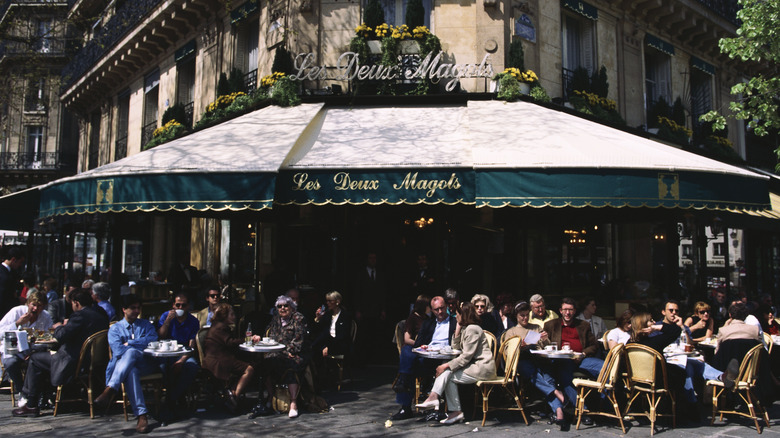
France has one of the greatest drinking and dining cultures in the world. French cuisine is rightly celebrated as some of the most delicious and influential cooking on the planet, and French wine is considered by many to be the pinnacle of excellence. But while French restaurants and French lunch and dinner culture are extraordinary, it is arguably breakfast and the simple cafe where they truly shine. Bakeries and breakfast are hugely important in France, and coffee culture is one of the most significant parts of everyday French life.
France is full of unspoken rules around dining out, and French coffee culture is no exception. The French place a lot of importance on doing things the right way when it comes to food and drink, and sticking to these customs is a vital aspect of blending in and immersing yourself in French society while you are visiting. However, it can be easy to make mistakes, and many tourists break lots of these coffee rules without meaning to!
Whether it's ordering coffee at the wrong time of the meal or the wrong time of day, ordering the wrong kind of coffee, or drinking your coffee in the wrong place, understanding how to navigate French coffee culture can be a tricky business. Here are a few things to watch out for to avoid the common etiquette blunders Americans often make in France.
Don't order coffee at the beginning of the meal
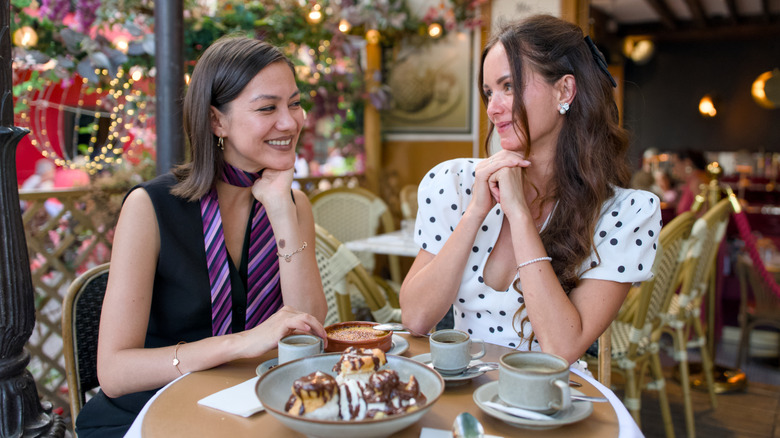
Coffee in France tends to be drunk either in the mornings, to set you up for the day, or after a meal, to settle your stomach. In a cafe, where you are planning to just have a coffee, or drink one alongside something simple like a croissant or a pain au chocolat, then you'll order everything together. But in a restaurant, coffee is considered in the same way as dessert.
No one will order their after-dinner coffee when they order their hors-d'oeuvres and main dishes. Indeed, most people will actually wait until they have ordered dessert and finished eating their meal entirely before ordering their coffee, often at the same time as any digestifs. No one will judge you (much) for asking for a coffee at the wrong time during the meal, but it will make you stand out as a tourist. So if you want to blend in, wait until you have finished eating before asking your server to bring you "un café."
Understand the vocabulary
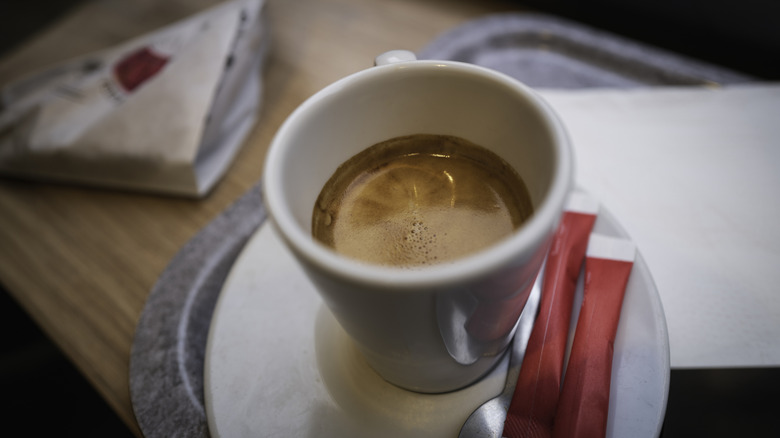
This is where things begin to get a little complicated. French coffee language is not the same as Italian, which is where most American coffee terms are borrowed from. The French have their own types of coffee, and their own particular ways of describing them, and they are very protective of this language and vocabulary. While some international franchises and chains will sell the standard types of coffee, the more traditional spots will stick with the French styles.
If you order un café, you'll likely get the French equivalent of an espresso, as this is the default coffee in France. If you want an Americano, or a long black, you'll need to order un café allongé (or un café Américain). If you prefer your coffee with milk, order un café au lait, which is usually made with filtered or brewed coffee and served with hot milk in a large coffee cup. If you prefer a latte-style coffee, a café crème is about as close as you'll get: an espresso topped with steamed milk. And if you want a macchiato, then you'll want un noisette, which translates as a hazelnut, but refers to the color of the coffee, not the flavor.
Don't drink the wrong coffee at the wrong time of day
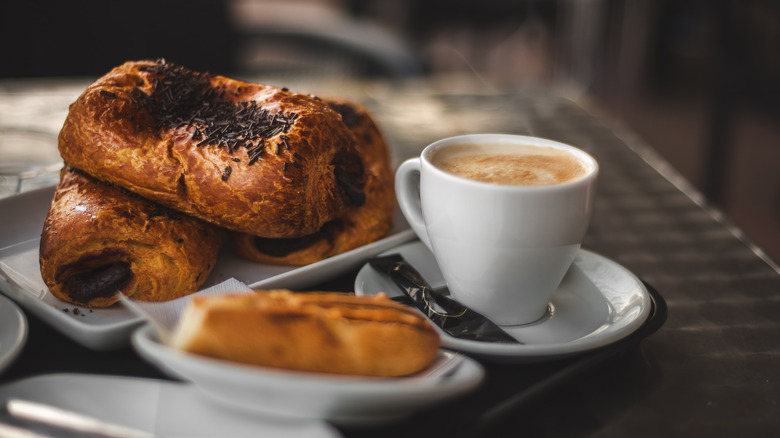
The French are quite particular about which type of coffee you should order at certain times of the day, and it is mostly all about milk. In fact, it is mostly about how the coffee complements your digestion, but this usually translates to how milky the drink is.
The French rarely drink coffee with lots of milk after lunch. This is because they feel the fatty, milky drinks can cause poor digestion, and coffee taken in the afternoon or after dinner is designed to help you process your meals. So, un café crème or un café au lait, which are gentler on an empty stomach, tends to be reserved for breakfast or mornings, while un café allongé is a great choice for the afternoon. After dinner, most French people will stick to a simple café, or perhaps un noisette.
Ultimately, this comes down to personal preference, and it certainly isn't forbidden to grab a milky coffee in the afternoon! As long as you are enjoying yourself, you're unlikely to go wrong. But if you want to do as the locals do, avoid milk after lunch.
Don't drink your coffee in the wrong place
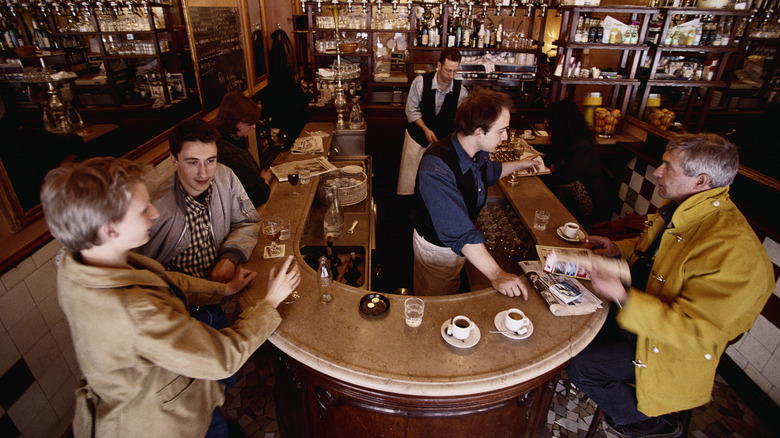
To be absolutely clear, there isn't actually a wrong place to drink your coffee. However, if you want to really do things the French way, then there is one neat trick to seamlessly blend in with the Parisians as they grab their morning brew on their way to work: drink your coffee standing up.
Most traditional coffee bars, plenty of restaurants, and even some tabacs (the French corner shops, a little like a New York bodega) will have a bar or a counter where coffee can be bought and drunk standing up. Not only is this a classic French approach to a coffee on the go, but you'll also find the coffee at the bar costs less than a coffee sat at a table! So to really look like you know what you are doing and save some money in the process, head to the bar and order un noisette.
Take things slowly

Coffee in France is all about the ritual. That means that it is an experience to be savored, not rushed. While obviously it isn't always possible, French people prefer to take a moment with their coffee, and drink it out of real porcelain, rather than grabbing something to go and racing off down the street. After all, there's nothing chic about a paper cup with a plastic lid.
This means it is always worth pausing when getting a coffee in France, even if you are in a hurry. Try to avoid getting a to-go cup, and give the coffee ritual the attention it deserves. Ordering and drinking at the counter can save time, and you'll enjoy your coffee far more if you slow things down and take a break alongside it. You won't have to worry about spills, overly hot coffee, or disposing of your cup, and you'll fit right in with the locals.