

The Unsettling Reason You Should Think Twice Before Blasting The AC In Your Hotel Room

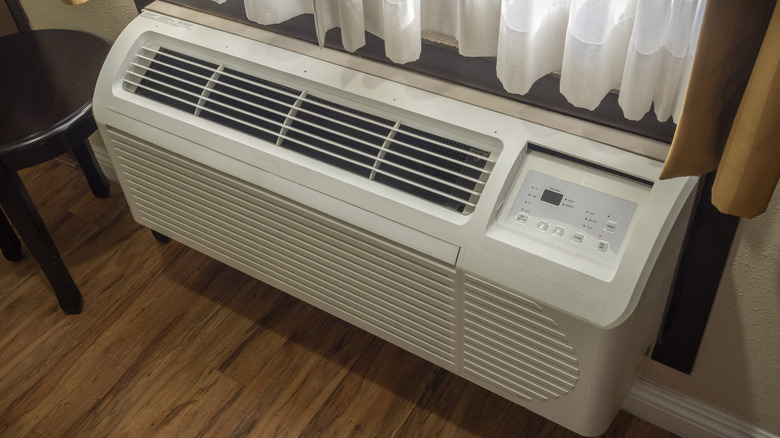
As much as you'd like to trust that your hotel is on top of their cleanliness game, that's not always the case. For example, you should absolutely request new towels upon checking in, and you should also think twice about turning on the air conditioning unit in your room. While AC is quite a relief after a sticky day in 95-degree (or more!) heat, it's not exactly the healthiest thing for you.
"Generally, a well-maintained air conditioning unit will not make you sick," senior clinical pharmacist Nyrah Saleem told Metro UK. "However, an AC unit which is not maintained in terms of water build up could potentially increase the risk of infections if it harvests viruses and bacteria... Especially if mold or microbes grow within the AC unit." In fact, AC units that aren't properly maintained are so common that there are actually a few terms for the sick-feeling that can come from going on vacation and blasting the AC: Air Con Flu, Magaluf Flu, and Ayia Napa Flu.
Although the symptoms can vary, a stuffy nose, headache, fatigue, breathing issues, and even skin irritations are all possible results of using your hotel's air conditioning. While these things are inconveniences more than anything else, in some more serious cases, you can end up with Legionnaires' Disease. It's caused by Legionella bacteria and is a far more extreme form of pneumonia, requiring antibiotics to get rid of it. But these aren't the only health-related concerns that come with using the air conditioning.
What to know about volatile organic compounds (VOCs) in your hotel room
According to a 2024 study published in the Journal of Environmental Research and Public Health, of the 139 volatile organic compounds (VOCs) they were looking for, 57 were identified in four different hotel rooms with different star ratings in four U.S. cities. At the 2.5-star hotel, the highest amount of alcohol was found, indicating the use of lots of cleaning products, but they're not necessarily products that are safe to breathe in. Conversely, the 4-star hotel came in second in detected alcohol but ranked lowest in aromatics (scented products). In other words, it might be worth splurging a bit for the four-star hotel if air quality is important to you.
It's also worth noting that the U.S. Environmental Protection Agency has found that indoor air can be far more polluted than outdoor air. With people spending 90% of their time inside, that can be problematic, especially for those who are already vulnerable to bacteria, mold, and similar contaminants. Hotels, notably, have higher amounts of indoor air pollutants. When you consider the factors that lead to indoor air quality, hotels are rife with them: a high turnover rate of guests, windows that rarely open all the way (if at all), and other cleanliness-related issues.
If you shouldn't put your luggage on hotel room floors, then you should take into account other things that may not have crossed your mind before. After all, even in rooms where high traces of alcohol were found, suggesting proper cleaning had taken place, it doesn't mean the air is clean. Tie in the fact that hotel air conditioning units are sometimes attached to several rooms, so everything is just being recirculated back and forth again, and it's not the best combination.
How to keep yourself safe and healthy

The easiest way to keep your indoor air within a healthy range while staying at a hotel is by not turning on the heating, ventilation, and air conditioning (HVAC) at all. "If hotel staff fails to clean the filters (or at least clean the top visible portion), simply turning on the unit can cause these particles to fill your room and your lungs," former hotel manager Chris Johnston told Bustle. But if skipping the HVAC is going to hinder your ability to be comfortable, you have options.
When booking a hotel, make sure to always check out the hygiene rating, looking for the highest one you can find. If you can't locate the rating, you have every right to ask how often the air conditioning systems are cleaned. You can also request that the air filter in your room be replaced. If you want to take matters into your own hands, then purchasing a portable air purifier can definitely help. And, of course, monitor your own health situation throughout your vacation. While there are certain locations where people get sick more often, it's also important to realize that not everything can be blamed on your air conditioner. In some cases, you could have picked up a cold days before your trip even began, or you're simply allergic to something you came into contact with outside your room. But if you think it's the AC, then turn it off or request a new filter.