

One Of The Best National Parks For Kayaking That Isn't Glacier Or The Grand Canyon
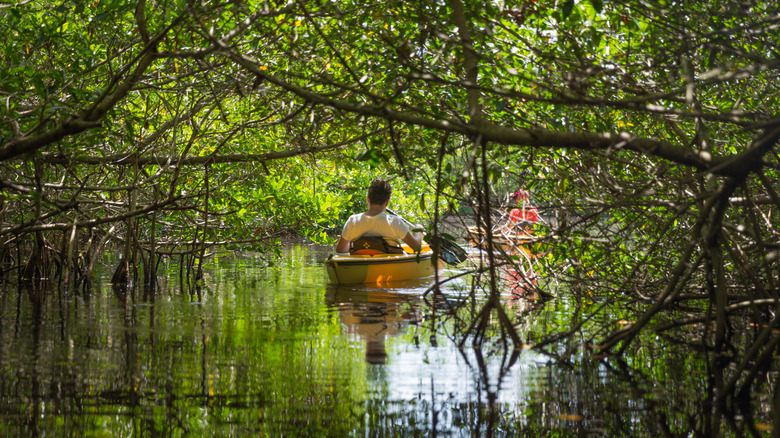
When it comes to outdoor adventure, America's national parks are unparalleled. These wild, stunningly beautiful landscapes are filled with amazing forests, wildlife, trails, and mountains, making them ideal places for the most adventurous travelers to explore. One of the best things to do in national parks across the country is get out onto the water in a canoe or kayak.
Glacier National Park (known as the "Crown of the Continent") is one of the most popular spots to paddle, with over 700 lakes surrounded by stunning snow-capped peaks and deep pine forests. Another amazing spot, with a very different vibe, is the Grand Canyon National Park, where the Colorado River runs the entire length of the iconic canyon, offering a unique perspective of this extraordinary natural landmark. However, although these two parks are often considered the standout options for adventurous paddlers, there's a third choice that many consider to be the best in the U.S. — Florida's Everglades National Park. With more than 1.5 million acres covered by freshwater marsh and mangrove forests, including the 10,000 Islands and the open waters of Florida Bay, Everglades is a paddler's paradise.
Everglades National Park covers most of the southern tip of Florida. It is a huge expanse, with three entrances in three different cities. The main entrance is the Ernest F. Coe Visitor Center at the Homestead entrance, just outside Florida City. The Shark Valley Visitor Center is the entrance closest to the Greater Miami Area, while the Marjory Stoneman Douglas Visitor Center, located in Everglades City, is the entrance closest to Naples and best for visitors arriving from the west. In the east, the closest airport is Miami International Airport (MIA), and in the west, the closest airport is Southwest Florida International Airport (RSW) near Fort Myers.
The best paddling in Everglades National Park
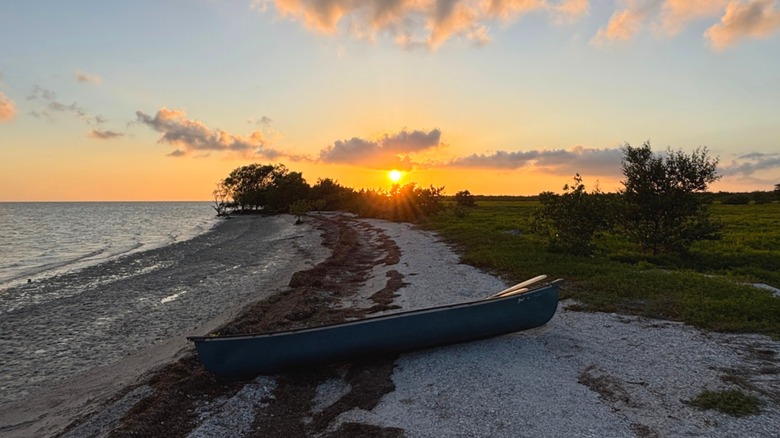
Everglades National Park is an extraordinarily diverse ecosystem that includes mangrove forests, cypress swamps, pinelands, and marine estuaries. It is the only place in the world where alligators and crocodiles live together, and it makes for an amazing canoeing or kayaking adventure. As you might imagine over such a vast expanse of wilderness, there are a variety of options for keen paddlers looking to explore the Sunshine State's River of Grass.
For paddlers, the Everglades can be roughly divided into two main areas. The Gulf Coast and 10,000 Islands region, and the Flamingo/Homestead region. The Gulf Coast boasts tidal estuaries, winding channel mazes through mangrove forests, and wide-open saltwater bays. There are plenty of rental companies in Everglades City that provide kayaks and equipment, and the routes are best accessed from the public kayak launch on the grounds of the Marjory Stoneman Douglas Visitor Center. The Sandfly Island Loop is a good place to start, a 5-mile estuarine loop that passes a number of historical sites. Another excellent option is the Turner River Paddling Trail, which takes travelers 8.5 miles from a put-in on U.S. 41 to Chokoloskee, through sawgrass marshes and narrow mangrove tunnels.
On the other side of the national park, the beautiful vistas of Florida Bay await. Nine Mile Pond is a great place to start, with guided paddles on offer for beginners, while the 7.5-mile Mud Lake Loop from Coot Bay Pond is very popular with birders. The West Lake Trail offers one of the best opportunities to get up close to alligators and crocodiles, while Hells Bay is brilliant for veteran paddlers, tricky to get into but gorgeous once you are in.
The Wilderness Waterway
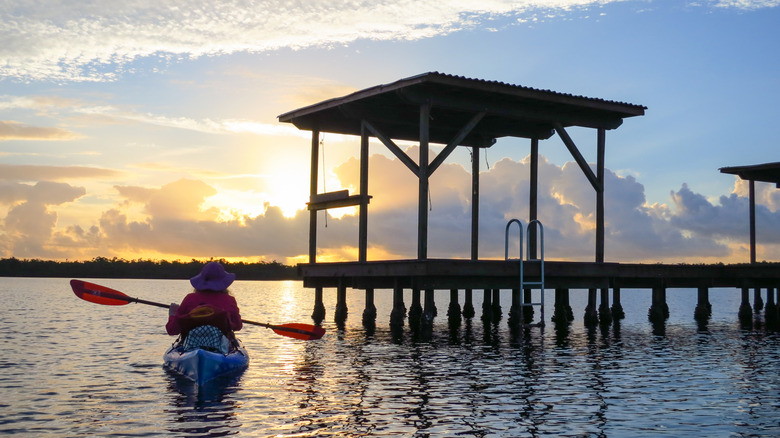
For serious, experienced paddlers, one of the best ways to explore the labyrinth of marshy channels, lakes, creeks, and mangrove tunnels that make up the Everglades is on the Wilderness Waterway. This 99-mile-long trek is the ultimate backcountry adventure, taking brave explorers right the way across Florida from Everglades City to Flamingo.
The route takes between seven and 10 days to complete, so backcountry camping is required. This adds an extra level of excitement to the adventure, as wilderness campsites in the Everglades offer a unique experience. Accessible only by water, you'll be surrounded by birds, mangroves, and the occasional croc or gator, giving you the opportunity to immerse yourself in the largest subtropical wilderness in the United States. However, wild camping excursions aren't for everyone, so it is a good idea to do your research in advance if you plan on taking on this challenge.
It is important to get the proper wilderness permits for overnight camping in the Everglades and to come extremely well prepared. If you are undertaking the full Wilderness Waterway route, it is also important to arrange to be met at your destination so you and your equipment can be shuttled back to where you started. Before you head out, make sure you're aware of the dangers of paddling Florida's alligator-filled waterways so you can stay safe.