

How The '90s Handled Air Travel (And Why We're Kinda Glad It's Not Like That Anymore)
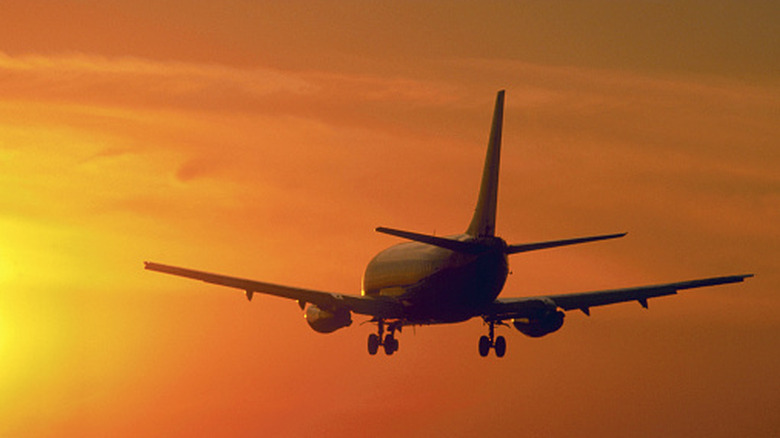
Air travel has come a long way since the St. Petersburg–Tampa Airboat Line conducted the world's first passenger flights on winged open-air boats in 1914. During these daring adventures, a goggle-wearing pilot would shepherd one to two passengers at a time along with random items like ham and newspapers across Tampa Bay, flying only around 50 feet above the water. From there, the airline industry bloomed rapidly, entering its golden age in the 1950s to the 1970s — when passengers dressed to the nines for their flights, sipped mixed drinks in onboard cocktail lounges, and enjoyed multi-course gourmet meals.
The last 30 years have heralded a slew of other changes: the rise of budget airlines, the disappearance of complimentary meals and free checked bags, and increased digitization at every step of the travel process, just to name a few. In some ways, flying now is more complicated than it used to be — especially when it comes to the many new layers of security screenings, including one unexpected TSA check that happens even before you get to the airport. In other ways, though, air travel has changed significantly for the better. Here are several 1990s air travel realities that we're very glad to leave behind.
Purchasing an airline ticket was a time-consuming, multi-step journey in itself

In the early 1990s, before the rise of web-based booking platforms, there were a few different approaches to finding the cheapest flight for a trip. For one, you could call several airlines to comparison shop. To do this yourself, you would use a landline to call an airline and wait in a queue to speak to a representative about different flight options to determine the least expensive airfare for your travel window. To comparison shop, you could repeat the rigamarole with different airlines until you found one you liked. This process could eat up hours, and you still wouldn't have your physical ticket in hand yet — electronic tickets didn't come into vogue until the late 1990s and early 2000s.
To get the ticket, you would have to wait for the airline to mail you the ticket or go to the closest airline office (major airlines had offices in most big cities) or to the airport ticket counter to pick it up. To avoid all this hassle, many people enlisted the help of travel agents, who were like in-person booking platforms — they would do the comparison shopping for you. The travel agent would then hand you the ticket directly or send it to you by mail.
Everything began to change in the mid to late 1990s, with the emergence of Travelocity, Expedia, Priceline, and other online services. Comparison shopping for the cheapest airfare and purchasing a ticket can now be accomplished in a few clicks over a period of minutes, not hours. Thank goodness we can spend our time on more important things these days, like endlessly scrolling on our phones.
Suitcases
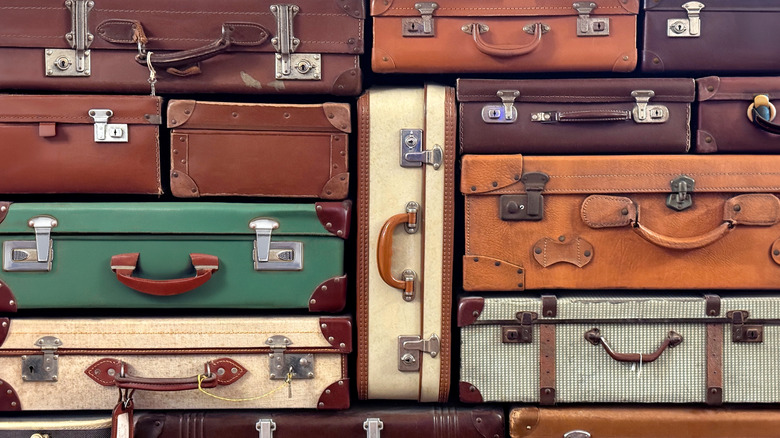
Vintage luggage may be making a comeback in the 2020s. But please, let's not go back to the time when suitcases lacked higher-tech mobility features, because physically carrying your bag around an airport or destination is the farthest thing from a vacation. Rolling suitcases existed prior to the late 1980s, but the small and non-swiveling wheels were located on the suitcase's long side rather than at the bottom. You also typically used a strap rather than an extending handle to pull it. This lower-quality design meant that suitcases often strayed as you pulled them along, like an untrained puppy learning to walk on a leash.
In 1987, the luggage company Travelpro introduced the modern version of the wheeled suitcase — called the Rollaboard, which flight crews quickly adopted. In the 1990s, the model revolutionized passenger carry-ons, too. But throughout that decade (and maybe even beyond it), those who hadn't yet replaced older suitcases with newer wheeled ones could still be seen schlepping them through airports — weary souls, although it probably burned a lot of calories.
Wheels are not the only luggage features to have evolved in past decades. Suitcases have become both smarter and more personalized, with available features like padded laptop sleeves, USB chargers, GPS tracking, digital locks, monograms, and colorful designs. Fortunately, these days, deciding which kind of suitcase suits you is a much harder task than carrying it around.
Smoking was still allowed on some flights in the 1990s
One of the ugliest realities of air travel that disappeared in the 1990s was in-flight smoking. Prior to 1988, smoking was allowed in designated sections on all flights. Of course, the smoke from the smoking section would eventually permeate the whole airplane, coating surfaces — including passengers' clothes, hair, and skin — with foul-smelling tobacco residue.
Finally recognizing the health hazards of exposure to tobacco smoke in enclosed spaces like airplane cabins, the U.S. banned smoking on all domestic flights under 2 hours in 1988, on most domestic flights in 1990, and on all commercial flights within the U.S. and between the U.S. and foreign destinations starting in 2000. Thus, smoking was still permissible in-flight on some routes throughout the 1990s. This was great for the flyers using nicotine to quell anxiety on long overseas flights. It was, of course, not so great for the nonsmoking crew and passengers, especially those with asthma and other health conditions. Regardless of their smoking status, all aboard a plane would end up breathing secondhand smoke for multiple consecutive hours and walk out smelling like human ashtrays. Thankfully, smoking on airplanes is a thing of the past!
Fewer onboard entertainment options
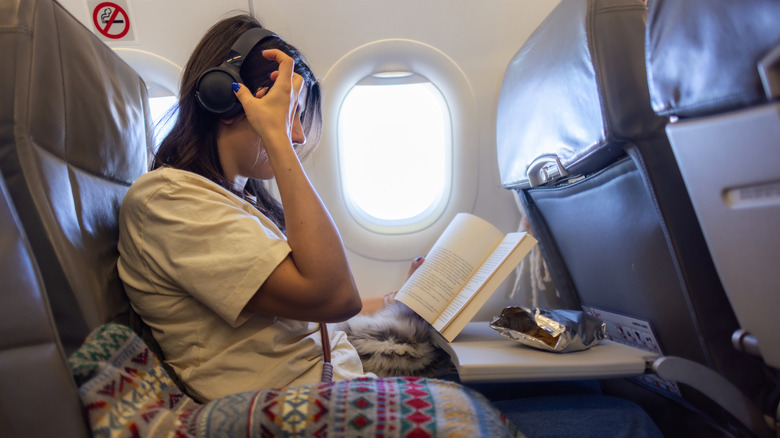
Unlike smoking, having fewer in-flight entertainment options in the 1990s wasn't dangerous to your health. In the best-case scenario, it may have been the reason you caught up on much-needed sleep or read a good book. In the 1990s, entertainment options varied depending on the airline, plane type, and route. For example, in 1988, Northwest Airlines debuted Airvision screens on the backs of airplane seats on 747s. But individual screens weren't commonplace across flights until the later 1990s and 2000s.
In the early 1990s, sometimes the only in-flight entertainment options on flights were a few preprogrammed radio stations you could click through and listen to through airline-supplied headphones. Other than that, entertainment was self-styled: magazines, books, crossword puzzles and other paper-and-pencil games, diligently working through packs of chewing gum, and recreational trips to the airplane lavatory.
On a longer or overseas flight, passengers could watch movies on overhead monitors that were placed throughout the cabin — if they had a decent vantage point from their particular seat. Otherwise, conversations with travel buddies or seatmates could take on never-before-seen dimensions on overseas flights. Meals and drinks were welcome respites from the monotony, and naps could be epic.