

Not Arizona, Not Utah – This State Has The Driest Climate In The US
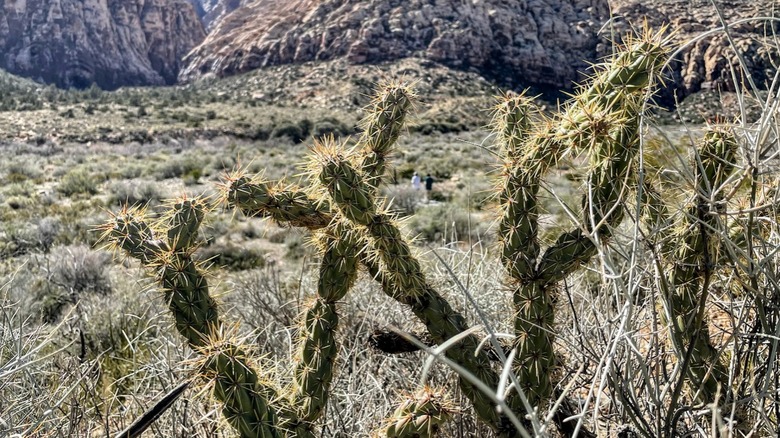
The western portion of the United States features some of North America's beloved desert ecosystems. Think cacti galore, peaks and valleys of orange rock formations, rattlesnakes, lizards, and vast blue skies with no rain clouds in sight. These features are symbolic of sparsely precipitated states like Arizona and Utah, but the driest state in the U.S. is actually Nevada.
The Nevada State Climate Office reports that the average annual rainfall statewide is only around 10 inches. The quintessential desert scenes of southern Nevada only see around seven inches of rain per year. Such low numbers are because right across the state's southwest border with California are the Sierra Nevada Mountains. These high peaks block moisture from reaching Nevada, a phenomenon called a rain shadow, which also causes dry weather in other parts of the world, such as Chile's Atacama Desert. The Sierra Nevada Mountains combine with the Wasatch, Cascades, and other mountain ranges to form the Great Basin, a geological feature wherein the mountains act as walls for lakes and valleys. Most of Nevada lies in this basin, which means there are more effects from rain shadows throughout the state.
Nevada's dry climate has created vibrant desert landscapes
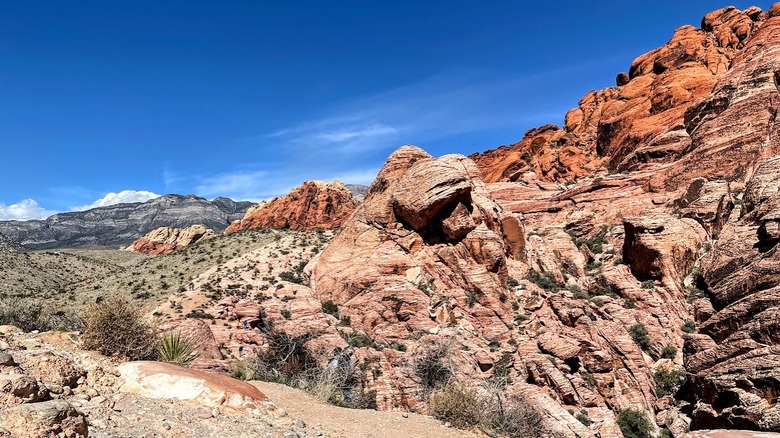
One of the amazing places to see Nevada's dry, desert landscapes is Red Rock Canyon National Conservation Area. This is one of many stunning alternatives to Joshua Tree National Park, featuring similar plants and landscapes. You can see the area's huge, vibrantly colored rock formations from its 13-mile scenic drive, but there are also places along this route to get out of your car and explore. Even better, Red Rock Canyon is only about 30 minutes from the Las Vegas Strip.
Another incredible and nearly rainless destination in Nevada is Avi Kwa Ame National Monument, which means Spirit Mountain in the Mojave language. Around 90 minutes south of Las Vegas, scenic hiking trails and camping await on this expansive protected space. Take the 4.4 mile New York Mountains trail to get wide views of Spirit Mountain. Look for juniper trees, Joshua trees, bighorn sheep, barrel cacti, and more along the way. Camping is popular at Wee Thump Joshua Tree Wilderness along East Wee Thump Road, but there are no amenities. Please hike and camp responsibly, as this territory is sacred to multiple Indigenous tribes and has suffered from fires in recent years.
Despite the dry climate, not all of Nevada looks like a desert
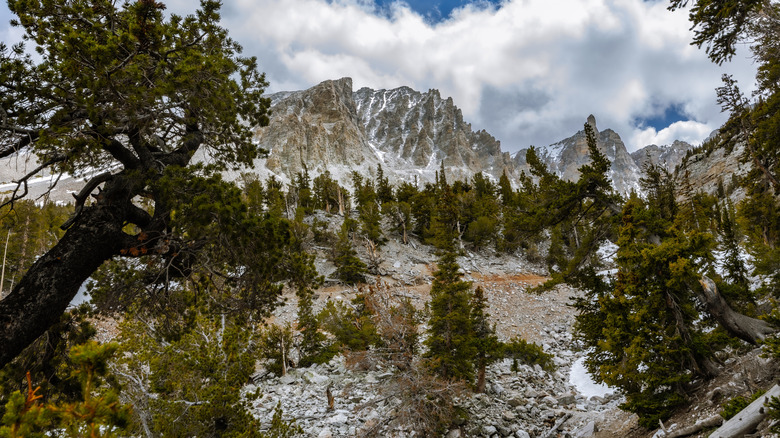
Not all deserts fit the stereotypical Wile E. Coyote and Road Runner terrain. Four hours north of Las Vegas is Nevada's Great Basin National Park. With low humidity, cold nights, and low precipitation, this park is still a desert. However, more than cactus-filled valleys, you'll also find snowcapped mountains, trees, and creeks at this park.
Another feature that proves Nevada is not all barren and beige are the Ruby Mountains, just under four hours west of Salt Lake City. The Lamoille Canyon Scenic Byway runs through the western section of the Rubies, offering 12 miles of mountainous scenery with lakes, creeks, and hiking trails. In contrast to most of the state, this part of the mountain range gets around 18 inches of precipitation each year — but mostly in the form of snow.
While not all deserts come with scorching temperatures either, those of southern Nevada definitely do. Triple-digit temperatures are common here during summer months. Thankfully, in true desert fashion, nighttime brings cooler temperatures. This is why walking along the famous Las Vegas Strip is an activity that you might want to avoid entirely during the daytime. No matter where you go, be sure to plan Nevada vacations carefully and take all necessary desert trekking supplies during any outdoor activity.