
How The Great Lakes Create Powerful Waves You Can Surf Like The Ocean
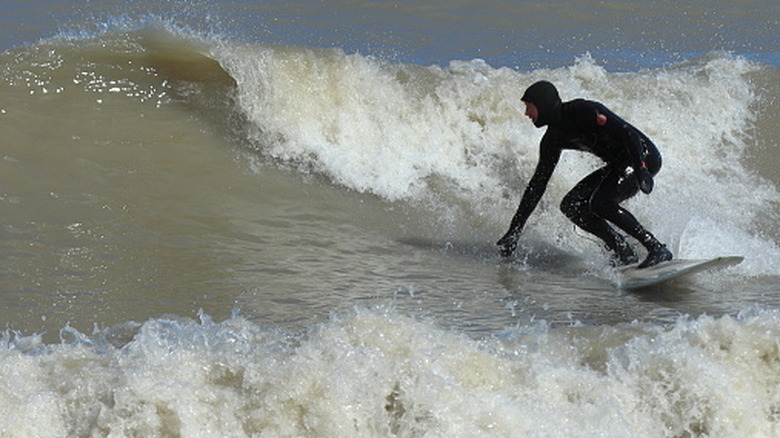
A lake doesn't sound like the ideal place to bring a surfboard. In the animated film "Surf's Up," the character Chicken Joe says he surfs on Lake Michigan. The line comes across as a joke, but there is actually some truth to it. As it turns out, the Great Lakes along the border of the United States and Canada actually do see plenty of surfers.
When looking out over the water at any of the five Great Lakes, they are so big that it feels like looking over an ocean. This helps make surfing and kitesurfing possible here. Each lake provides large fetch areas, a term referring to the distance over which wind blows without changing direction. Winds above 15 knots (around 17 miles per hour) that have blown over more than 50 miles of water (50 miles of fetch) can create sizable waves when the winds occur for five to 10 hours. If Chicago's nickname of the Windy City is any indication, this part of the continent has no problem generating some wind. Great Lakes waves tend not to get as big as ocean swells and sometimes only occur for a few days at a time, but there are still multiple destinations to try out these beloved aquatic activities.
Surf and sightsee at hotspots on Lake Michigan and Lake Huron
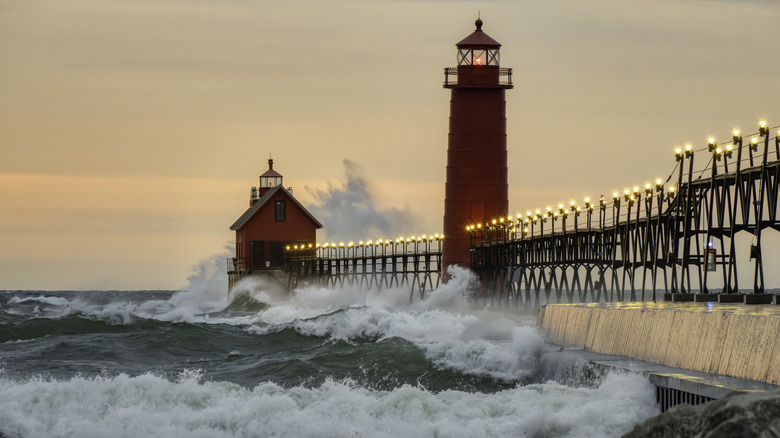
Lake Superior is not where the best Great Lakes surfing is found, but Stoney Point, in Minnesota, is a solid option on this lake. There is a reef break here, an underwater feature that makes for longer waves. Lake Michigan is more popular for surfing. Among its hotspots is Grand Haven, a dazzling beach town full of rolling dunes and year-round adventures. Take a surfboard to Grand Haven State Park or North Beach Park and hit the water. There are plenty of other activities at these parks too, which is important given the aforementioned short windows of time to catch Great Lakes waves. Stick around to enjoy miles of white sand beaches and huge sand dunes at either park. At Grand Haven State Park, check out two historic lighthouses and the beautiful Grand Haven Pier.
At almost nine miles, Wasaga Beach on Lake Huron in Canada is the world's longest freshwater beach. Surfers and kitesurfers frequent these waters, but it is also popular with stand-up paddleboarders. On land, hang out on the beach or do some cycling with wide lakeside views. Kincardine, just two hours away, is another Lake Huron surfing hotspot, featuring a pier surfers can use for easy water access.
Be sure to have cold weather equipment when surfing the Great Lakes
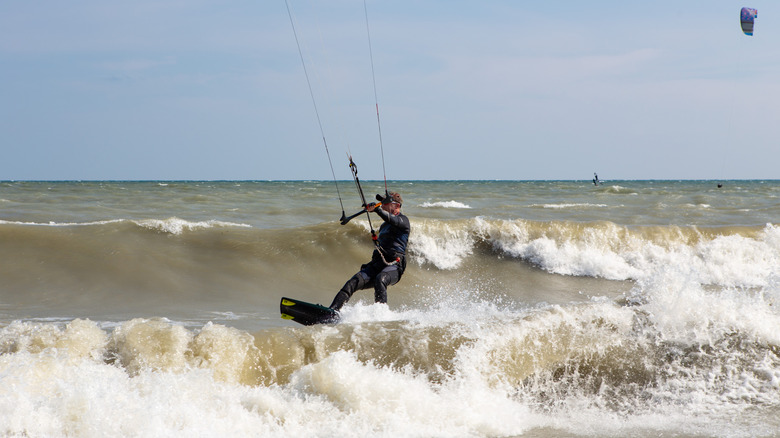
Surfers and kitesurfers on Lake Erie have had good luck at Hamburg Beach, less than 20 minutes south of Buffalo, New York. The best wind is during spring and fall months, but surfing is possible in summer here as well. On Lake Ontario, you can surf around Ashbridges Bay, just 20 minutes from the famous CN Tower in Toronto. The extensive nearby beaches and boardwalk are must-visit spots in Toronto with views that will almost make you forget that you're in Canada's largest city.
As you can guess from the Great Lakes' northern location, surfing and kitesurfing here can get extremely cold. This is especially true given that the lakes see their best waves between September and April. An icicle or two might even form on you once you're back on land. Be sure to get a wetsuit made specifically for cold water, and earplugs, boots, and gloves are all must-haves during these months. Keep your eyes on weather reports or use the Windfinder website, as wind is key for Great Lakes surfing. If storms are coming, surfers will be heading out, wetsuits and boards in hand.