

Rick Steves Urges Americans To Pay Attention To This Difference In Europe
Differences between the United States and Europe include more than just the centuries old architecture and vast systems of public transportation. There are also clothing etiquette rules every tourist needs to know before packing for Europe, but perhaps even more potentially consequential are the differences regarding how Europeans denote dates, time, and numbers. Those differences could throw a wrench into your plans if you aren't aware of them.
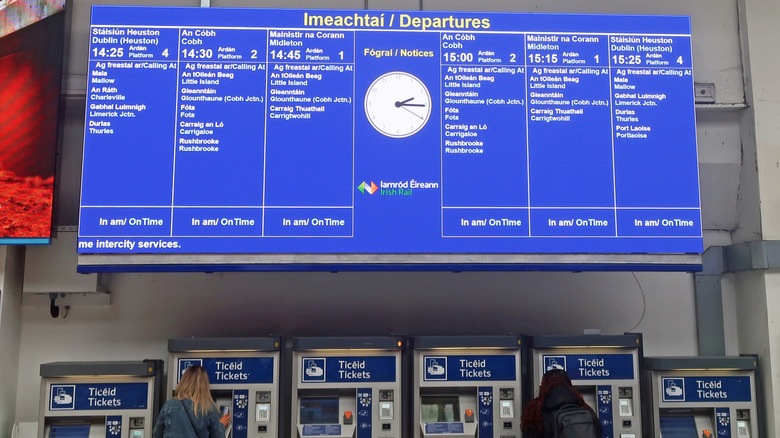
Travel guru Rick Steves wants travelers to be as educated about Europe as possible before making the journey across the pond. Something travelers from the U.S. need to know in particular are dates and times. "When it comes to dates, remember — especially when making reservations — that European date order is written day/month/year. Christmas 2026, for example, is 25/12/26 instead of 12/25/26," Steves explained on his website. Telling time is different too, as Europe does not have a.m. and p.m. They use what Americans would call military time: a 24-hour clock. For example, if you book some form of transportation online such as a train or bus, you might see departures at 13:00, 14:00, and all the way to 23:00. Midnight is often denoted as 00:00.
Some written numbers look different in Europe vs in the U.S. as well

When you encounter clocks and websites displaying times like 13:00 and on to 23:00, remember to simply count past 12 to see what time it would be on a 12-hour clock. So, 13:00 is 1:00 p.m., 14:00 is 2:00 p.m., and so on. If you're heading to Europe and want to get used to this, perhaps switch your phone to the 24-hour military time clock before leaving for your vacation.
Aside from numbers on digital clocks, some written numbers look different in Europe than in the United States as well. Europeans add a line through the stem when writing the number seven. This helps differentiate it from how they write the number one, because instead of making a simple vertical line, Europeans keep the slanted line typically seen in typed out 1's. "If you don't cross your 7, it may be mistaken as a sloppy 1," explains Rick Steves. This is important to remember when visiting European markets, for example. Something that looks like seventy-seven euros might actually be just eleven. Additionally, what is known in the U.S. as the "pound" sign or "hashtag" symbol is not often used by Europeans in a numbers context either.
For more tips, read up on Rick Steves' recommended bold approach to exploring Europe.