

TSA's Major Airport Security Upgrade Is Quietly Changing How Items Are Screened
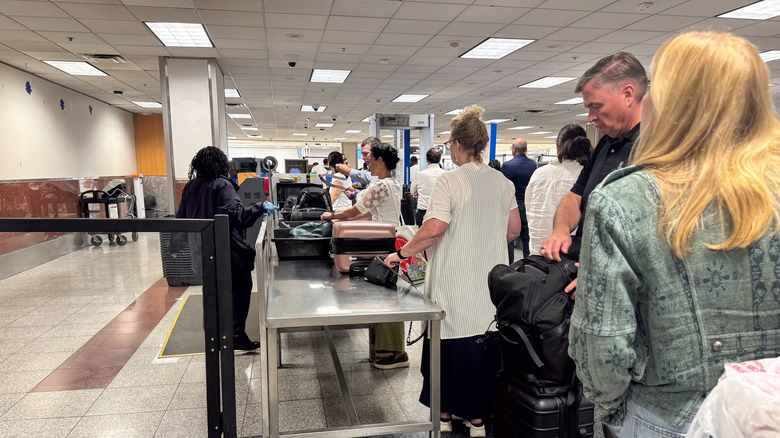
Anything that has the potential to improve airport security is worth noting, and it's why a recent change implemented by the Transportation Security Administration (TSA) has earned so much attention. The agency recently introduced computed tomography (CT) scanners at some 300 airports, and they're designed to reshape what happens at the checkpoint for travelers while improving visibility for TSA officers.
It marks a departure from the standard X-ray scanners that have been mainstays in airports since the 1970s. The devices provided agents with a two-dimensional view of what's inside luggage, but the limited scope of the image meant that the TSA checkpoint process was often slow and subject to delays when bags required additional screening. Now, though, the improved images give agents a detailed view, and, according to a TSA press release, the new system "can automatically detect explosives and other threat items" through its advanced technology.
The changes are significant for travelers, too, with the greatest perk being a more streamlined journey through security. Laptops and other electronics can now stay inside carry-on bags, as can liquids — provided they meet the 3-1-1 transparent bag rule strictly enforced by the TSA. The new algorithms allow officers a rotational 360-degree view of these and other items.
How the TSA changes will affect travelers
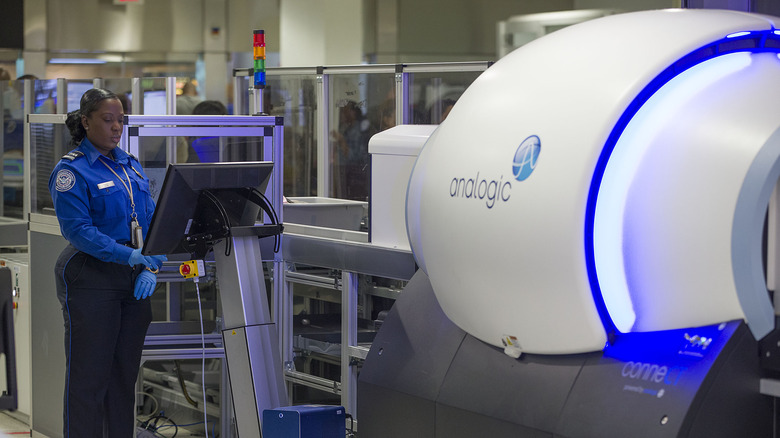
While there are clear perks associated with a more streamlined security screening for travelers, the newly refined process also brings some unexpected changes to the process. Previously, people could simply toss their carry-on bags directly onto the conveyor belt. With CT scanners, though, every single item, from small duffles to full-size roller bags, must be set in a dedicated plastic bin.
In theory this shouldn't change the traveler's experience too much, but the new machines have smaller entrances than the older units. This could make it more challenging for a slightly larger carry-on to fit through the tunnel. The agency suggests checking the bag with the airline instead (and it's always smart to make sure the bag meets the established carry-on size requirements beforehand).
Additionally, the TSA has long recommended that people traveling with undeveloped film request a hand inspection instead of sending it through the tunnel, but the new CT scanners could pose an even more significant threat to undeveloped film. Because the devices use more radiation than X-ray scanners, they could cause issues like fogginess, bands, and lines that alter the film's integrity. Store film in clear bags, as you would liquids, and submit them for hand inspection.