

The Unwritten Rules American Travelers Should Know Before Visiting Canada

As the closest of neighbors, Canada and the U.S. share plenty of similarities. In many northern U.S. states, Canada is just a short drive away, and crossing the border is a regular occurrence for plenty of folks. The two countries share a language, geography, and a whole lot of history and culture. But don't be fooled: there is a world of difference between these two North American cousins as well.
Everyone knows that Canada is one of the world's friendliest countries, and that Canadians take politeness to the extreme. But apologizing and meticulously thanking the bus driver aren't the only things that are important in Canadian culture. For Americans visiting their northern cousins, there are several unwritten rules that are incredibly important to keep in mind if they want to have a safe and fun trip.
Around 1.5 million Americans visit Canada every month for day trips or longer vacations. But they aren't always adequately prepared for what to expect on the other side of the border. Whether it's preparing properly for the weather, learning a little about the diverse cultures that exist in the country, or keeping in mind the differences in everyday behaviors, brushing up on some of these important elements of Canadian life is a vital part of any trip.
Don't underestimate the cold

The weather in Canada is serious business. While plenty of northern U.S. states know all about freezing temperatures and harsh winters, in Canada, the cold can be something truly hard to handle. Conditions vary enormously, and parts of the country regularly reach -40F during the winter months. It is incredibly important to dress appropriately and not underestimate the cold, even if you are only going to be outside for a short amount of time. Even the dash from car to restaurant can leave you with frozen hands and a stinging face if you aren't wrapped up warm!
It is also worth keeping in mind how varied the weather can be and how quickly it can change. On the coast, winters can be very mild, and the mercury might not even drop below freezing, but somewhere like Toronto might barely get warmer than 23F all winter. Similarly, temperature swings of up to 30 degrees can happen within the space of 24 hours, meaning you really need to be prepared for all eventualities.
Keep survival gear in the car
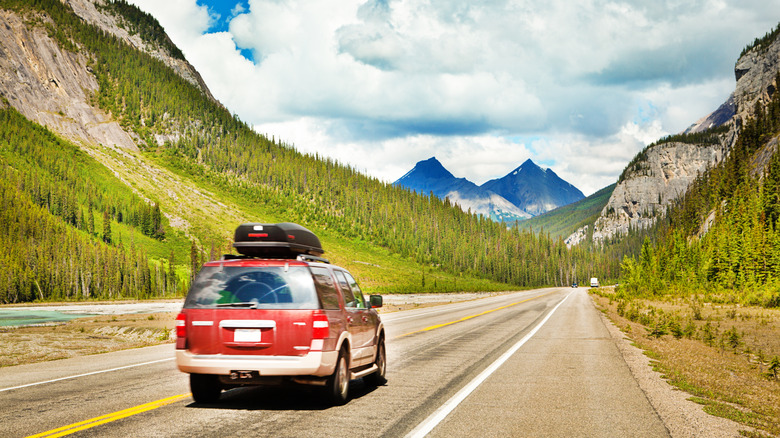
Canada's combination of unpredictable, extreme weather and vast size means that driving times are long, distances between cities and towns can be enormous, and if disaster strikes, it is very easy to find yourself far from assistance. As a result, if you are planning a road trip through Canada, or even just to drive anywhere in the more rural areas or the prairie states, then keeping survival gear in the car is absolutely essential.
If your car breaks down or a serious snowstorm hits, having the necessary equipment and kit to stay safe and secure is a huge deal. You'll want to have some food that won't spoil, like energy bars, as well as plenty of bottled water. A blanket and some warm clothes can help stave off the cold, while a first aid kit is important to deal with bumps, bruises, cuts, and scrapes. Things like a flashlight, a whistle, candles, and warning lights are important for attracting attention, and plenty of antifreeze or even just a bag of sand can prevent your car from freezing over. Finally, even if you aren't a whizz at mechanical stuff, having a tow rope and a set of jumper cables will make it easier to be rescued if necessary.
French Canadian culture is unique

Much of the early history of Canada involved a tussle for control between the colonial empires of France and Great Britain. When France ceded possession of its colonies in North America to the British, the regions of Quebec and Acadia maintained their language, their culture, and certain rights, laws, and traditions. French Canadians are both proud and protective of their Francophone roots, but it is important to remember that things have evolved significantly over the last few centuries, and just because the language is similar, it is not the same as French culture from France. There is a whole host of unique sayings, expressions, and curse words, and French Canadians consider the French from France more as long-lost cousins.
That said, if you are traveling to Quebec, Newfoundland and Labrador, or even Saint-Pierre and Miquelon, the last piece of French territory in mainland North America, having a little French up your sleeve can go a long way. Almost everyone in Canada speaks English, so you won't have a problem if your French is rusty, but you'll garner a whole load of goodwill with even the most basic phrases. Politeness is a huge part of Canadian culture in general, so taking the time to learn a few words is a lovely gesture that will be appreciated enormously.
Personal space is important

The Canadian stereotype of being polite to a fault is well-known, but there's another, lesser-known character trait that is equally true and just as important. For Canadians, personal space is hugely important, and behaviors that might seem perfectly acceptable in the U.S. or in Europe come across as awkward, rude, and even inappropriate in Canada.
Pay close attention to how close you are to people around you, and avoid invading others' space as much as possible. In lines, in elevators, or on public transport, if you feel you might be a bit too close, you probably are! If you do need to get close to someone, acknowledge it (this is where the Canadian "Sorry" is used the most!) by saying you're just going to squeeze past or something similar. Waiting for others to get off buses and trains is an important part of this, as is letting people go first, or holding doors open for them.