

North America's Longest Cross-Country Highway Offers A Coast-To-Coast Road Trip In Canada
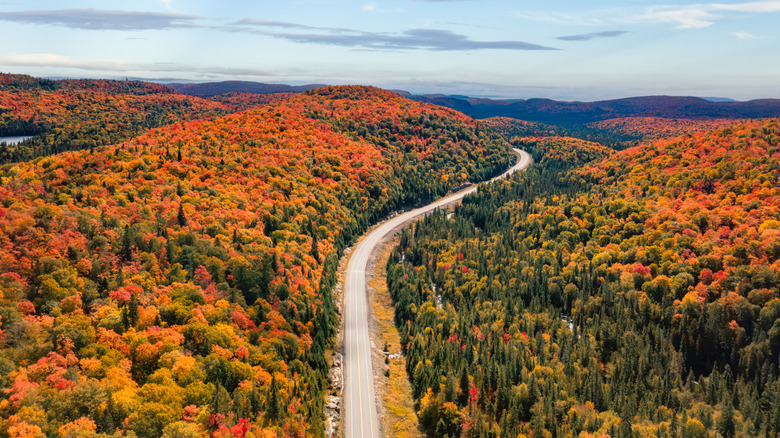
North America is spoiled for choice when it comes to great driving roads. From iconic highways like Route 66 or Route 1 to thrilling road trips that explore multiple national parks, packing up the car and hitting the road is a superb way to discover the best that North America has to offer. Road trips are a unique way to travel, a vacation where the attraction is the journey, not the destination, and views from the window are just as important as exciting places to stop. A road trip lets you explore new places and go off-plan, finding corners of the world you might never otherwise discover.
The longest road trip routes in the U.S. stretch from coast to coast and come out at about 3,500 miles. But this is nothing compared to North America's longest cross-country highway, the Trans-Canada Highway from Vancouver to Halifax. This extraordinary road route stretches for 4,860 miles and is considered the world's longest road, connecting the Pacific Ocean to the Atlantic Ocean, and crossing all 10 Canadian provinces. It is a gorgeous route that combines the best of Canada, encompassing soaring mountain peaks, verdant rainforests, charming old towns filled with culture and history, and vibrant, dynamic modern cities.
The Trans-Canada Highway starts in Victoria on Vancouver Island, British Columbia, and heads east, going through cities like Vancouver, Calgary, Winnipeg, Sudbury, Ottawa, Montreal, Quebec, and Halifax, before ending in St. John's, Newfoundland. Additional branches split off in Quebec and Ontario, offering alternative routes west from Manitoba to Prince Rupert, and east from New Brunswick to Prince Edward Island. If you are arriving from outside Canada and traveling west-to-east, you'll likely arrive at Victoria International Airport (YYJ), which is served by routes across Canada, the U.S., and Mexico. Travelers going from east to west are best served by St. John's International Airport (YYT), which boasts routes from the Caribbean and Europe.
Vancouver to Glacier National Park
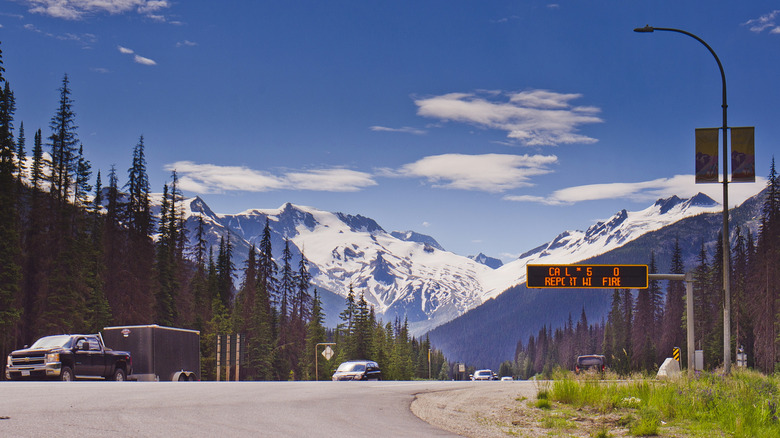
Before seriously setting off on the Trans-Canada Highway, it is worth exploring the joys of British Columbia. Vancouver Island offers an extraordinary array of exciting things to see and do, from great surf breaks in Tofino and amazing forest canopy views on the Malahat SkyWalk to discovering Indigenous culture in Alert Bay and orca-spotting in Victoria. Vancouver is also a great city to explore, with an amazing food scene, the iconic Stanley Park, and the charmingly historic Gastown.
The next stop on this excellent route is the majestic Fraser Valley. The Fraser River carves its way through Fraser Canyon, offering dramatic landscapes best seen via the wonderful Hell's Gate Airtram. Just beyond Hell's Gate is the town of Lytton, which is one of the best places to go white-water rafting, as well as boasting an excellent Chinese history museum, a great opportunity to learn about an often-overlooked aspect of the region's history. Fraser Valley is also one of Canada's premier wine regions, so it is worth pausing at one of the many fabulous wineries to eat and drink locally-sourced fare.
The next major attraction on the route is the stunning Glacier National Park (not to be confused with the similarly-named park in Montana). One of seven national parks in British Columbia, it covers 521 square miles and boasts two mountain ranges, more than 400 glaciers, and a stunning variety of ecosystems, wildlife, and scenery. The Trans-Canada Highway reaches its highest point at Kicking Horse Pass, which sits at a vertigo-inducing 5,338 feet above sea level.
Alberta to Newfoundland
Banff National Park is another picture-perfect wonderland along the route, and not just for ski fanatics! It is the third-oldest national park in the world, and the Canadian Rockies offer some of the most picturesque landscapes in the country. Calgary boasts some of the most complete and jaw-dropping dinosaur fossils on the planet, while Medicine Hat, Alberta, is a center for Indigenous culture and is home to Saamis Tepee, the world's tallest teepee. Heading out of Alberta into Saskatchewan, you might enjoy exploring Moose Jaw, nicknamed "Little Chicago" during the Prohibition era due to its central role in smuggling illicit liquor. Saskatoon is a charming and elegant town, worth a short detour, and Regina is steeped in history, from its fantastic early 20th-century architecture all the way back to Scotty, the largest T. rex skeleton ever discovered.
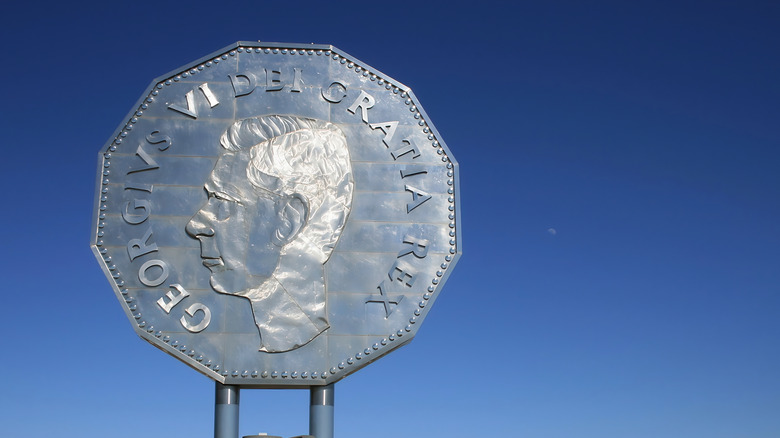
Manitoba and Ontario are Canada's heartlands. The Highway takes you through fields of golden canola, and a stop in Winnipeg to explore its excellent museums and galleries is time well spent. In Ontario, the landscapes start to get rugged again after the flat prairies of Saskatchewan and Manitoba, and travelers will enjoy the myths and legends of Thunder Bay, the sweeping views over Lake Superior, and the Big Nickel, the biggest coin in the world, a delightful roadside attraction in Sudbury.
The final stretch of this epic road trip includes the magnificent cities of Toronto and Montreal, filled with amazing cultural highlights, brilliant museums, exceptional art galleries, and some wonderful places to eat and drink. Past Montreal and Quebec, all that is left is the beautiful coastal scenery in New Brunswick and Nova Scotia, before crossing the Gulf of St. Lawrence to reach the journey's end at St. John's, surrounded by the remote natural beauty of Newfoundland Island.