

Here's The Right Way To Pack Your Hiking Gear If You Want To Avoid Back Pain
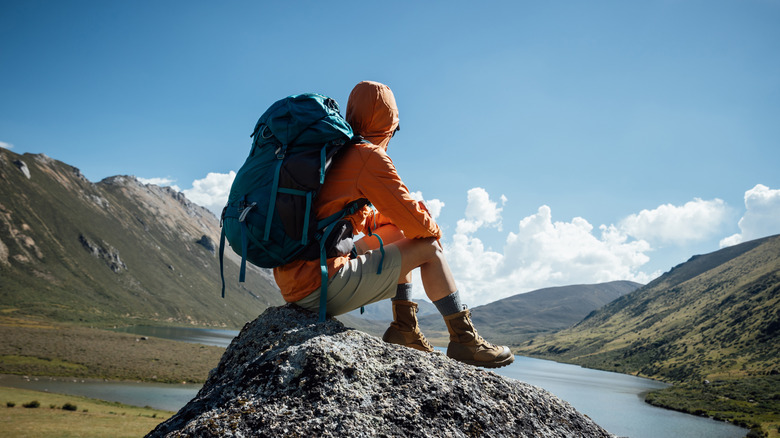
Travelers who wish to journey far from any signs of human society and experience truly wild places up close likely already know they'll have to do some serious hiking. To fully immerse yourself in nature, you may plan a multi-day wild camping excursion in which you carry your food, water, and gear in a large backpack. Even if you're only embarking on a long day trip, you'll need to make sure you have some essential gear. Regardless of how far you plan to go or how long you plan to stay, it's important that you properly pack your hiking gear if you want to avoid back pain on the trail.
Hiking and backpacking are incredibly rewarding activities, but most seasoned outdoor recreation enthusiasts will agree that they aren't always the most comfortable experiences. Even if you're packing the best and safest hiking gear, you're still going to be lugging around extra weight that your body might not be used to. When you combine that extra weight with the physical exertion of hiking, or spending a few nights sleeping in a tent, it can lead to some serious aches and pains.
To mitigate discomfort as much as possible, it's crucial that you choose the right version of hiking backpack for your body. A good pack will fit your torso length (not height), and sits comfortably on your shoulders, back, and hips, distributing the weight evenly. Once you find the pack that's appropriate for your frame, you need to make sure that you're using the best method to load up your gear. Understanding proper weight distribution is essential so that your pack stays balanced on your body. You're going to want to make sure that your heaviest gear sits near the upper middle part of your back. The weight should also be evenly distributed from left to right and from back to front.
Avoid the worst aches and pains by packing your heaviest items in the right place
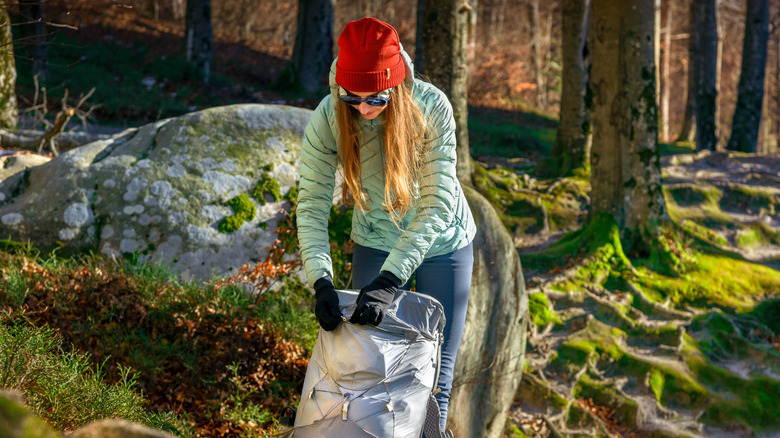
Improperly packed gear can ruin an otherwise incredible hike or backpacking trip. I once went on a weeklong backpacking trip with a small group, and on the second morning I woke up with an extremely achy back. My shoulders felt like they were on fire and the hike that day was horrible. I was in far too much pain to fully enjoy the stunning scenery. Finally, one of my friends helped me repack my bag so that the weight was more balanced. It made all the difference and the rest of the week was much more enjoyable.
A properly fitted backpack that is the appropriate size for your current needs helps distribute the weight evenly on your body, but you still have to ensure that you're loading up your gear correctly. You should always make sure that the heaviest items you're packing are near the upper middle part of your backpack. When you have your pack on, those heavy items should ideally sit below your shoulders, right around your shoulder blades. This will prevent your bag from feeling top heavy or bottom heavy.
Before you start packing your gear, determine which items are the heaviest. Food and water are usually some of the heaviest items. Your tent, camp stove, clothes, or extra shoes might also weigh you down. You may want to weigh your gear on a scale to determine which items are heaviest if you're unsure. Pack light items that you won't need to access often in the bottom of your pack. Extra clothing, sleeping bags, and your sleeping mat are good options for the bottom layer. Then move to the heavier items. Top your pack off with light layers or snacks that you may need to grab on the go.
Strategically distribute weight within your pack
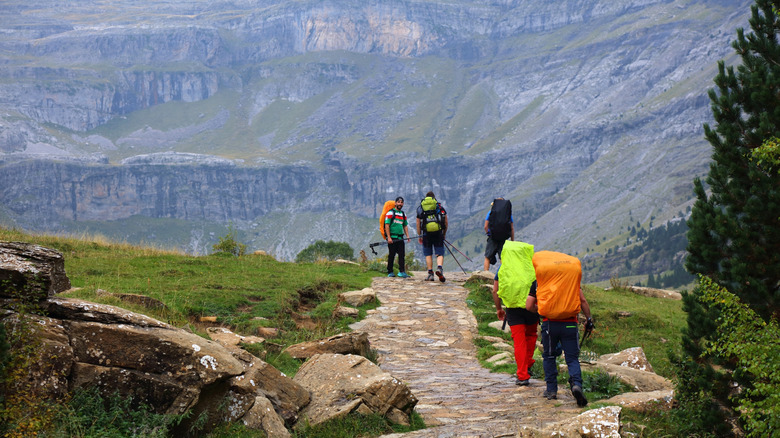
Once you're aware of which items are heaviest and determine which gear is going in the bottom, center, and top of your pack, you'll want to make sure that the weight is evenly distributed throughout. Imagine that there is a balance scale within your bag. If you place something on the left side of your pack, you'll want to place something of an equal weight on the right side of your pack. This will ensure that one side of your body doesn't have to work harder than the other. It will decrease pain points in your hips and shoulders.
It's also a good idea to pack heavier items closer to your back, where the pack frame is, and lighter items on the side of your pack that is facing away from you. If you don't do this, you could end up feeling as though your pack is pulling away from your body, which can lead to back pain. You'll want to pack everything nice and snug. Tighten up all of the straps and buckles as tightly as you can and ensure that you wear your pack as close to your body as possible. Ideally, it should feel like an extension of your body.
It's important to remember that even if you pack your backpack perfectly, there's still a good chance that you could end up feeling a little sore by the end of your expedition. Unless you're a frequent backpacker or someone who has trained for weeks and practiced exercising with extra weight on your back, your body is almost certainly going to ache a bit. Mild soreness in your back, neck, and shoulders is okay, but we want to mitigate pain as much as possible so that you can enjoy your time on the trail.