

Why Outdoor Experts And Survivalists Warn Against Camping In Dry Riverbeds
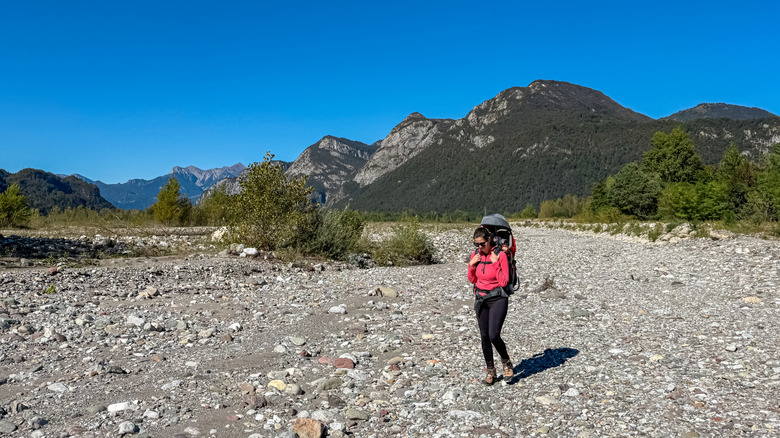
Camping is a favorite pastime among nature lovers and outdoor recreation enthusiasts, but if you aren't careful about where you decide to pitch your tent, it can be dangerous. While most established campgrounds offer safe locations to camp, you'll need to be cautious if you're selecting a backcountry campsite yourself. When embarking on a wild camping excursion, one of the most important things to keep in mind is that you should never camp in a dry riverbed.
At first glance, a dry riverbed may seem like the perfect place to set up camp. They're often sandy and flat. A flat surface is crucial when choosing where to put your tent, and sand provides a soft and comfortable surface to sleep on. A dry riverbed may look ideal, but if a flash flood were to occur, you could find yourself in a life-threatening situation.
Dry riverbeds can be found all over the world, but they're particularly common in dry and arid climates. "Dry creek beds and washes are the campsite selection hazard that kills most reliably, because they present as the most appealing camping spots in desert environments ... while being among the most dangerous in any weather system," Marcus Reed, a professional outdoor gear tester and expedition guide, wrote in an article on the Pro Camp Gear website. Survivalists and outdoor experts like Reed strongly advise against camping in a dry riverbed due to the risk of flash flooding.
Dry riverbeds are extremely dangerous places to be during flash floods
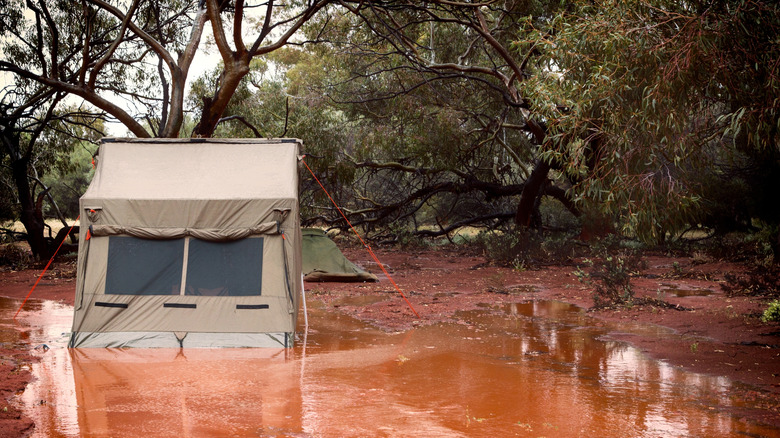
It isn't uncommon to come across a dry riverbed when you're hiking and camping, but you should never camp there. During a flash flood, dry riverbeds suddenly become raging rivers, which can make campsites unsafe. Some popular canyon hikes constantly close to help avoid these risks. Flash flooding can transform fun trails into deadly hazards. This is the reason why Keyhole Canyon, an unsuspecting Zion National Park hike in Utah, is so dangerous.
"A dry wash in the American Southwest, the Australian outback, or any semi-arid environment can carry 3 to 5 feet of fast-moving water within 20 to 30 minutes of a storm that fell many miles away and produced no visible weather at the campsite location itself," Reed wrote. "Never camp in a dry creek bed or wash regardless of how dry the conditions appear or how stable the weather looks."
Dieter Pey, a self-described 4x4 adventure filmmaker and traveling storyteller, posted a video on his YouTube channel warning against camping in dry riverbeds. "Flash floods can just happen like that," he said with a snap of his fingers. He went on to describe the space he selected to set up camp, which was high above a dry riverbed. A Facebook video shared by Newsflare showed an entire campground swept away by a flash flood in Australia. Campers stood by as their tents, gear, and even cars were washed away by rapidly rising water. "Heavy rain can cause debris flows especially in hilly or mountainous terrain," a safety guide published by the National Weather Service states. "Soil gives way and slides downhill picking up branches, trees, and rocks. Debris flow can completely destroy campsites and bury campers in a matter of minutes."
Proper safety precautions for flash floods when camping near dry riverbeds could save your life
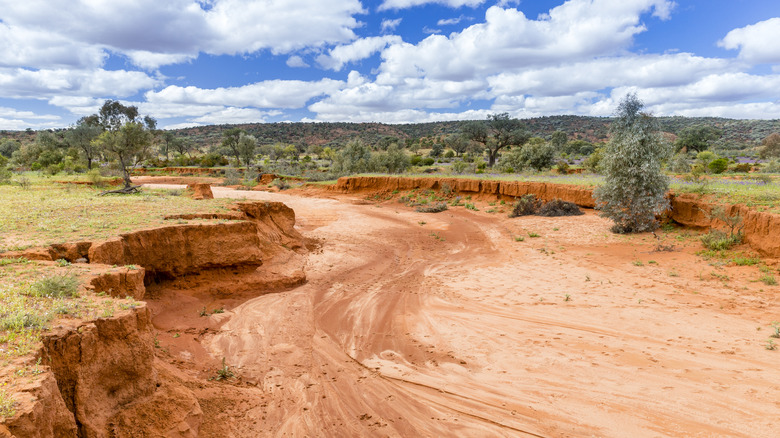
Most seasoned outdoor recreation enthusiasts take certain precautions when embarking on a camping adventure, and properly preparing for flash floods is a crucial step. Most deaths from flash floods occur at night, which is another reason why camping in a dry riverbed is a horrible idea. If you are sound asleep when a flash flood occurs, you may not have enough time to safely escape the area. Nature can be unpredictable, and it's better to be safe than sorry.
Don't believe you're safe just because it hasn't rained. It could be raining cats and dogs a few miles upstream. "Heavy rainfall can bring a danger of flash flooding, but sometimes even light/moderate rainfall can trigger dangerous floods. Dry streambeds can become raging torrents in minutes with no rain in sight," the National Weather Service advises.
Before you leave for your camping trip, you should always check the weather. Continue to check throughout your camping trip and heed weather warnings. A Flood Watch is issued when it's possible for flash flooding to happen. A Flood Warning means that flooding will occur or is already occurring. If you find yourself camping in an area where a flood warning is issued, you need to get to higher ground and stay far away from dry riverbeds. It only takes a few inches of moving water to knock an adult off their feet and sweep them away. A car can get carried away in just 12 inches of water. Leave No Trace guidelines suggest camping at least 200 feet from a dry riverbed or a water source. That guideline is mostly based on ecological concerns, so Reed recommends a minimum distance of 300 to 400 feet from the current water line for safety.