

Ignoring This Sign On Japanese Trains Can Lead To A Brutal Ride During Summer
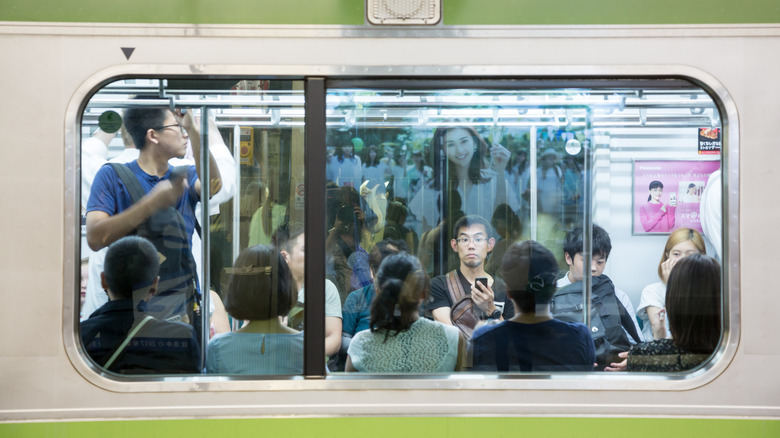
For years, Japan had a reputation as a hard place to explore as an independent traveler. The unique culture, traditions, and customs that make Japan such a fascinating and unusual place to visit also made it tricky for Western tourists to get around. The language barrier in particular was famously difficult to overcome, as English wasn't widely spoken, and signs in the Japanese alphabet were hard for English speakers to decipher. But this reputation is now extremely out of date. These days, things have changed significantly. While there are still a few things that tourists need to know before traveling to Japan, technology has made overcoming the language gap easier than ever before, and most tourist-friendly areas have signs in multiple languages.
Being a considerate tourist in Japan is easier than ever. However, while multilingual signs and Google Translate have made a self-guided vacation in Japan far more accessible, there are still a few occasions where tourists can go wrong if they haven't brushed up on their kanji, katakana, hiragana, and romaji! One place in particular is on Japanese trains, where ignoring a very important sign on certain cars could mean a sweaty and uncomfortable ride during the summer months.
There are a few things that tourists planning to use Japan's train system need to know. One of the most important is the sign 弱冷房車 (jakureibōsha), which means weak or mild air-conditioning. On these cars, the AC is turned down, which is not a problem for most of the year, but during the hot summer months, when temperatures can consistently reach and exceed 86 degrees Fahrenheit in the daytime, this could mean a deeply unpleasant experience.
Why do some Japanese trains have mild air-conditioning?
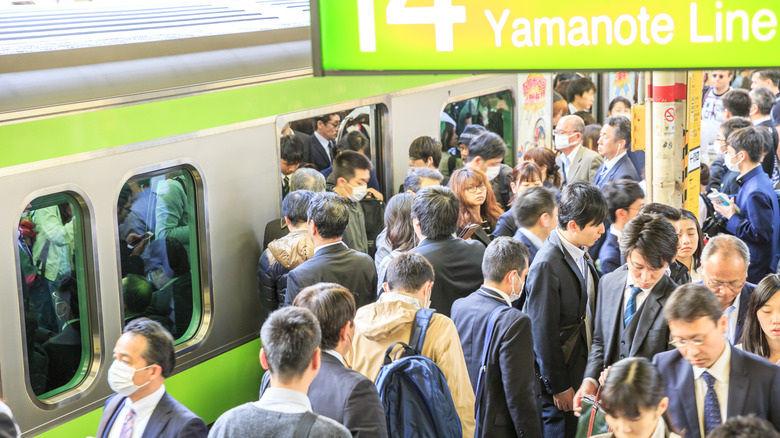
In general, the air-conditioning on Japanese trains is exceptional. In the cold winters, trains are toasty warm, with some carriages even boasting heaters under your feet! In the hot summers, the AC is cool and refreshing, with plenty of people using trains as a way to take a break from the sweltering heat. However, intense air-conditioning isn't to everyone's taste, so certain cars are designed to be less cool, with the AC turned down. The milder air-conditioning is also pitched as a sustainability move. Turning down the AC on some cars means using less energy, something which is increasingly becoming a priority for the Japanese government.
Opinions on the milder air-conditioned cars have been mixed. Plenty of people feel that it is a good idea, offering an option for people who find regular AC too cold. However, there are a lot of complaints on social media, pointing out that with the increasing summer temperatures, it may be better to be too cold than too hot, and that it seems to be a way for the train companies to save money dressed up as a green initiative.
The actual temperatures on train carriages differ depending on which line you travel on. Most of the main train companies in Tokyo, as well as the Tokyo Metro, have a standard 78.8 degrees Fahrenheit for their normal cars, and 82.4 degrees Fahrenheit for their mildly air-conditioned cars. However, if you take the Yamanote Line, run by JR East, then things are a little cooler, with regular cars at 77 degrees Fahrenheit and jakureibōsha cars at 80.6 degrees Fahrenheit.