

This US Airline Just Banned Robots After A Passenger's Viral Flight
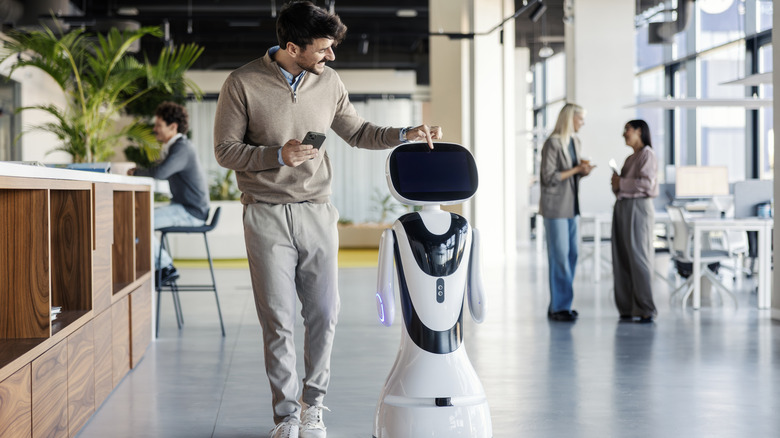
The list of things you can't bring through TSA and onto an aircraft is long and surprising. While many banned items are obvious, like guns, explosives, knives, and chemicals, there are plenty that might come as a surprise. For example, British Christmas crackers are a big no-no in either checked or carry-on bags, while power banks can't be left in checked luggage and must be kept with you on the plane.
Now, thanks in part to one passenger's viral flight, Southwest Airlines has added a curious and unexpected entry to its list of prohibited and restricted items. After a humanoid robot boarded a plane from Las Vegas to Dallas Love Field, Southwest has updated its policies to ban human-like and animal-like robots from its aircraft, regardless of its size or purpose.
Southwest has stated (via People) that the reason for the ban is due to safety concerns around the size of the lithium-ion batteries, as well as the potential risk of delays. Southwest's updated regulations are in line with its existing policies on toys, which must fit into a carry-on bag and comply with standard battery restrictions.
What sparked this ban?
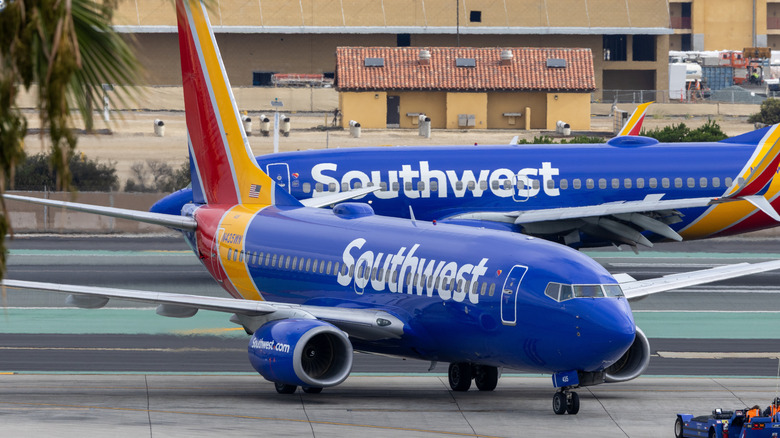
In May 2026, Aaron Mehdizadeh, founder of The Robot Studio in North Dallas, took his company's humanoid robot, Stewie, on a Southwest flight from Las Vegas to Dallas. He bought the robot, which stands about 3.5 feet tall, its own seat, and fitted Stewie with a smaller battery in order to comply with security restrictions. The journey went off without a hitch, with the robot making its own way to its seat, although Stewie did not get the opportunity to enjoy Southwest Airlines' in-flight service!
Unsurprisingly, the stunt went viral. Mehdizadeh told CBS News Texas, "Most people were very excited to see a robot flying and provided so much entertainment, and it was great." Although Southwest indicated that it was mostly concerned about the battery, Mehdizadeh described the custom battery as "essentially a laptop battery," which is in line with the existing policies.
It's not the first time a robot has taken to the skies on a Southwest plane, and the fallout from the previous incident possibly had a greater impact on the airline's reaction. Back in April 2026, a robot called Bebop flew from Oakland to San Diego, but only after nearly an hour of delays as the flight crew tried to figure out how this unusual passenger fit in with the airlines' specific regulations. As the flight attendant on Stewie's trip said (via CBS News), "well, I don't know what to do with that."
Does the airline industry need to change?
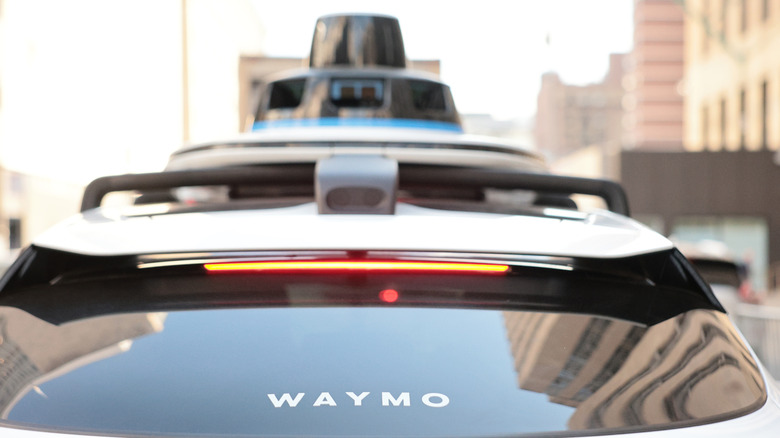
The most recent incidents of robot passengers are fairly obvious stunts, designed to raise the profile of these robotics companies and drive viral social media marketing opportunities. But robots are becoming more commonplace in the travel industry, from luggage handlers to driverless robotaxis that take you to the airport. So, as humanoid robots become more sophisticated, is this going to be an issue that repeats itself on a more serious level? If robots become more common in everyday life, what is currently a funny viral video might be something that needs addressing in more detail.
Pushkar Shinde, the chief technology officer of The Robot Studio, told Fox 4 Dallas-Fort Worth that he compares the current state of the robotics sector with the automobile industry in the 1920s in that it's "a very early industry." In the same report, Mehdizadeh says that uses for robots are "still predominantly [for] entertainment," but expects radical change in the near future. Industry experts suggest that robots may be used as personal carers and even travel guides, which suggests that airlines may need to find a way to get more comfortable with robots on its planes sooner rather than later.