

This Couple Actually Built A Home In Glacier National Park – Here's Why It's Legal
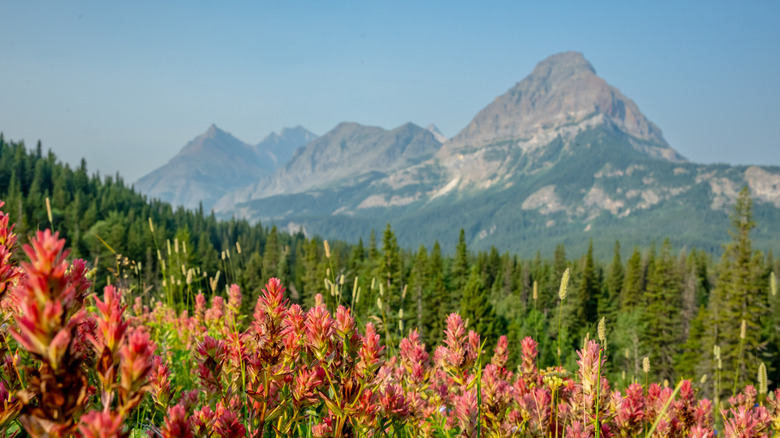
The idea of living inside one of the most beautiful national parks in the U.S. is a tantalizing one. Surrounded by majestic landscapes and stunning natural beauty, far from the hustle and bustle of the city and the stress of the everyday grind, it's a utopian vision of off-grid living that could be attractive to many adventurous explorers and lovers of the great outdoors.
If building a home in one of America's beautiful wildernesses is something you've ever dreamed of, you might be inspired and encouraged by the story of a recent couple who did just that. A California couple has succeeded in their legal battle to construct a three-story house on the banks of McDonald Creek in the Crown of the Continent, Glacier National Park, Montana, basically because a federal law took precedence over a state law.
According to the Montana Free Press, John and Stacy Ambler from San Diego, California, bought half an acre of land in Glacier National Park, just west of Apgar Village, in 2019. After consulting the Park Service and Flathead County, they began building their home, until 2023, when they were required to put everything on hold by the Flathead Conservation District (FCD).
What was the dispute all about?
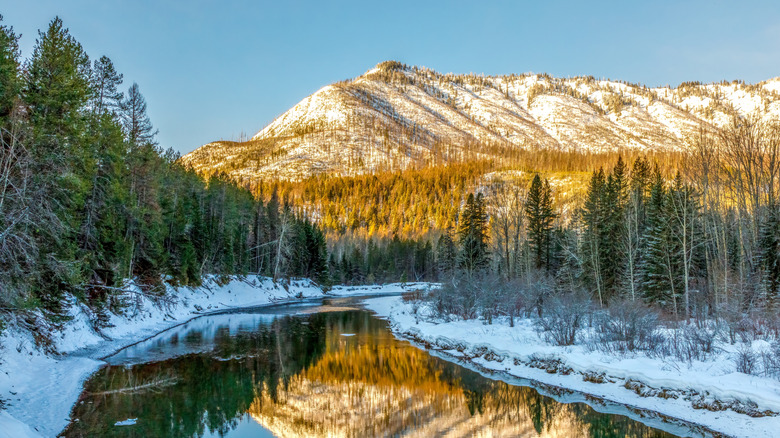
The Flathead Conservation District first took an interest in the construction on the banks of McDonald Creek following complaints from locals. The issue was protecting the riverbank and the stream, and the FCD felt that not only was the house being built too close to the river, but that the couple had not applied for the appropriate permits to build in the area. It charged the construction with violating the state's stream protection laws and ordered the house to be dismantled.
However, the issue becomes complex due to the national park status itself. Perhaps surprisingly, the fact that they were building inside the confines of a federally protected national park was actually what helped the Amblers in their case. Because national parks are administered and governed by a federal agency, state laws that were added to the statute book after the national park was set up do not apply. As the stream protection laws were enacted in 1975, over 60 years after Glacier National Park was established in 1910, the California couple argued that they hadn't infringed on any relevant legislation.
The Amblers sued the Flathead Conservation District and took the case to federal court in 2023. The court upheld their case and ruled that the construction was legal. Following an appeal by the Flathead Conservation District, the U.S. Court of Appeals for the Ninth Circuit confirmed the decision in favor of the construction, ruling that Montana state law was superseded by the jurisdiction of the U.S. government.
What does it all mean?
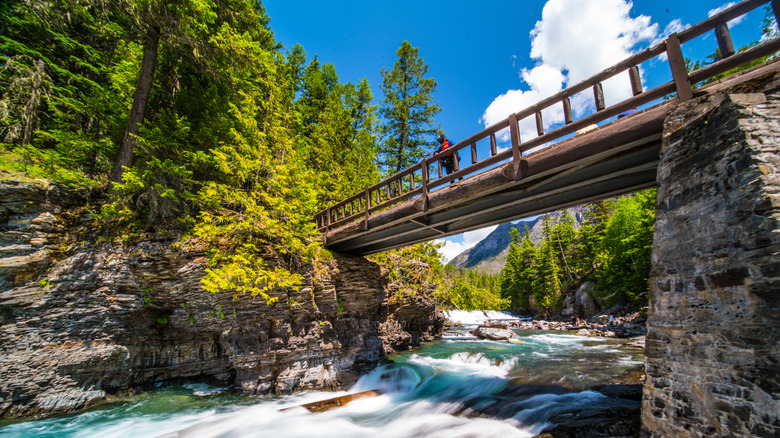
In this particular case, the ruling means that the Amblers are free to finish construction of their three-story home. After three years of legal battles, this will obviously be a huge relief to the couple, although they are on the hook for some fairly sizable legal fees, after their petition for costs to be paid was rejected. But there are concerns about what this might mean for environmental protections and wildlife in U.S. national parks more widely.
Redditor GlitteringRate6296 said, "Just the start. If we do not protect our public lands they will be sold off to the highest bidders via the corrupt GOP. These people value nothing but $$$$." Given there are 2.5 million acres of privately-owned land within the national park system, it is certainly something that is worth thinking about. And the Amblers' case does have the potential to be used as a precedent. However, given that the issue was less about whether they could build a home and more about confusion over whether state or federal law took precedence, it perhaps should be considered a clarification of jurisdiction rather than something for environmentalists to worry about.
Certainly, it does not mean that anyone can just buy land and start building inside national parks. But for existing landowners, it may give clarity about what would be required to appropriately and legally do so.