
New Orleans' Abandoned Amusement Park Will Thrive Again As A New Indoor & Outdoor Water Park
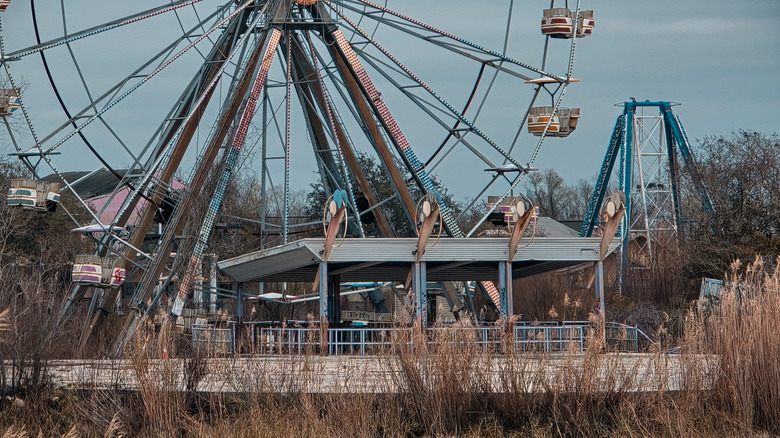
In its 65-year history, the Six Flags amusement park chain has seen its share of troubles, undergoing bankruptcy at one point and being forced to close or sell off some of its less successful parks. Few of those parks have been as short-lived, however, as the one in New Orleans, which only lasted two years after Six Flags attached its name to it. Hurricane Katrina left the park flooded in August 2005, and it never reopened after that. After sitting abandoned for two decades — much longer than it was ever open — the last vestiges of Six Flags New Orleans were finally demolished in 2026. This clears the way for Bayou Phoenix, a proposed $500 million mixed-use development, to build a new water park and sports complex on the site.
In a community presentation in March 2026, private developers Henry Consulting and TKTMJ, Inc. laid out their vision for what Bayou Phoenix could be. The Bayou Phoenix website identifies its potential indoor and outdoor water park and sports complex as the "primary demand generators" for the redeveloped site. Yet the 225-acre property would also include a movie studio, hotels, retail and dining space, and a family entertainment center with an arcade.
According to local news outlet Fox 8, Bayou Phoenix's viability is contingent on the approval of a bank loan and $50 million in public funding, neither of which the developers had secured at press time. They do have "handshake agreements" with future tenants like Eastern Sports Management and American Resorts Management, which would respectively operate the sports complex and the water park and entertainment center, along with one 300-room hotel. Apart from that, they have already inked an official deal with E. Ross Studios to construct the movie studio and retail space in Bayou Phoenix.
Bayou Phoenix could bring a water park to the Big Easy
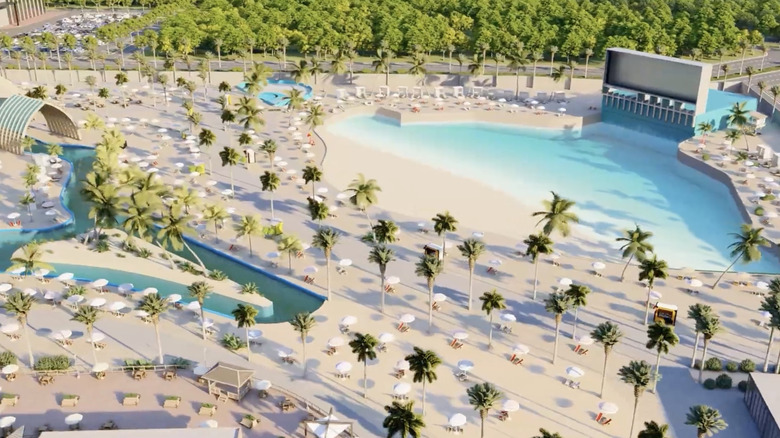
Per Bayou Phoenix, "There is no comparable water park competition within 175 miles" of its planned location in eastern New Orleans, but the key word there is "comparable." Gulf Islands Waterpark is only 60 to 70 miles away in Gulfport, Mississippi. Though it's one of the most dangerous water parks, according to traveler reviews, Blue Bayou Waterpark (soon to be renamed Soak'n Fun) is also about 80 miles away in Baton Rouge, Louisiana. Both parks — which have the same owner, Leisure Sports and Recreation — sit off I-10, just as Bayou Phoenix will.
The difference with those is that they're outdoor parks, which traditionally operate on a seasonal basis from mid-May to Labor Day weekend in early September. Having an indoor park alongside other recreational facilities would presumably allow Bayou Phoenix to be a year-round attraction, bringing in visitors beyond the summer crowds. A presentation video showing off Murphys Waves technology indicates that the park's indoor section would have an action river, a wave pool and waterslides, and a play structure for kids. Larger versions of these features would be present in the outdoor section, with the waterslides occupying three different complexes.
Bayou Phoenix is also slated to include a clear lagoon and an inflatable wave simulator where surfers can practice. For out-of-towners, making once-in-a-lifetime trips from far afield, attractions of this nature might not necessarily rank among the best things to do when visiting New Orleans. Locals looking to cool off or just have fun in the Big Easy could nonetheless make Bayou Phoenix a popular regional attraction. With its name, the park is clearly positioning itself as a development that will rise from the ashes of Six Flags to revitalize New Orleans East.
Jazzland and Six Flags cast a long shadow
Bayou Phoenix already has a 99-year lease on the land once inhabited by Six Flags New Orleans (which itself had a 75-year lease, but only made it through the first few years of that). Building a water park on a site devastated by hurricane flooding, and shielding its attractions against the elements with indoor facilities, is certainly one way of reclaiming the narrative. With planning in the early stages, though, it's too soon to say whether Bayou Phoenix will fare any better than its two predecessors.
The park that would become Six Flags New Orleans was originally known as Jazzland when it first opened (under different ownership) in May 2000. With areas themed to Mardi Gras and Cajun Country, Jazzland leaned into New Orleans' rich musical history and cultural traditions. Yet it faced the same problem Disney California Adventure would in 2001, in that it was peddling the fake theme park version of a place when the real thing was right outside. Attendance at Jazzland quickly dwindled, leading it to file for bankruptcy in 2002, whereupon Six Flags bought it up, reopening the park under its own name in April 2003.
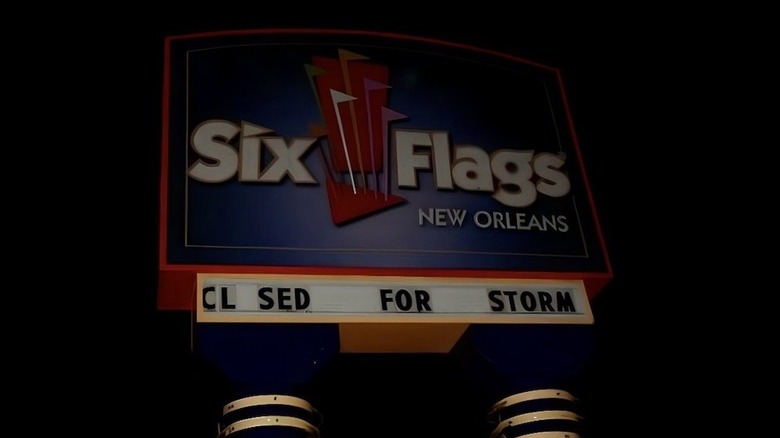
Six Flags New Orleans later featured in the documentary "Closed for Storm," which took its title from the last message posted outside the park before it was abandoned. That message would remain up over the years as the park deteriorated, being overtaken by weeds and graffiti. Before it was demolished, you could still see the water line from the flooding inside some buildings, where calendars were left showing August 2005. In the 2010s, Hollywood blockbusters like "Jurassic World" and "Dawn of the Planet of the Apes" began filming on constructed sets in the vacant parking lot. Now, with a water park potentially joining the movie studio on-site, Bayou Phoenix is looking to begin a new chapter in the place's troubled history.