
Between Montenegro And North Macedonia Lies One Of Europe's Least-Visited Countries
Despite its immense popularity as a vacation destination, there are still a few corners of Europe that can genuinely be described as hidden gems. In Eastern Europe in particular, there are plenty of countries that were incredibly difficult to travel to in the decades behind the Iron Curtain and are still off the mainstream tourist trail. Albania offers incredible coastal getaways that rival Greece without the crowds, while Slovenia is a historic, cultural treasure that provides a fabulously Italian atmosphere at a fraction of the cost. But even these spots seem overcrowded and popular when compared with Kosovo, Europe's newest and youngest nation.
It can be controversial even to describe Kosovo as a nation at all! Although they declared independence from Serbia in 2008, Kosovo hasn't been recognized as an independent country by the United Nations. However, with over 100 countries around the world recognizing the Kosovan government, it is usually considered the youngest country in Europe. What is not contentious is that it remains one of the least visited European destinations, flying firmly under the radar and on almost no regular tourist itineraries. And this is a real shame, as it is a beautiful, fascinating, and vibrant country with a rich culture and an endlessly interesting history.
Kosovo is a landlocked country in southeastern Europe, surrounded by Serbia to the north and east, Albania and North Macedonia to the south, and the underrated bucket list destination of Montenegro to the west. Its main international airport is located in the capital city, Pristina, and is served by a wide variety of carriers and routes around Europe and Turkey. You can also enter Kosovo by land from Albania, Montenegro, and North Macedonia, but the border crossing from Serbia is complex due to the political situation and best avoided.
History and culture in Pristina
Like its neighbors Montenegro and Albania, Kosovo boasts stunning mountains, deep forests, historic fortresses, fascinating religious buildings, and a delightful, almost Mediterranean climate. It is also a cultural melting pot, an area of the world where civilizations clashed for centuries, which makes it a stunning place to visit for anyone interested in history, religion, or culture. This was the frontier between the Christian West and the Islamic Ottoman Empire, and this rich history has left a remarkable blend of architecture and customs.
The depth and variety of Kosovo's history can best be seen in Pristina, the capital city. While the city itself is something of a hodge-podge of architectural styles and often somewhat overwhelmed with traffic, it is still a fascinating place to explore. On the outskirts of the city, Ulpiana Archaeological Park takes visitors all the way back to the time of the Roman Empire, letting them walk in the footsteps of the past. Further out of town, the looming bulk of the Novo Brdo Fortress, dating from the medieval Serbian kingdom, is a stark reminder of Kosovo's position as a frontier between Eastern and Western civilizations. The center is filled with gorgeous minarets and buildings from the Ottoman period, including the Sultan Mehmet Fatih Mosque on the edge of the old town, the magnificent Great Hammam, and the Carshi Mosque, the oldest structure in the city.
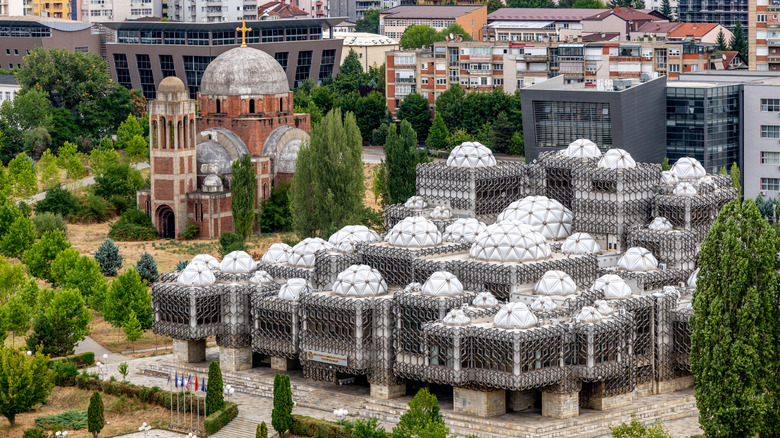
There's plenty to please fans of more modern styles as well. The magnificent Brutalist weirdness of the National Library is one of Pristina's most iconic and most bizarre structures. It's an endlessly fascinating visual masterpiece both inside and out, and home to some of the country's most significant cultural collections. The Art Nouveau Hotel Union is a treat, and the funky Newborn monument, constructed to commemorate Kosovo's independence, is worth a visit too.
Outdoor adventure beyond Kosovo's capital
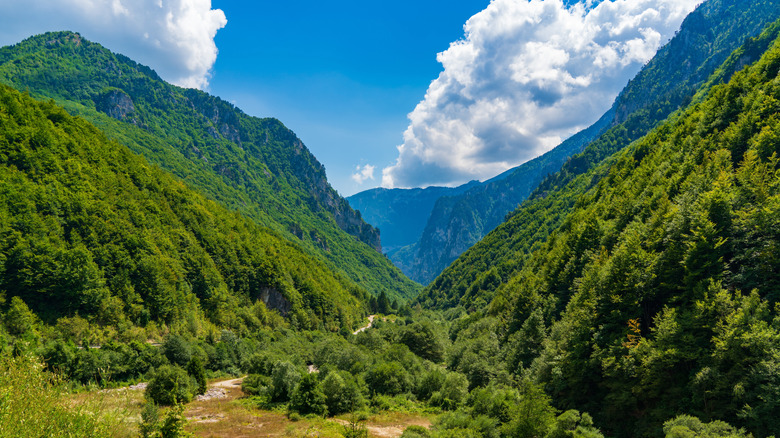
Outside of Pristina, Kosovo is one of a few destinations across Europe for people who hate crowds and a paradise for outdoor adventurers. Bjeshkët e Nemuna National Park sits in the foothills of the wonderfully named Accursed Mountains, also known as the Albanian Alps, and is one of Europe's most spectacular national parks. Filled with soaring limestone peaks, glacial lakes, and deep valleys, it is a remote wilderness ideal for adventurous hiking trips. On the edge of the national park, the Patriarchate of Peć Monastery is a gorgeous medieval church complex, whose bright, colorful exterior contrasts excellently with the somber, almost cave-like atmosphere inside. For rock climbers and spelunkers, the monastery is at the mouth of the Rugova Canyon, one of the longest and deepest canyons in Europe, and an ideal spot to begin a hike to the summit of Hajla, Kosovo's highest peak.
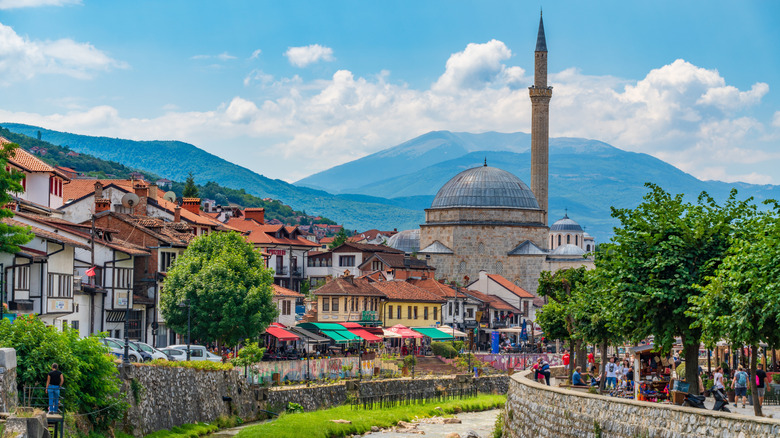
Kosovo's second city, Prizren, is also a delight. Located on the banks of the Prizren River, it has a wonderfully preserved old town and boasts several excellent historic buildings to visit, like the 17th-century Sinan Pasha Mosque, the impressive Kalaja Fortress, the Cathedral of Our Lady of Perpetual Succour, and the UNESCO World Heritage site Our Lady of Ljeviš. One fascinating spot that should not be missed is the Complex of the Albanian League of Prizren, a cultural heritage museum exploring the history of Albanian statehood following the fall of the Ottoman Empire.