

Why A Mexico Tourism Official Says 'Every Canadian Is Worth Two Americans'
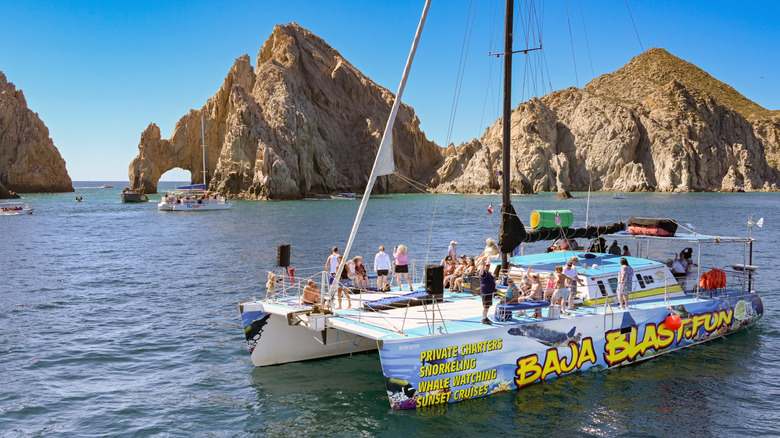
For many years, the main resort destinations in Mexico were filled with tourists from the United States. Places like Cancún, Puerto Vallarta, Los Cabos, and Puerto Escondido were dominated by American voices, from families enjoying warm-weather getaways over the holiday season to young partygoers letting loose on an affordable Spring Break vacation. But the latest tourism figures suggest that a shift in the traditional dynamic is happening, with visitors from further north becoming more and more prevalent.
According to data from the Los Cabos Tourism Observatory, Canadians are now the second-largest tourist market in Los Cabos, after Americans, and are easily the fastest-growing market in the region. In 2025, more than 215,000 Canadians visited Los Cabos, on the southern tip of the Baja California peninsula, an increase of 10% compared to 2024. While the raw numbers of Canadian tourists compared to Americans are small (nearly 2.2 million visitors from the U.S. arrived in 2025), the rate of growth is staggering, and compares extremely favorably to the growth in U.S. visitor numbers, which is essentially flat. And while American tourists might still outnumber their Canadian counterpoints, it appears that Canadians also comfortably outspend visitors from the U.S.
This is why Rodrigo Esponda, managing director of the Los Cabos Tourism Board, said "every Canadian is worth two Americans" at a tourism event in Toronto (via Open Jaw). As a result, the Mexican tourist industry is welcoming Canadian tourists with open arms.
Why are Canadians valued more highly than Americans in Mexico?
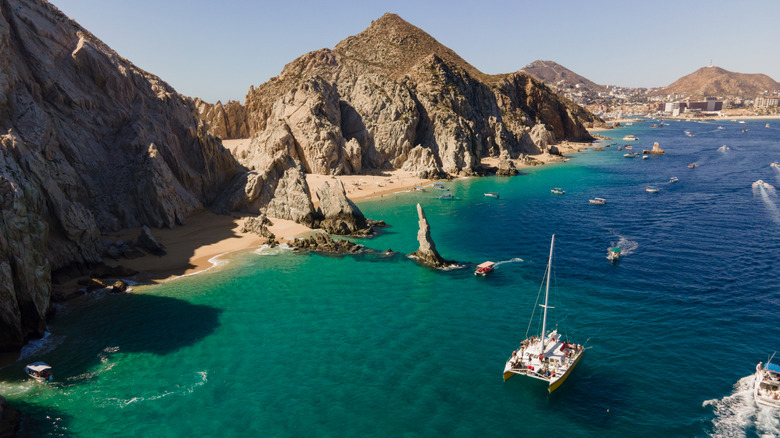
Canadians are hardly strangers to a budget-friendly beach vacation in Mexico. Snowbirds have been wintering in Mexico, away from the ice, snow, and freezing temperatures, for decades, and plenty of Canadians have vacation properties in spots like Baja California, the Yucatan Peninsula, and the Mexican Riviera. But the recent figures suggest a change in Canadian traveling and spending habits. "Canada has evolved into a core market for Los Cabos, not just a seasonal source of winter travel," Rodrigo Esponda told Travel Industry Today.
The main reason that Canadian travelers are considered more valuable than Americans at the moment is their spending power. Canadian tourists are currently spending far more on vacation in Mexico than their American equivalents, largely because they stay for longer. At the tourism event (via National Post), Esponda mentioned that Canadians tend to stay for an average of 11 nights, which is nearly double the average American stay of 5 to 6 nights. As a result, Canadian tourists spend more money in Los Cabos, an average of $4,600 per trip.
Some American tourists may worry that this trend is part of something larger: a rejection of visitors from the U.S. more generally. The recent protests in Mexico City, focusing on gentrification and U.S. expats, certainly gave the impression that there is a significant amount of anger and opposition toward Americans at the moment. But while Mexican tourist groups are obviously delighted with the upsurge in Canadian visitors, there is no suggestion that they want to discourage tourists from the United States.
What is driving this surge in Canadians vacationing in Los Cabos?
There seem to be a few main reasons Canadians are coming to Baja California Sur in larger numbers than ever before. For starters, it has never been easier to get to Mexico from Canada. Major Canadian air carriers have increased their flight capacity significantly, with routes now available from Toronto, Vancouver, Calgary, Montreal, and other hubs across the country. Air Canada alone plans to increase its seat capacity to Mexico by 18% in summer 2026. While the busiest period remains the winter, year-round travel from Canada to Mexico now seems to be far more popular than in previous years.
Canadians may be choosing Los Cabos in particular due to security concerns. While Mexico is a safe place to travel to, recent events in Puerto Vallarta have led to a drop-off in tourist numbers in Nayarit, Guerrero, and other destinations on the Mexican Pacific coast, many of which have been popular with Canadian visitors in the past. Baja California Sur, on the other hand, has a reputation for being peaceful, calm, and secure, with a dedicated tourist police force and a Level 2 security rating.
Finally, there is a feeling that Baja California Sur offers a different Mexican experience to the more traditional resort destinations, and tourists are being tempted to ditch Cancun for the culture, dolphins, and beautiful beaches of the Pacific Coast. With whale watching in Cabo San Lucas, world-class snorkeling and scuba diving in the Sea of Cortez, and the stunning landscapes of the Sierra de la Laguna mountains, it is an outdoor lover's dream, while towns like San Jose del Cabo and Todos Santos offer fascinating cultural experiences. There's a sense of integrity that appeals to travelers seeking authentic experiences, which may be a significant driver of Canadian tourism to the region.