

What Happens To Flight Passengers During Airplane Security Scares?
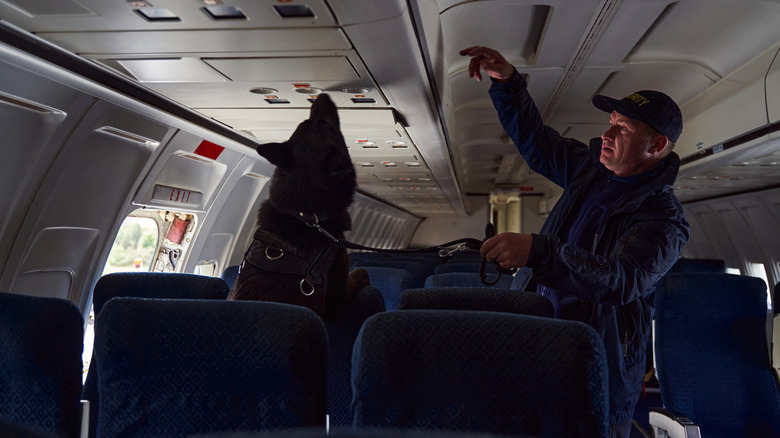
On Friday, March 6, 2026, Southwest flight 2094 departed from Nashville International Airport to Fort Lauderdale. Mid-flight, the plane diverted to Georgia after a security scare. Rumors began flying that there was a bomb threat. Law enforcement has since confirmed that there was no threat, but the incident has caused travelers to wonder what exactly happens to passengers during airplane security scares.
Airplane security threats are taken very seriously, especially after the tragic events that occurred on September 11, 2001. The Aviation Security Administration makes sure that every single passenger boarding a commercial airline in the United States goes through significant security screenings. They begin looking for potential threats before passengers even set foot in an airport. Prior to boarding, passengers pass through airport security body scanners to ensure they don't have any dangerous items. Still, incidents occasionally occur. With global tensions at an all-time high, it's important to be prepared should a security scare arise on your flight. What happens to passengers during airplane security scares will depend on the type of threat and the threat level.
In some instances, flight attendants and pilots may try to deescalate the situation or issue verbal and written warnings. They may decide to stop serving alcohol or even restrain certain passengers if necessary. If the security scare is serious, the plane may divert to the nearest safe landing location. During most security threats, law enforcement officers will take charge once the plane is safely on the ground.
Commercial aircraft security threats and what to expect if they occur
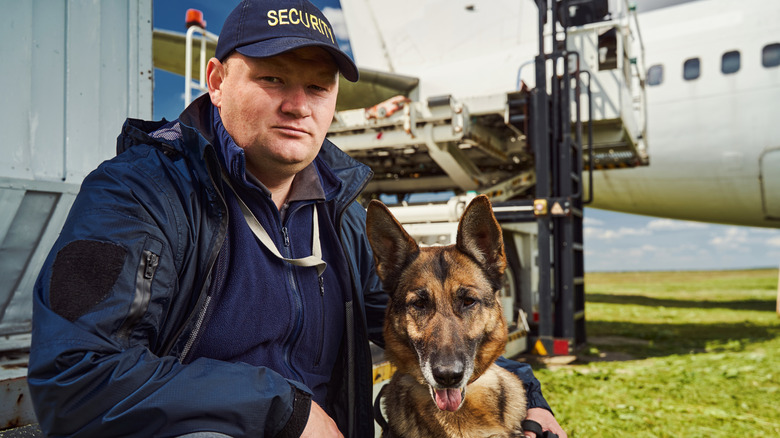
The Federal Aviation Administration (FAA) has identified four threat levels to help crew members take the appropriate course of action. A Level 1 threat involves a person on board exhibiting disruptive behavior. Disruptive behavior can be suspicious or threatening. It can look like an intoxicated passenger who argues and yells when they are told to take their seat, uses verbally abusive language, or makes threats. Flight attendants strongly advise against doing those things on a plane.
A Level 2 threat occurs when there is physically abusive behavior. "Pushing, kicking, hitting, grabbing, tripping, or inappropriate touching" are examples of Level 2 threats listed by the FAA. During Level 1 and Level 2 threats, crew members will attempt to diffuse the situation. Verbal and written warnings may be issued. It really depends on the seriousness of a situation and whether the perpetrator calms down and complies. In severe cases, the passenger might have to be restrained. The pilot in command may decide to continue the flight or divert. Law enforcement may get involved once the plane lands.
A Level 3 threat is when there is life-threatening behavior. "Weapon displayed/used, credible terrorist threats, credible bomb threats, or actual use of bombs, sabotage of aircraft systems, credible threats of hijacking, and deadly hand-to-hand techniques such as choking or eye gouging," are some examples per the FAA. A Level 4 threat is an attempted or actual breach of the flight deck. This is the highest and most serious security threat level. During Level 3 and Level 4 security threats, the plane will most likely divert to the nearest safe landing location. Law enforcement officers will meet the aircraft on arrival. Passengers may be asked to remain seated or given other instructions depending on what law enforcement officers require.
What to do if you're on board an airplane with a security threat
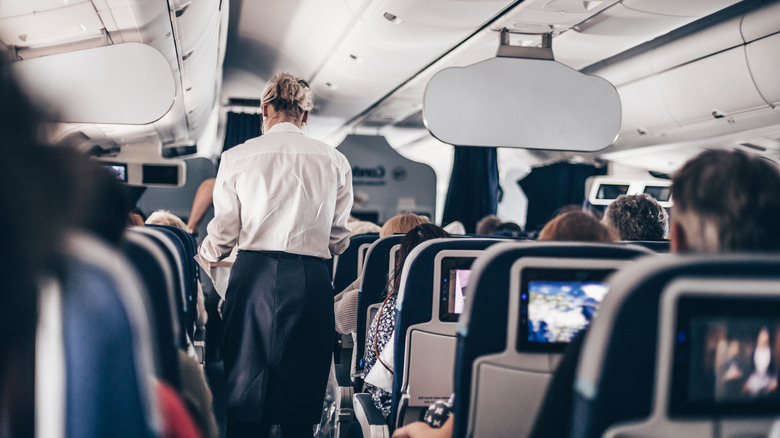
The most important thing to do if you are on board an aircraft during a security threat is to comply with instructions given by pilots, flight attendants, and law enforcement officers. It's their job to keep every single person on board the aircraft safe, but their success depends on passengers' willingness to comply. In the event of an emergency or security threat, you may hear instructions over the PA. Listen and do your best to remain calm. If you choose not to comply, you could put yourself and other passengers at risk.
After the security scare that occurred on a Southwest flight in early March, passengers took videos of the scary situation. In the videos posted on social media crew members shout "heads down, hands up" in the background as one passenger is removed by law enforcement officers. This occurred after some believed his call to prayer alarm on his phone might have been a bomb threat, according to news outlets. The videos provide a glimpse of what passengers may experience during a security scare.
If law enforcement officers are on board, their instructions should be taken very seriously. Sometimes, officers may require that all passengers exit the aircraft so that they can conduct a security search. Other times, they may ask everyone to remain seated while arrests are made. Following instructions and remaining calm is the best course of action.