

Why Doctors And Survivalists Warn Campers To Never Drink Lake Water
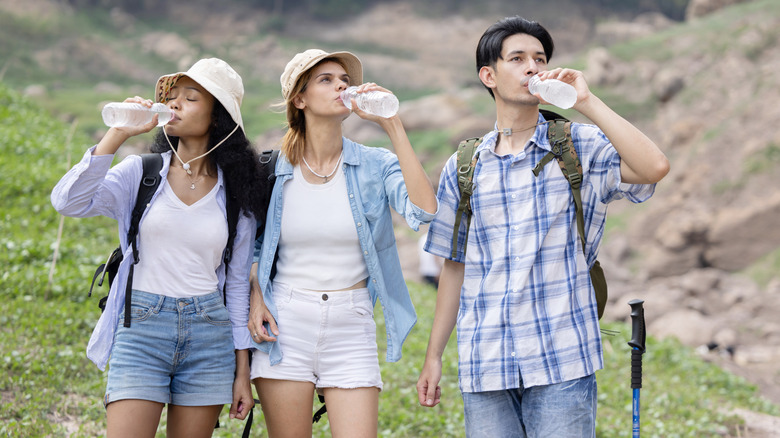
Imagine that you're out hiking on a warm spring afternoon when you stumble upon a pristine mountain lake. The water is crystal clear and sparkling in the sunshine, and just looking at the view makes you feel thirsty. You may think that the water looks clean and that it might be good enough to drink, but medical professionals strongly advise against drinking lake water unless you're in a life-or-death situation.
Whether you're planning a wild camping excursion or embarking on a challenging hike in a remote area, it's crucial that you have plenty of water to keep yourself hydrated. If you fail to pack enough water, you may be tempted to consume water from a natural body of water like a lake. Experts like doctors, park service employees, and survivalists warn that it isn't safe to do so.
Even if you're in a remote area far from potential pollutants, it could harm your health to consume water without proper filtration and treatment. Lake water is particularly risky because it is a breeding ground for bacteria, viruses, parasites, and other hazardous organisms.
The risks of consuming lake water
Regardless of how pristine a lake looks, drinking the water could be extremely harmful to your health. According to the National Park Service (NPS) website, "Never drink water from a natural source that you haven't purified, even if the water looks clean. Water in a stream, river or lake may look clean, but it can still be filled with bacteria, viruses, and parasites." Those invisible hazards could lead to dangerous waterborne diseases, and NPS experts specifically advise against drinking from stagnant water sources like lakes.
But it's not just non-moving water that poses a risk. As another NPS article explains, "Drinking untreated water from springs, streams, or lakes while hiking or camping in the parks could put you at risk for infection." Even remote lakes that are far away from sources of pollution can be contaminated by urine and feces from humans or animals. Cryptosporidium and Giardia are just two examples of waterborne diseases, with common symptoms including diarrhea, stomach cramps, dehydration, and vomiting. "I've gotten giardia, a nasty parasite that wreaks havoc on your bowels, after drinking from a pristine lake," Les Stroud, a well-known survival expert, wrote in an article published on BC Outdoors.
Blue-green algae, a type of dangerous cyanobacteria, is another risk that occurs in lakes across the U.S. According to the Cornell University College of Veterinary Medicine, exposure to blue-green algae bacteria "can be life-threatening to dogs, humans and other animals. There is no antidote for blue-green algae poisoning, and it can rapidly become fatal." Doctors at the Centers for Disease Control and Prevention (CDC) remind travelers even clear water that appears clean can be dangerous.
Safe drinking water is crucial for outdoor adventures, but lake water should always be avoided
Drinking water is one of those things you'll always wish you brought more of. It's a good idea to have a backup plan in case you run out or find yourself in a survivalist situation. Learning how to find and filter water is a skill every backcountry explorer should master.
According to the American Hiking Society, dehydration is one of the most dangerous risks people face when partaking in activities like hiking, and symptoms include headaches, disorientation, and nausea. On the extreme end, a few days of prolonged dehydration can cause organ failure and death. "Your ability to survive will likely depend on your ability to find and collect water," Les Stroud, also known as "Survivorman," wrote. If you need drinking water in an emergency, you should try to find a clean source of moving water like a stream or a spring. Lake water is not a good choice because it's stagnant.
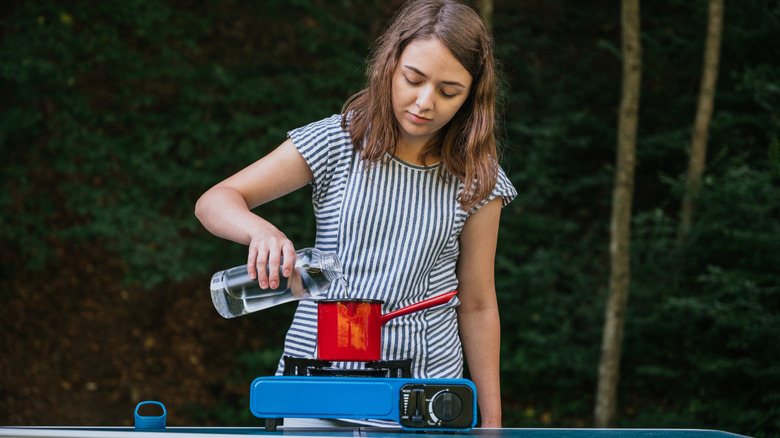
Once you've identified a safe source of moving water, you'll want to filter it. Hikers and backpackers swear by the Sawyer Squeeze Water Filtration System, but filtration alone does not make water safe to drink. A good water filter will remove dirt, debris, and some other contaminants from water. After filtration you will need to disinfect the water further by boiling it. Allow the water to come to a rolling boil for at least one to three minutes, and remember water boils more quickly at higher elevations. Disinfecting water via a UV light tool or special chemicals is also possible, but the National Park Service website stresses that those methods are less effective than boiling. Les Stroud suggests you filter and treat all water but adds that, "if your choice is to drink untreated water or die of dehydration, then drink."