

The 5 Best US National Parks For Beginner Hikers, According To Research
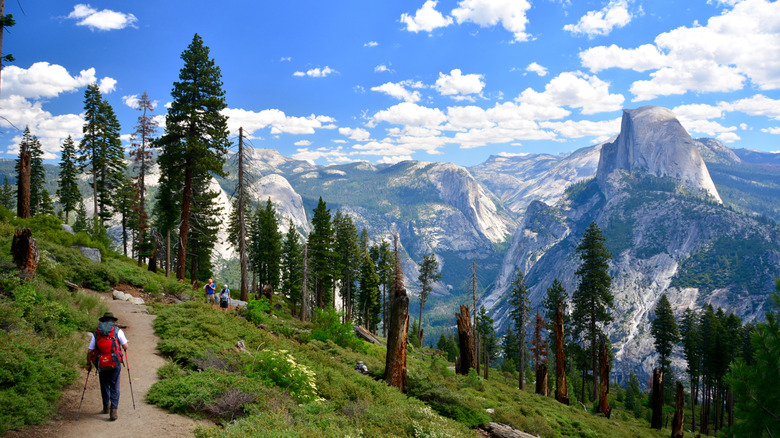
There are many scenic beginner hiking trails in America's national parks. However, not every park is ideal for amateur hikers. For example, the high elevations of Denali, Glacier Bay, and Mount Rainier can make physical activity difficult or even induce altitude sickness. Plus, even places with some excellent easy hikes (like Great Smoky Mountains National Park) can have routes risky enough to qualify among the country's most dangerous. With these facts in mind, how can people who are just starting out find the perfect park for them?
For some helpful insight, let's check in with the American Hiking Society (AHS). When providing tips for beginners, the AHS emphasizes opting for short treks with minimal elevation gain and choosing well-maintained and clearly marked trails. Using these standards, you can obviously rule out visiting Death Valley for steep, strenuous hikes along Telescope Peak Trail or around Golden Canyon and Red Cathedral. You'll also want to avoid heading to the Grand Canyon and trying to complete the full 19.4-mile Hermit Trail trip to the Colorado River (a task even the National Park Service advises against).
Instead, prioritize hikes that are low on stress and difficulty while delivering incredible views. Routes like these may not sound exciting, but they can help beginners build a safe and fun base of experience as they journey into the hiking world. Such a successful start can not only build your confidence and allow you to gradually develop your navigation skills but also show you why hiking is such a worthwhile hobby. To make adventuring as easy as possible for you, we scoured social media, hiking blogs, AllTrails, and National Park Service (NPS) resources to identify the five best U.S. national parks for beginner hikers. According to our research, Acadia, Yellowstone, Glacier, Arches, and Yosemite are the top national parks to hit.
Acadia National Park - Bar Harbor, Maine
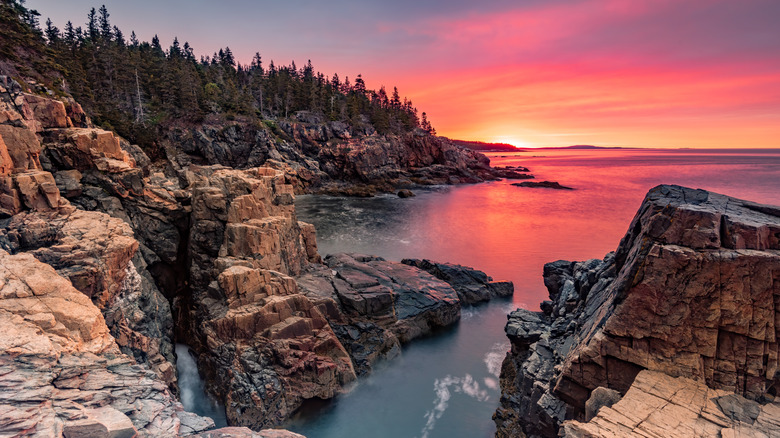
To start, we're heading to one of America's best small towns — Bar Harbor, Maine. Surrounded by water and part of Mount Desert Island, this community is home to the awe-inspiring Acadia National Park. Often called the crown jewel of the North Atlantic Coast, this destination spans 50,000 acres and hosts over 150 miles of trails. If sorting through all those possible routes sounds overwhelming, don't worry. Acadia's NPS hiking page breaks down all the options by location, environment, route type, and public transportation accessibility. By simplifying the planning phase, this well-organized free resource does some heavy lifting to establish the park's beginner-friendly hiking credentials. That said, Acadia is also often brought up in online hiking and travel community conversations about easy trails.
This reputation is backed up by the NPS and AllTrails, both of which share detailed profiles of park trails perfect for newbies. Some recommended beginner hikes here include Jordan Path, Cadillac Summit Loop, and Ship Harbor Trail. Jordan Pond Path is a 3.3-mile roundtrip experience that loops around a picturesque lake, features areas with wooden boardwalks, and has a total elevation gain of just around 60 feet. The Cadillac Summit trek is shorter — under half a mile long — with paved sections able to accommodate wheelchairs, 65 feet of total elevation gain, and incredible views of mountains, Frenchman Bay, and the Porcupine Islands. Often recommended by Reddit users, the figure-eight-shaped Ship Harbor Trail makes another fun and easy hike. The flat and ADA-compliant first loop is a great option for visitors with mobility aids or strollers, and the full trail is under 1.5 miles long with 72 feet of total elevation gain. Showcasing beautiful views of the shore, this pick will particularly appeal to birders curious to spot herons, ospreys, and other species along the way.
Yellowstone National Park- Idaho, Montana, and Wyoming
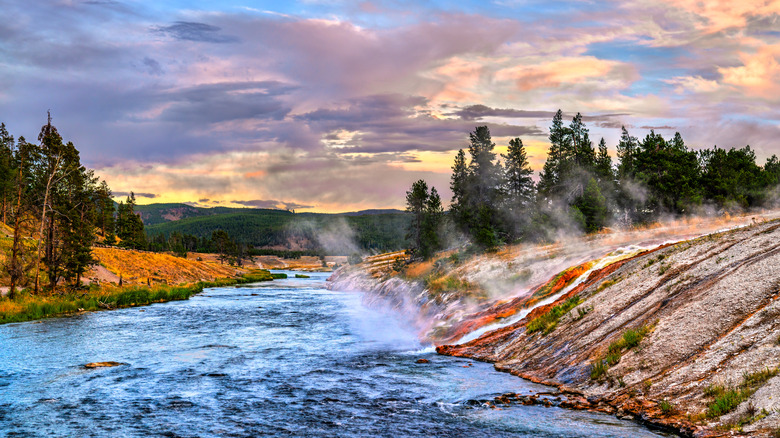
Next up is Yellowstone, home to one of the most accessible national park hikes in the U.S. Covering over 2.2 million acres across three different states (though Wyoming enjoys 96% of the total area), this destination has 92 trailheads, 1,114 miles of hiking trails, and 15 miles of boardwalk for leisurely strolling. Plus, no permits are needed for day hikes here. As the nation's very first national park (dating back to 1872), Yellowstone has had plenty of time for people to develop thorough hiking guides to the area. That means numerous resources, many of them free online, are available to guide visitors. You can even find Tripadvisor forum discussions dedicated to identifying the best routes for people with knee issues who are over the age of 60. This wealth of information helps Yellowstone qualify as a beginner-friendly park for hikers, but that's not all this icon has going for it.
When it comes to easy trails, the park has some extraordinary options. After all, as one Reddit user explains, many of Yellowstone's popular landmarks can be accessed via "short, flat walks." To start, stroll along the Mammoth Hot Springs Trails' boardwalks and marvel at how thermal waters have shaped unique mineral formations. For a roughly 1.2-mile trek with a mild climb, follow Trout Lake Trail to its eponymous waterway. During the trip, you can witness some stunning ridgeline and forest landscapes, too. While closed in the winter, the Fairy Falls Trail is another fun route for novice hikers. Plan for this 5-to-6-mile roundtrip journey to take a few hours, but know that the waterfall views will be worth it. Plus, while not fully accessible for the average mobility aid user, the path can be partially explored with specialized adaptive gear featuring all-terrain tires.
Glacier National Park - West Glacier, Montana
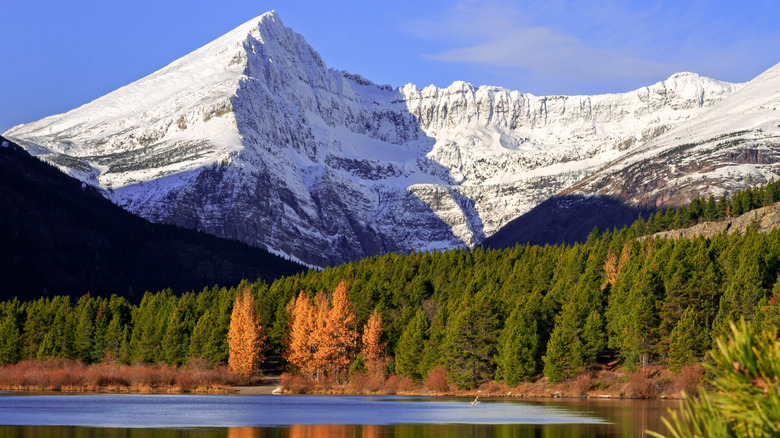
Near the U.S.-Canadian border, Montana's Glacier National Park showcases melting ice formations, sprawling meadows, and the scenic drive that is Going-to-the-Sun Road. Covering just over a million acres of land and 1,583 square miles, the destination also hosts 762 lakes, 175 mountains, and 158 trails. Those 158 trails combine for a total length of 745.9 miles, many of which are easy enough to welcome new hikers. Park ranger-led hikes as short as 1.5 miles long are also available for visitors seeking extra guidance. Glacier's official NPS hiking page also connects travelers to organized Flickr photo albums that provide "previews of some popular hikes." For novice hikers looking to calm their nerves, this resource can help by showing the kind of terrain they can expect to encounter.
Recommended as a manageable trek on Reddit and cited as family-friendly on Facebook, Rocky Point Trail is just under 2 miles long roundtrip with 229 feet of elevation gain. It treats visitors to gorgeous glimpses of Lake McDonald and access to the beach. For a longer hike with less elevation gain, try the Swiftcurrent Lake Trail. Two sections of the path (one starting at Many Glacier Hotel and the other at Many Glacier Picnic Area) are wheelchair accessible, and views along the way include waterfront landscapes, Grinnell Point, Mount Wilbur, and Wynn Mountain. Another highly recommended option is Trail of the Cedars. Weather permitting (avalanches are possible around winter), this boardwalk voyage is under a mile round-trip. It passes through an old-growth forest filled with, of course, cedar trees but also paper birches, Douglas firs, maples, and more. In addition to lush tree cover, the trail also has sections passing by breathtaking blue water streams flanked by moss-covered boulders.
Arches National Park - Moab, Utah
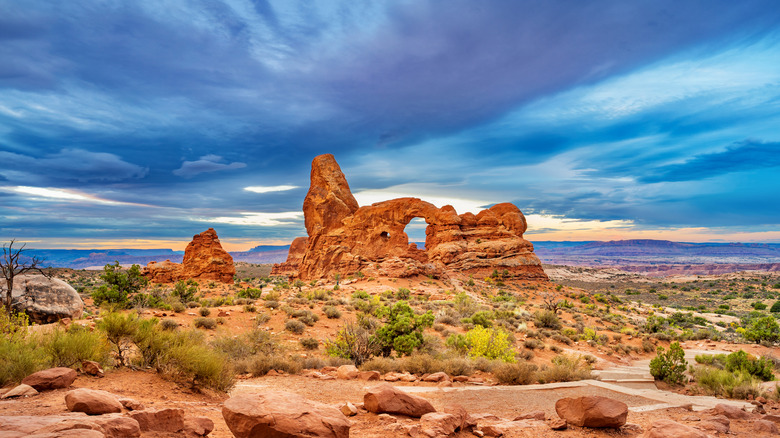
For more great entry-level hikes, let's head down to the Southwest — specifically, Utah. Home to the "Mighty 5," this state shows off some of its best beginner trails at Arches National Park. The destination is characterized by its dramatic red rocks and resides in the vibrant gateway town of Moab. Encompassing just 76,519 acres (119 square miles), Arches may be the smallest park on this list, but that fact is actually to a beginner's advantage. Smaller means easier to manage, freeing visitors from some of the FOMO involved in trying to see all the highlights of a national park. Here, you could actually spend all morning hiking to make the most of cooler weather and fewer crowds, then hit many of the park's major points of interest with just an afternoon of scenic driving.
So, where should you go for beginner-friendly hikes before that scenic driving? Kick off your adventure with Double Arch Trail. Coming to just over half a mile long round trip, this trek offers only mild elevation gain on the way to two huge arching rock formations. Upon arriving, ambitious explorers can even "scramble up the rock beneath the arches," though the NPS cautions visitors that "climbing up is often easier than climbing back down." A longer 1.8-mile hike is available on Landscape Arch Trail, where the namesake arch delicately connects over scrub within Devils Garden. If you're traveling in a group with more experienced hikers, those with more energy can extend their walk along this trail to include a trip to Double O Arch (for a total of 4 miles). Meanwhile, for an ultra-short and mostly paved hike, there's the Balanced Rock Trail. At under half a mile long, this loop won't take long to complete but still rewards you with views of the precarious and picturesque Balanced Rock formation.
Yosemite National Park - Yosemite, California
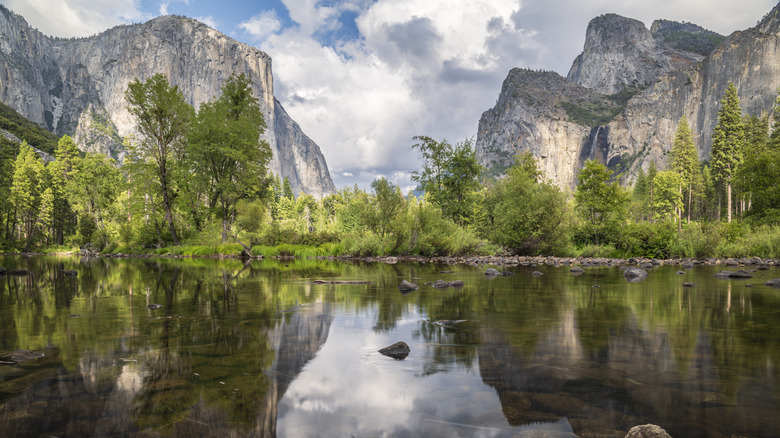
A heavy-hitter among national park destinations, Yosemite is the final addition to our list of beginner-friendly hiking spots. Located in California and west of major metro areas such as San Francisco and Sacramento, this iconic natural area sprawls across 759,620 acres (1,187 square miles). The landscapes within that acreage include a spectacular collection of natural wonders, too. Those wonders include everything from a 2,425-foot waterfall to roughly 1,500 flower species, wildlife like big horn sheep, and even glaciers set atop mountains. With so much beauty to show off, Yosemite National Park has no problem attracting sightseers. In 2024, it welcomed over 2.4 million visitors, including 48,968 overnight hikers. You don't have to stay overnight to enjoy the region's hiking paths, though. Out of the park's 800 miles of trails, there are several prime picks that allow beginner hikers to revel in Yosemite's majesty.
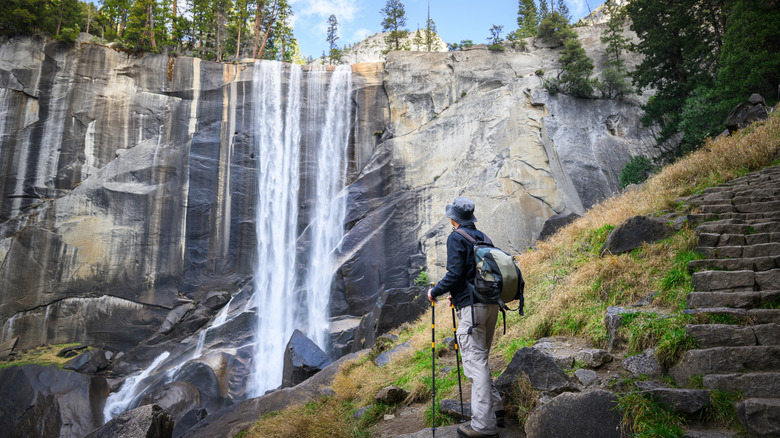
For "beautiful viewpoints of big waterfalls with minimal walking," outdoor adventure blog Hike With Ryan suggests Lower Yosemite Fall Trail. This mile-long loop has just 50 feet of elevation gain to navigate and is widely considered to be an easy hike. Plus, it'll introduce hikers to the park's incredible Upper and Lower Yosemite waterfalls. For extra ease, a park-run shuttle service runs to the Lower Yosemite Fall Trailhead, too. Wheelchair users, visitors with strollers, and others seeking accessible trails may also appreciate that the trail's eastern side can typically handle such gear (just look out for slick conditions in winter).
Another option for novice hikers is Cook's Meadow Loop — a flat, mile-long hike past iconic sights such as Half Dome and Yosemite Falls. For a longer hike, try the Mirror Lake Trail. Those seeking a challenge can tackle the entire 5-mile loop, but the shorter 2-mile paved section is perfectly pleasant for a milder stroll.
Methodology
In building this list of America's top national parks for novice hikers, we referenced a variety of sources. The research process began by identifying the most important factors for beginners to consider. Crucial advice on this front came from the AHS, a U.S. nonprofit that began in the late 1970s and upholds a mission to empower "all to enjoy, share, and preserve the hiking experience." By reviewing this organization's guidance, we were able to distinguish four key qualities to look for in beginner-friendly national park hiking trails: clear markings, well-maintained grounds, a short length, and minimal elevation gain.
With those characteristics allowing us to measure a trail's suitability, research continued by seeking out commentary on which national parks best suit amateur hikers. This stage involved perusing recommendations from outdoor travel blogs and commenters in relevant Reddit threads. Frequently mentioned park names across these sources were added to a short list. That short list was narrowed down by tallying which places were cited the most across all sources. AllTrails, a self-proclaimed "app for the outdoors," also helped us verify each site's credentials via its explore map. This tool allowed us to zero in on a particular park and sort its hiking trails by length, difficulty level, elevation gain, and user rating. Of course, these park and trail details were also checked against official NPS records.
Overall, this deep dive into the five best U.S. national parks for beginner hikers should serve as a helpful guide for stepping into the world of outdoor adventure. When you're ready for more challenging treks, check out Grand Teton National Park's top hiking trails, which range in difficulty from easy to strenuous. Or, discover more parks to explore with this list of North America's least-visited national parks worth a trip.