

How Rising Tensions In The Middle East Are Affecting Travelers Around The World

If you have an upcoming trip, you've probably been glued to the news lately. With conflict escalating in the Middle East, you're wondering if any of what you planned — the flights, hotels, and activities — is still happening.
Following the U.S. and Israel's joint military strikes against Iran and Iran's sweeping retaliatory attacks across the Persian Gulf, the global travel landscape has shifted dramatically. Since the conflict started on February 28, over 20,000 flights scheduled to arrive or depart from the Middle East have been canceled, leaving thousands of passengers stranded. The ripple effects of the tension are being felt far beyond the region, so even if you're not flying to or through the Middle East, be prepared that you may need to adjust your travel plans.
Bookings in the coming days and weeks could continue to see disruptions, especially as the conflict widens with retaliatory strikes and no sign of negotiation on the horizon. Here's what travelers need to be aware of leading up to any trips.
The conflict's affect on transportation
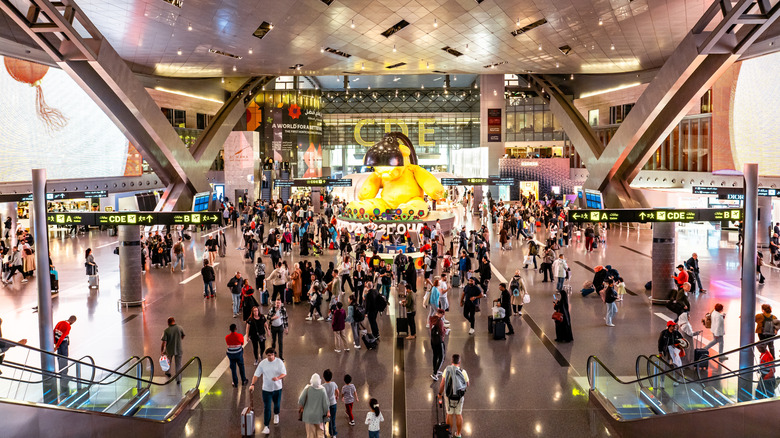
The Middle East's geographic position makes it a central connection point for a lot of international travelers. Qatar's Hamad International Airport, one of the most luxurious in the world, welcomes about 50 million passengers per year. In the United Arab Emirates, Zayed International Airport in Abu Dhabi sees about 30 million passengers annually, and Dubai International Airport handles a whopping 90 million. With these three major transit hubs in limbo, there's a knock-on effect for airlines and airports around the world.
Flights with carriers like Etihad, Emirates, and Qatar Airways have been canceled en masse, leaving passengers scrambling for last-minute alternatives with sky-high prices. As Henry Harteveldt, an airline industry analyst and president of Atmosphere Research Group, told Afar, "The suspension of airline service at Abu Dhabi, Doha, and Dubai will not only disrupt travel to and from those cities, but will make it difficult for people in North America to travel to and from the Indian subcontinent, Africa, and Asia/Pacific."
Cruise lines around the Persian Gulf have had to cancel all upcoming itineraries and evacuate passengers, though some remain onboard waiting for a safe solution to return home. Countries as far away as Sri Lanka and Thailand are bracing for fuel shortages as oil and gas shipments from the Middle East face delays and uncertainty. Long lines and expensive fuel are now among the scary reasons you may want to avoid renting a scooter in Southeast Asia.
What travelers need to know before traveling in 2026

If you have a trip coming up, you don't necessarily need to cancel everything yet, but it's wise to continue monitoring the situation. Revisit your travel insurance to understand what is covered — many standard policies exclude war and conflict. However, some companies offer a "cancel for any reason" policy, which often costs more up front but can be worth it for the peace of mind.
Governments around the world, including the U.S., U.K., Australia, and Canada, are working to repatriate citizens in the Middle East. Check the State Department's current travel advisories at travel.state.gov and sign up for the Smart Traveler Enrollment Program (STEP), a free service that can help you feel safer when traveling internationally. No matter where you're going, prepare for potential delays and heightened security at border crossings.
Several airlines are now offering temporary flexible cancellation and rescheduling policies as the situation unfolds. Check with your airline, hotel, or cruise line directly for up-to-date information about the status of your trip and what you can do if you want to postpone. Remember your safety is more important than ticking something off your bucket list, and there will always be another chance to travel.