

Flight Attendants Immediately Notice This Type Of Passenger During Boarding
If you're someone who feels a little weary of flying in an airplane, you're certainly not alone. Feeling nervous for your flight is nothing to be ashamed of, especially if you're new to flying. I spent the majority of my 20s working as a flight attendant, and sometimes I'm still struck by the strangeness of hurtling through the sky in a metal tube that's traveling hundreds of miles per hour. Aviation is often described as a man-made miracle, and it is pretty miraculous that we've figured out how to transport ourselves across the world in just a few hours. It's okay to feel a bit freaked out, but you should be aware that your flight attendants have probably noticed you if you're a nervous flier.
As you step from the jet bridge onto a commercial airplane, you'll see a flight attendant smiling at you. As you continue down the aisle, you may spot more flight attendants directing passengers towards their seats or helping people stow their bags in the overhead bins. Crew members may seem like they're just trying to keep the traffic moving so that the aircraft can depart on time, but they're also discreetly observing each and every passenger. The main role of a flight attendant is to ensure the safety of everyone on board. That means that there is a lot your flight attendants notice about you when you board a plane.
While passengers are busy boarding, crew members are watching quietly. If you're someone who is a nervous flier, flight attendants usually notice you right away.
Most nervous fliers do just fine, but sometimes flight anxiety escalates
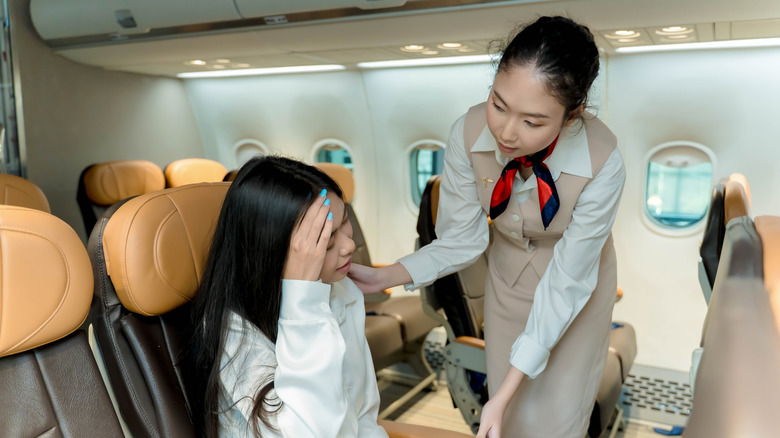
Flight attendants are particularly careful to watch for signs of intoxication, illness, or anxiety during the boarding process. Anything that could become a safety issue in the air is better addressed on the ground. Once the aircraft takes off, it's much more difficult to address problems. A panic attack can be a difficult and dangerous situation, so most airline crew members keep a keen eye out for nervous fliers.
Crew members are used to seeing nervous fliers daily. Flight anxiety is extremely common. Usually nervous fliers are able to calm down after a few words of encouragement, but sometimes flight anxiety can blossom into full-blown panic attacks. Panic attacks can be debilitating, and they occasionally require medical intervention. The symptoms of a panic attack can mimic more dangerous conditions like heart attacks and strokes.
During my career as a flight attendant, I once had a nervous flier whose anxiety quickly escalated during takeoff. She was seated in the bulkhead directly in front of my jump seat. It can be dangerous for flight attendants to exit their jump seats during takeoff, so I attempted to offer verbal reassurances. Unfortunately, once we were up in the air, her condition continued to worsen. Within just a few moments, she was hyperventilating and expressing fear that she was going to faint. I used the airplane's PA system to request a medical professional before administering oxygen. Within a few moments an incredible emergency room nurse came to the rescue. She was familiar with panic attacks and was able to calm the woman and administer care throughout the flight. If she hadn't been there, we may have had to make an unscheduled landing so that the woman could receive medical attention.
Signs of nervous fliers that flight attendants look for
It's important to remember that flying is one of the safest modes of transportation. You have a greater chance of being killed in a car crash than dying in a plane crash, but all of the safety statistics in the world might not calm the nerves of extremely anxious fliers. Flight attendants have an easy time spotting passengers who might be suffering during boarding.
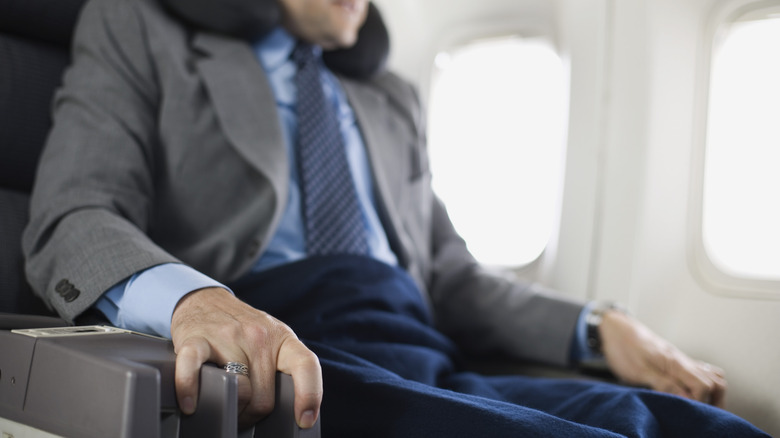
Nervous fliers may appear jittery, jumpy, or distracted as they walk down the aisle. They sometimes avoid direct eye contact with crew members or other passengers. When flight attendants greet them their voice may quiver or sound strained when they respond. They may appear restless. Excessive fidgeting is a sure sign of mild flight anxiety in my experience. Many of those same signs are things that flight attendants look out for when scanning for suspicious or intoxicated passengers, so you can bet that they're watching you closely for those behaviors. Extreme cases are even more obvious. Sweating, shaking, a pale face, and gripping the arm rest are all tell tale signs of flight anxiety. In the instance I referenced above, I had noticed the woman was a bit shaky during boarding, but she assured me she was just tired. As the aircraft began to barrel down the runway, her face broke out in a sweat, and as we lifted off I watched the color drain from her face. She was breathing rapidly, began to complain that she felt dizzy, and said that she thought she might faint.
Her symptoms could have been signs of a life threatening medical emergency, which is one of the many reasons flight attendants will always treat nervous fliers with extra care. If you're hoping to overcome your fear of flying, check out these tips from a psychologist.