

Why Doctors And Survivalists Warn Campers To Never Eat Snow
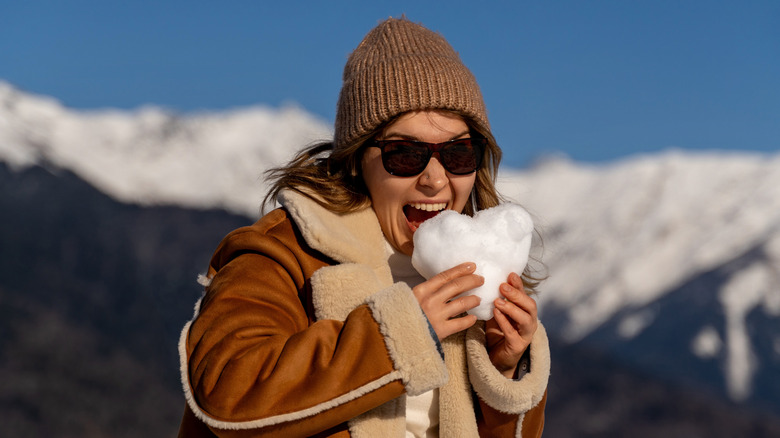
If you're hoping to save some weight in your pack by eating snow instead of packing in fresh water during your next wild camping excursion, you should carefully consider the risks. Many medical professionals and survivalist experts believe that eating snow is dangerous, particularly when it's intended to hydrate you.
If you're someone who enjoys camping in remote campsites, you're already aware that you have to pack everything you'll need for a safe and enjoyable experience. Experienced backpackers and people who enjoy camping in the wilderness attempt to purchase gear that is as lightweight as possible, knowing that they will ultimately have to carry every single pound on their backs. It's possible to find gear that is extremely lightweight, but winter camping gear is often heavier so that it can protect campers from the season's harsh conditions. Clean, fresh water is one of the heaviest things that campers have to pack, and during the winter months, some may be tempted to eat snow for hydration instead. According to experts, that's a bad idea. Always pack a cold weather hydration system and plenty of fresh water in your winter hiking backpack for your own safety.
Obviously, you should never consume snow that has any sort of color to it. If you're out in the wilderness, you could risk consuming something gross like animal urine or droppings if you aren't extremely careful, but even fresh snow poses a risk. While plenty of people eat small amounts of snow, it could contain toxins, pollutants, and bacteria that can make you sick — even at remote campsites. Relying on snow as your means of staying hydrated is also dangerous. Experts warn that eating snow may actually end up dehydrating you, which could result in a life-threatening situation.
Eating snow isn't always safe
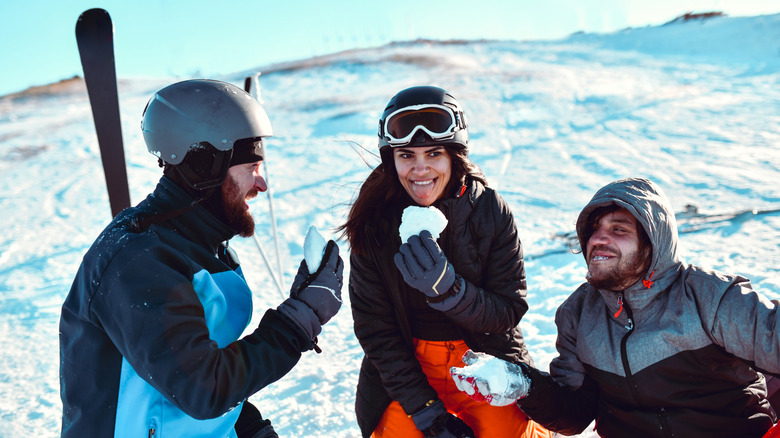
According to medical professionals, small amounts of clean snow might not cause too much harm, but it could be full of pollutants. By ingesting snow you may be unknowingly consuming dangerous chemicals. According to an article published by the Cleveland Clinic, it's safer to eat snow in more remote areas. Knowing that snow is safer outside of busy cities could encourage some campers to try eating it.
Even outside of urban areas, it is still possible for snow to contain contaminants. Snow can collect dust and pollution as it's forming. The first layer of snow can also absorb things like salt, oil, and fertilizers from the ground. The first layer of snow is the riskiest. "Any snow has the risk of containing pollution, dirt and microbes. Snow that has been on the ground for a couple of days may have chemicals from snow removal, dirt, microbes from the dirt and animal debris," Jennifer Johnson, Mayo Clinic Health System family medicine physician, told AccuWeather. "I have read case reports of kids getting unusual bacterial infections that were traced back to the environment and assumed to be connected to eating snow off the ground," Johnson added. People who eat snow may suffer from a stomach ache or diarrhea. Those who ingest large amounts of snow may have to worry about more serious illnesses.
If you're inclined to eat snow just for the fun of it, you're certainly not alone. Plenty of people eat fresh, pure white, and untouched snow and don't consider it that risky. While small amounts of clean snow probably won't kill you, eating snow as a means of hydration when you're in a survival situation can be very dangerous.
Eating snow can dehydrate you further
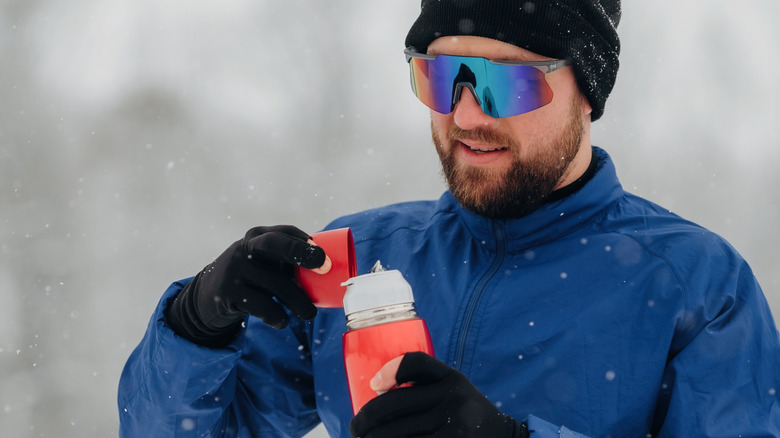
Drinking enough water is crucial during winter adventures, and proper hydration can help keep you from getting hypothermia. Just make sure it is liquid water and not snow. Experts warn against eating snow in a survivalist situation. Medical professionals argue that eating snow when you're thirsty ultimately dehydrates your body even more. "You utilize energy to melt that snow in a drinkable form. You're using more energy to melt that snow with the heat from your own body," Max Huddleston, a physician's assistant, told the Cleveland Clinic. "Any hydration you're getting from eating or drinking snow isn't as great as the energy you're using to melt it. So, over time, if you're consuming a high quantity of snow, in theory, it can dehydrate you."
The University of Utah's "Who Cares About Men's Health" podcast interviewed a wilderness medicine expert named Dr. Graham BZ about winter wilderness survival and addressed the question of whether or not eating snow can actually dehydrate you. Dr. BZ explained that snow is mostly made up of air, and that you have to eat much more than you'd think to get the equivalent of a glass of water. Since snow is much colder than the human body temperature, your body burns a lot of calories trying to melt the snow. "In the end, it does consume more total body volume water than you actually are receiving for it," Dr. BZ said.
Instead of attempting to eat snow, Dr. BZ suggests trying to melt it without using your body heat. If you have the ability to make a fire, you could place the water nearby until it melts from the heat. Dr. BZ also suggests placing the snow in direct sunlight to melt it.