
France's Underrated Castle Hides Ancient Medieval Passages Underground
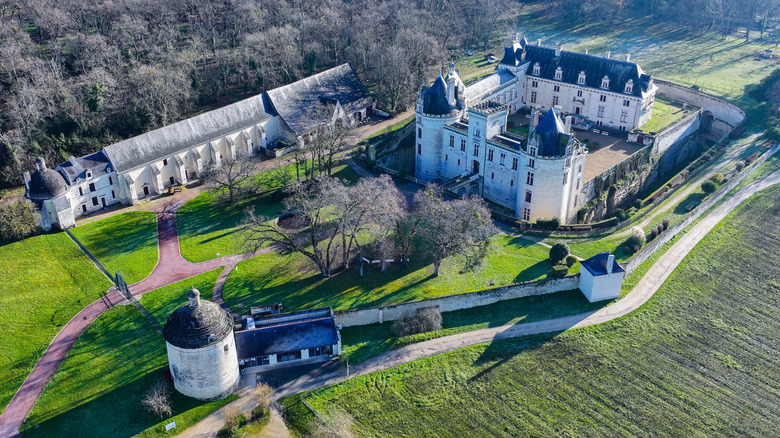
There are more than 40,000 castles, or châteaux, in France. Château de Versailles, Château de Chenonceau, and Château de Chambord are the most famous in the country. Each one receives more than a million visitors each year. But most châteaux receive a small fraction of that. One of those hidden gems is Château de Brézé. More people might visit if they knew it had a fortress hidden underground.
Château de Brézé is one of the oldest châteaux in the Loire Valley. France's world-renowned wine region is also a gold mine for castle adventures. The structure was built between the 11th and 19th centuries. The original medieval fortress was rebuilt as first a Renaissance, and then Neo-Gothic château. A moat was added in the 15th century, a king visited in the 16th century, and German forces occupied it during World War II. It's been open to the public for almost 30 years.
This fascinating château, surrounded by vineyards, is in Bellevigne-les-Châteaux, a small town outside of Saumur in the Pays de la Loire region of Western France. Paris-Charles de Gaulle Airport (CDG) is the closest major international airport. Here are frequent traveler's best tips to breeze through Europe's largest, most stressful airport. You can then drive about four hours to Bellevigne-les-Châteaux or take the TGV, France's high-speed train, to Saumur. The château is about 10 miles from the train station.
Tour Château de Brézé
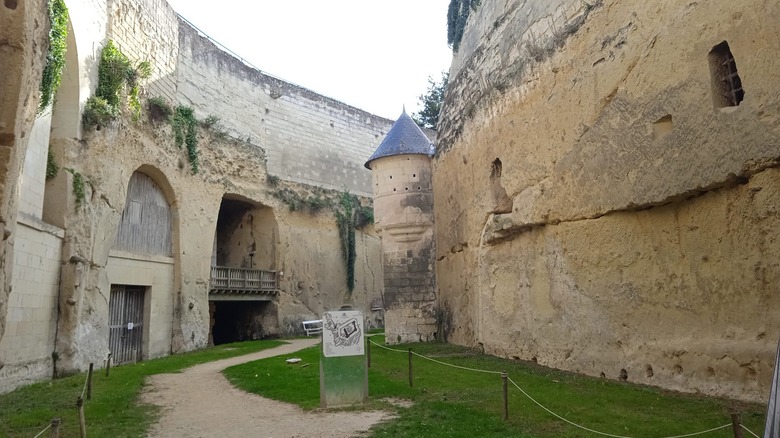
As you approach Château de Brézé, it may not seem that different from other châteaux in the area. The Loire Valley, a UNESCO World Heritage Site, is full of them, after all. This one is U-shaped with two towers at the end of each wing and columns lining the elaborate facade. As you get closer, you'll see a drawbridge and a moat surrounding the château. It's dry now — and always has been — because the château sits on top of porous rocks. It's the deepest dry moat in Europe, though.
Inside the château, you can tour the Bishop's Room with its Trompe-l'oeil woodwork, the Richelieu Room with original 16th-century furniture, and the study with a sculpted ceiling. There's also a gallery, completed in modern times, that includes portraits of the families that owned the château. Henri-Evrard de Dreux Brézé, the Grand Master of Ceremonies at Louis XVI's first National Assembly, is among them.
A fortress lies beneath the château. About 30 feet underground, there's a nearly one-mile maze of tunnels and rooms that was hand-carved out of rocks. These vast fortifications include a defense system, stables, kitchens, a bakery, an ice house, a grape-pressing room, and even a 17th-century silkworm nursery, used to create clothing and tapestries for France's nobility. It could basically become a subterranean village if the château had been attacked.
Explore the grounds of the château
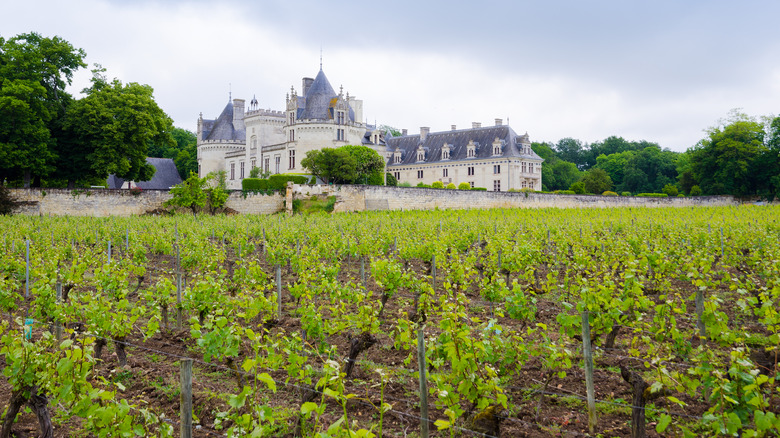
Since the château is surrounded by a nearly 25-acre vineyard, you should taste their estate-made wines during your visit. Château de Brézé is the Saumur-Champigny region, which is known for its cabernet francs. The château's owners, the De Colbert family, produce cabernet francs, as well as white chenin blancs, rosés, and sparkling crémants using only organic methods. Bees and birds live among the vines.
Château de Brézé is also home to a small farm. You can visit its friendly residents, including a billy goat, a dwarf goat, two Vietnamese pigs, and three Thônes and Marthod sheep. Tickets for a self-guided tour of Château de Brézé, including the castle and underground passages, are about $16 per adult. They can be purchased online in advance.
Before leaving to see other must-see castles to visit on your next trip to France, you may want to stop for lunch or more wine in Bellevigne-les-Châteaux. Le Breton Grognon is within walking distance of the château. The casual spot serves pizza for lunch and dinner. Just a short drive away, another relaxed place is Les Belles Caves. The all-day restaurant makes hearty, homemade dishes. You can learn more about the area's cabernet franc grape at Domaine de la Giraudière. It's the only one produced at this family-run winery. Uniqueness is the key in this part of the Loire Valley.