

Shady Things Hotels Do That Are Actually Illegal

Staying at a hotel should be a relaxing experience. A break from the hustle and bustle of daily life, where things that you usually have to do for yourself are taken care of, and you can enjoy some much-needed R&R. Sadly, while most hotels are great and deliver a fantastic guest experience, some can be less pleasant. And nothing spoils a vacation faster than an issue with the place you sleep.
Obviously, not every annoying thing that happens at a hotel is illegal. You can't report the noisy kids at the pool to the police or press charges because your hotel room reeks of smoke! But there are several things that shady hotels often do that are against the law in the U.S. From violations of safety or privacy and sneaky costs to refusing to give you a room, we've picked out five things that some hotels try to get away with that are actually illegal.
Stepping into a hotel is actually the beginning of a contract between guest and innkeeper, which comes with a number of responsibilities and requirements. The laws and liability surrounding hotels are quite complex, and most guests won't have a detailed understanding of exactly what they entail, which allows some shady businesses to take advantage. Knowing your rights as a hotel guest gives you more power to challenge dodgy hotels and resolve tricky situations. It is important to note that this list doesn't constitute legal advice, and regulations do differ from state to state, so it is important to do your own research as well before making a stand.
Hidden fees

These days, many hotels ask guests to pay for their stay upfront, but there are still plenty of places where you'll pay for your entire trip at check-out, with additional costs like restaurant bills and activities included. This can feel delightfully old-fashioned and means that you can enjoy hotel amenities without having to pay every time, but it can also be something of a shock when the final bill doesn't match up to what you were expecting to pay.
Some unscrupulous hotels use the final bill as a chance to add additional, hidden fees that weren't made clear when you made your booking. However, legislation in 2025 has made adding resort fees — additional flat-rate fees for amenities — illegal, and the Federal Trade Commission (FTC) also ruled that hotels must specify all mandatory fees upfront. And while rates do vary depending on the season, hotels cannot just charge what they want, and most states require that maximum charges be clearly advertised at the front desk. This means that, unless specifically agreed by you, a hotel cannot charge you more than the total amount agreed at the time of the reservation.
Violations of privacy

Your hotel should feel like a home away from home — somewhere you can kick back and feel comfortable and safe. However, although we are able to construct a feeling of complete security and privacy, in reality, a surprising number of people are technically able to access your room, from cleaners and janitors to hotel management.
However, although there are lots of people who are able to enter your room without permission, this doesn't mean they are allowed to. As long as you are using a hotel room in a normal, respectable way, you have the right to expect the same privacy as you would in your own home (protected by the Fourth Amendment of the United States Constitution). Hotel staff can enter to carry out cleaning and emergency maintenance, but nothing else, and they are required to give you a notification before entering.
Hotel management is able to enter your room without permission if you are doing anything illegal or significantly disturbing other hotel guests, which might be a reason for the hotel to kick you out. Interestingly, this exception doesn't apply to law enforcement, who have to go through the standard processes, normally by getting a warrant. The management cannot permit the police to enter or search your room without your consent.
Refusing to give you a room

When you make a reservation at a hotel, you enter into a contract. The hotel has a responsibility to provide a room under certain conditions, so it is important to know what to do if your hotel is overbooked. There are two main types of reservations: guaranteed and confirmed. A guaranteed reservation is one you have paid for in advance. In this case, the hotel is required to hold your room for you regardless of when you arrive and cannot refuse to give you a room. A confirmed reservation is one that isn't paid for, but that is agreed to in advance via a booking. The hotel still has a responsibility to provide you with a room, but with limitations, usually based on arrival time. If you arrive after a certain time, the hotel may be able to refuse you a room.
If you've paid for your room and the hotel cannot provide one for you, they have to find you alternative accommodation in another hotel, and provide transportation to get you and your belongings there. This requirement applies even if the other hotel is more expensive than your original reservation.
No safe place for valuables
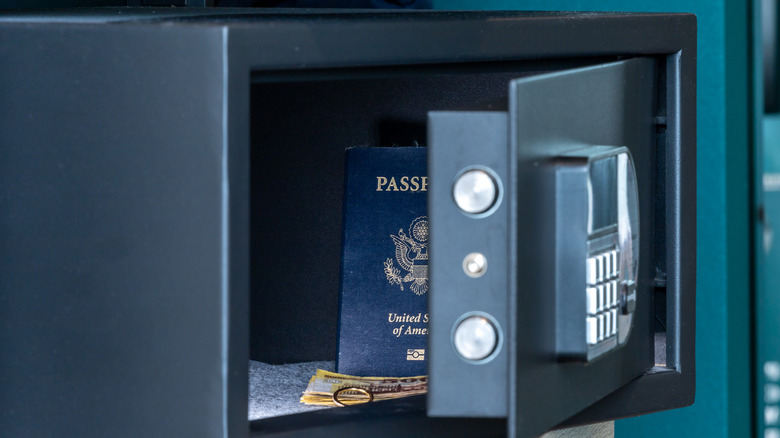
Part of feeling comfortable in a hotel room is knowing your belongings are safe, even when you are out of the room. We know that other people will enter our room when we aren't there, and there's an implicit level of trust that comes with staying in a hotel. But theft from hotel rooms does happen, and hotels are only liable up to a certain amount, so many people feel safer if they can leave their most valuable and treasured possessions, like jewelry, electronics, and passports, in a secure place.
In some states, hotels are actually required by law to provide a safe and secure place to leave valuable items, such as a safe in the room. Hotels in almost every state have a duty of care that covers guests' personal belongings and should therefore provide somewhere secure to leave possessions, either in the room or behind the front desk.
Refusing to allow service animals

Pets in hotels can be a controversial topic, and while some hotels are pet-friendly, many won't let you keep your furry friend with you during your stay. However, pets (and in some cases, emotional support animals) are a different prospect than working service animals, like seeing-eye dogs or dogs trained to respond to seizures or PTSD. Some hotels may try to treat working dogs as normal pets and refuse to let them stay in the hotel. Or perhaps ban them from common areas like the hotel restaurant.
However, the Americans with Disabilities Act (ADA) requires hotels to allow guests to bring service animals everywhere that guests are allowed to go in a hotel and may not charge extra fees. As a result, guests with service animals should be allowed to be with them at all times. Additionally, hotels may not add extra fees for cleaning up hair for service animals, although guests will be responsible for any damage caused by them.
Methodology

To compile this list of the rights and regulations of hotel guests and the illegal or inappropriate actions carried out by certain hotels, we explored legal advice websites and blogs, including FindLaw and LegalMatch, as well as hospitality organizations like AutoHost and Foster Garvey. We also carried out research with specific law firms specializing in contractual and commercial law, corporate governance, and civil litigation, as well as investigating state legislation and rulings by executive bodies such as the Federal Trade Commission (FTC).
It is important to note that this article covers hotels in the United States and may not be accurate with regard to the rights and regulations of guests or the responsibilities of hoteliers in other countries. Legislation on consumer rights is largely covered by state law and therefore can vary widely depending on the jurisdiction. Guests are advised to seek specific legal advice in the event of a dispute.