

The Ultimate Travel Guide To Going Analog On Your Vacation

It often feels as though our lives are becoming increasingly reliant on technology, and so have our vacations. If you're feeling called to unplug, it might be time to go analog on your next trip.
Many of us spend the majority of our workday glued to a computer screen, and when it's time to decompress at the end of the day, we find ourselves spending hours scrolling through social media or turning on the TV to stream the latest shows. Technology has tons of benefits: it's made information accessible to people all over the world. It has also changed how we travel, and now it's easier than ever to research destinations all over the world or navigate unfamiliar places. We can easily browse all possible flight options in order to find the best deal or purchase an all-inclusive getaway with the click of a button. All that said, if we don't find time to disconnect, it can leave many of us feeling a little disconnected from the world around us.
Some travelers are looking for opportunities to "go analog" when they travel. Taking some time to be present without the constant buzz of cellphone notifications can be a wonderful experience. When people talk about "going analog" they're simply referring to making an intentional shift away from the digital world. Instead of spending hours scrolling through reels, checking emails, and streaming shows, travelers are choosing to spend their vacation time having long talks under the stars, playing games, or getting lost on unfamiliar streets. If you've been feeling overwhelmed, then an analog vacation might be just what you need — but disconnecting from modern technology can be challenging. We've created the ultimate travel guide to going analog so that you can unplug with ease.
Kiss modern conveniences goodbye
If you're serious about going analog on your next vacation, you're going to have to do a little preparation before your departure. Remember that you don't have to be an analog purist. Having your smartphone close by can offer peace of mind and can help you feel safer when traveling, so there's no need to leave it at home as long as you have decent self-control. Instead, consider placing it on airplane mode for the duration of your trip or simply leave it charged but turned off in your bag. You can even opt to check your phone once or twice a day — just make sure you set a limit that feels appropriate so that you don't end up getting sucked into the digital world.
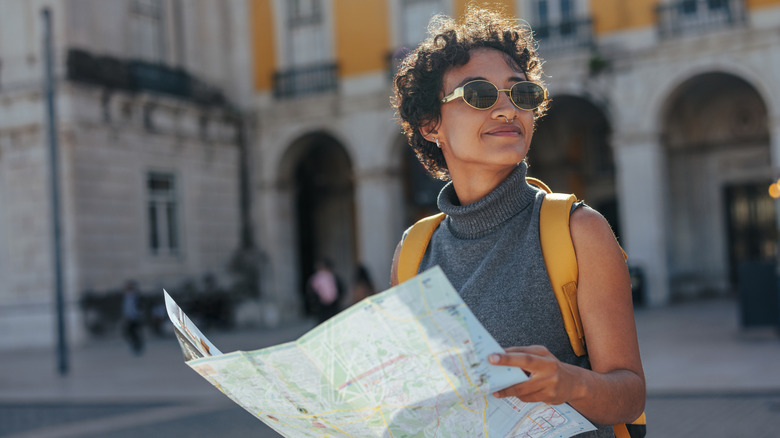
Since you won't be relying on your smartphone's GPS to get around, you'll need printed directions or a physical map. If you're used to opening your maps app to go just about everywhere, it can feel a bit overwhelming at first. Remember that people navigated the globe for thousands of years, and smartphones have only existed for a few decades. A solid map and a decent sense of direction are all you need to take an epic road trip or explore an unfamiliar city. You might end up taking a wrong turn here and there, but sometimes getting lost allows you to stumble on hidden gems that have yet to be discovered by hordes of social media influencers. Go with the flow and enjoy the journey.
Consider printing out an itinerary for your trip. Make note of the dates and times of any bookings for tours or experiences. If you're moving around a lot, you'll want to have your plane, train, and shuttle tickets printed out ahead of time.
Connect with locals and your fellow travelers

Have you ever noticed how older travelers have a much easier time striking up conversation? As a millennial, I'll admit that my first instinct when I sit down next to a stranger on an airplane is to put on my headphones and pretend to be asleep. Perhaps I'm just an introvert, but perhaps it's because our digital lives discourage face to face connection. Next time a fellow traveler nods at you or smiles in greeting, try introducing yourself. Ask them where they're from. Of course, it's important that you try to have situational awareness because some travelers might genuinely be exhausted and just want to sleep, but be open to a friendly conversation. It passes the time, and you might get to hear some fascinating stories.
People are often more open to new connections while traveling. Some hostels have common spaces where meeting people is easy, and others even have scheduled events and tours for their guests, which makes it easy to meet people from all over the world. Guided tours are another great way to connect with locals and other travelers.
If you have never traveled analog, you might be wondering how to choose where to go or what to see. Choosing a restaurant or a hotel without reading a hundred reviews might seem risky. Instead of pulling out your phone the moment indecision strikes, try asking a local for recommendations. They'll likely be excited to share their favorite spots. You might end up finding your new favorite spot and making a new friend in the process. Bartenders are used to chatty customers, so they can be great people to talk to if they're not busy. Some of my dearest friends are people that I've met while traveling. Don't be afraid to say hello to a stranger.
Bring some analog entertainment with you

Plan ahead for downtime and have some ways to entertain yourself ready. Scrolling through our phones, watching reels, reading the news, or streaming a show can make time fly by. That's great if you're in the middle of a long travel delay, but terrible if you're trying to be present and experience the world around you. Even if you're on the most exciting adventure of your life, it's a good idea to have some entertainment to keep yourself occupied when there's downtime. Perhaps a rainy day ruins your plans to sightsee, or maybe you end up with a stomachache and decide to opt out of the culinary tour with your group. In either scenario you'll be glad you brought some entertainment so you have an option other than your phone or the hotel TV.
Pack a good book, or several. A Kindle is an awesome space saver in your luggage, but in the spirit of an analog vacation, consider a paperback instead. You won't have to worry about the battery dying right when you get to the good part. If you run out of reading material, visiting a bookstore in your destination can be a fun activity. Grab a cup of coffee and browse the stacks. I always search for books about the history or folklore of the place I'm traveling. Visiting a historic castle can have an entirely different level of excitement if you've just read about an epic battle that took place there or the resident ghost who haunts the halls.
Games can keep your family busy on a long road trip. A deck of cards is compact and can easily be thrown in your purse or backpack for long flights or train trips. Puzzles and crosswords are a wonderful quiet activity that can help you decompress. Personally, I love to pack a deck of Tarot or oracle cards so that my travel companions can take turns pulling cards for one another and discussing their meanings. I've made quite a few new friends at hostels simply by breaking out some Tarot cards.
Document your trip the old fashioned way

Groups of tourists snapping selfies with their cellphones at famous landmarks have become an all-too-familiar sight. There's nothing wrong with taking photographs to help you remember an incredible vacation, but when you spend too much time attempting to capture the perfect shot on your cell phone, it can keep you from enjoying the beauty with your own two eyes. Look at your own camera roll, and you'll probably discover dozens of duplicate shots from previous vacations. Some travelers who are attempting to go analog allow themselves to whip out their phone for the sake of photos, but why not opt to bring a film camera with you on your trip instead. Taking a film camera on vacation can make you a more thoughtful traveler because you'll be forced to stay in the moment. You don't need to spend a ton of money to take great film photos. A disposable camera will get the job done, and when your trip is over, you can develop the pictures and frame them. Every time you walk by them you'll be reminded of your trip.
Instead of posting about your trip online, consider keeping a travel journal. Spend a few minutes each day writing down your experiences. Include what kinds of foods you ate, the sounds around you, people you met, and any sights that stood out. Writing things down can help you remember them more clearly, and when you re-read your journal years later, you may feel as though you've been transported right back to that place and time.
If you're artistically inclined, a sketchbook or a watercolor set can be a wonderful way to capture particularly beautiful scenery. Find a comfortable place, slow down, and spend some time taking in every little detail as you sketch or paint.
Choose analog destinations

If you really want to completely unplug on your next vacation, then you might want to consider visiting an analog destination. Since more travelers are searching for places to disconnect from the digital world, the tourism industry is responding. You'll have plenty of low-tech options to choose from.
A great analog vacation doesn't have to be centered around nature, but the best ones often are. Nature provides endless entertainment, and it's easier to unplug when you aren't navigating busy cities or trying to check train schedules and flight times. Ulko-Tammio is an uninhabited island off the coast of Finland where visitors are encouraged to leave their phones behind. The phone-free vacation spot is the perfect place to fully experience the region's natural beauty without distractions. You can rent charming "digital detox" cabins in the Irish countryside for a cozy unplugged vacation or wild camp in a national park.
All around the globe adventurous travelers can find top-rated vacation destinations with no cell service. From luxurious phone-free spas in Europe to wilderness escapes in Alaska, there's something for every type of traveler. Without cell reception, the temptation to spend your time scrolling is eliminated, and you're free to enjoy traveling the old-fashioned way — analog style.