

The Ultimate Guide To Whale Watching In San Francisco
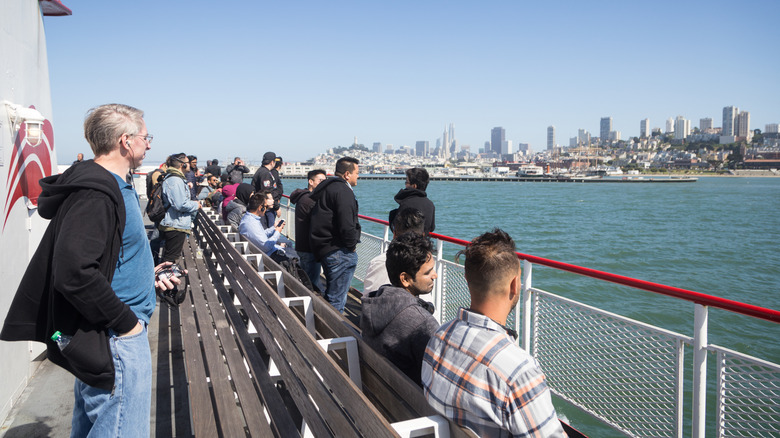
If you've been dreaming of going whale watching, you should definitely consider planning a trip to San Francisco, California. In addition to being one of the best whale-watching destinations in the United States, San Fran is one of the nation's most exciting cities. It is home to fabulous Michelin-starred restaurants, the oldest Japantown in America, and historic architecture. Whether you're a foodie, an art lover, or a history buff, you're certain to be pleased with a trip to San Francisco.
Most big city destinations aren't exactly top choices for nature and wildlife enthusiasts, but San Francisco is an exception. Since it's located on the breathtaking Pacific coastline, marine life is abundant. Whale watching is a popular pastime here among locals and tourists alike. On a trip to San Francisco, you'll have the opportunity to view the majestic giants of the sea up close, and you won't have to stray far from the city limits to spot them.
We've researched dozens of tours and read reviews from real travelers to bring you the ultimate guide to whale watching in San Francisco. Pack your bags and get ready for an unforgettable experience searching for some of the world's most fascinating creatures.
The whales of San Francisco and when to see them
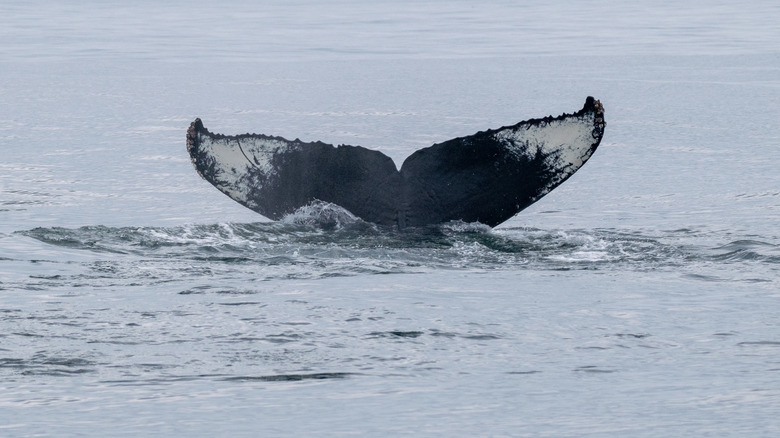
Whales are marine mammals that can be found in every ocean on the planet and they play an important role in the health of marine ecosystems worldwide. In total there are 90 known species of whales. Five of those species can be found in the ocean off the coast of San Francisco, California. The types of whales that you're able to view on a trip to San Francisco depend on the time of year in which you'll be visiting. Whales are migratory creatures, which means that they travel long distances on a regular basis (usually seasonally) in order to survive and thrive.
Humpback whales can be spotted around San Francisco between the months of May and November. They're an endangered species that weigh up to 40 tons and can grow to around 60 feet long. In the wild, they can live to be 90 years old. Gray whales are also endangered and pass through San Francisco around December through May. They weigh around 90,000 pounds and can be up to 42 feet long.
Sperm whales are also spending time in the Bay Area between December and May. They're some of the biggest species of toothed whales and weigh around 15 tons. A fully grown male sperm whale can be up to about 52 feet long. Orca whales are the black and white species of whale that are sometimes called "killer whales." They visit the sea near San Francisco from December through May. Most adult Orcas weigh about 11 tons and measure up to 32 feet. Blue whales are the largest animals on Earth, and spotting one is an unforgettable experience. They weigh around 165 tons and can measure up to 110 feet long. Blue whales pass through the Bay Area between July and October.
The best way to spot whales
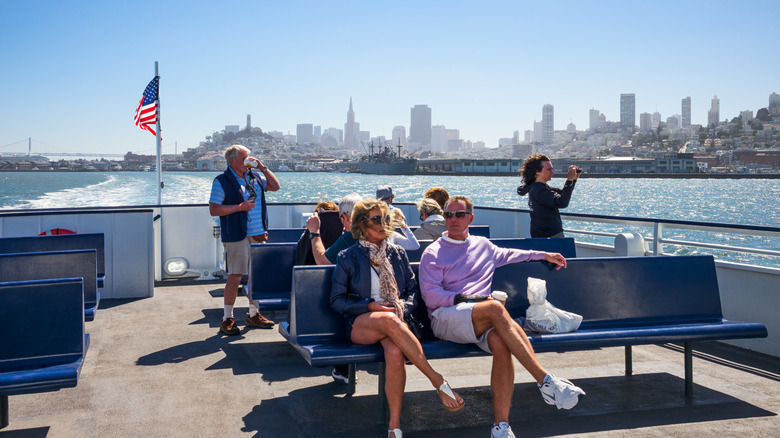
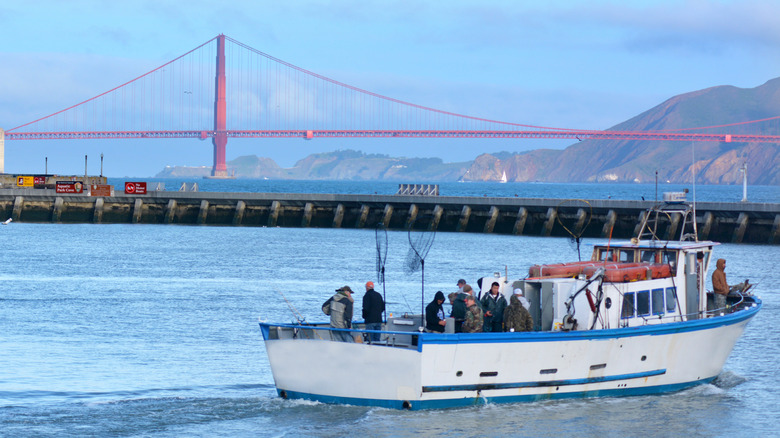
The easiest way to ensure you spot some whales on your trip to San Francisco is to book an organized whale-watching tour. Expert local guides that work for these companies know exactly where the whales like to hang out, so you'll almost certainly see at least one or two during your excursion. As an added bonus, you'll get to enjoy a day out on the water and beautiful views of the California coastline and the San Francisco skyline.
There are several reputable companies to choose from, like the highly-rated San Francisco Whale Watching Tours. The Golden Gate Whale Watch Tour cruises around the San Francisco Bay and lasts about two hours. The longer tour is a four-hour experience that explores the bay and the Pacific Ocean beyond. Prices range from around $125 to $155 per person. The longer tour runs from November through February, and the shorter tour is available year-round. The tour company has a 4.6-star Google rating based on over 1,000 customer reviews.
For a full-day experience, book a tour with the Oceanic Society. The non-profit offers a 7.5-hour experience that takes you from San Francisco Bay to the Farallon Islands. During the 2025 season, over 1,200 humpback whales were spotted on the tours. The 60-foot vessel fits 33 passengers, and prices start at around $300 per person. If you don't have a ton of time, the Angel Island/Tiburon Ferry offers a short wildlife tour that lasts about an hour and a half. The tour is only offered on the first Sunday of each month from June through October and costs about $55 per person. You'll also get to see views of the Golden Gate Bridge and Alcatraz.
Where to go whale watching on your own
Some travelers struggle with seasickness, which makes a boat tour unappealing. If that sounds like you, don't worry because you might still be able to spot whales from the comfort of dry land. There are a few spots around San Francisco where whale sightings are common, and they're free to visit. If you're planning a budget-friendly visit to San Francisco, whale watching is a great option.
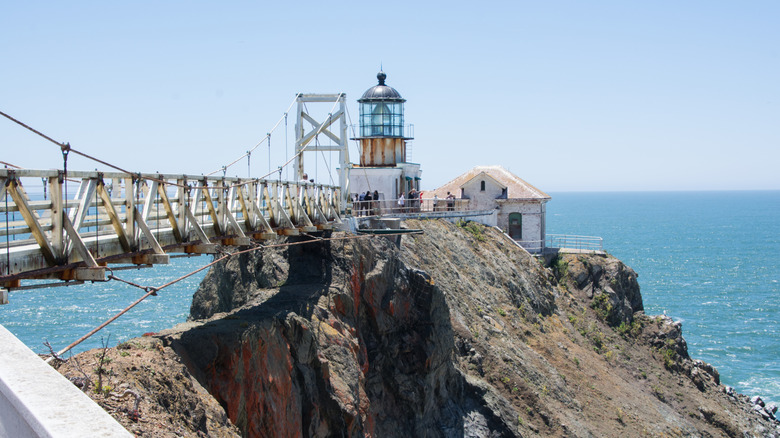
Point Bonita Lighthouse is part of the Golden Gate National Recreation Area that is managed by the United States National Park Service. The lighthouse was constructed in 1855 and was one of the first few lighthouses on the west coast. Sailing through the Golden Gate strait was extremely dangerous, and many ships sank over the years, even after the lighthouse was built. Travelers can hike to the lighthouse via the Point Bonita Trail, which is about a half mile long. The trail is only open on the third Saturday of each month, so plan accordingly. From the lighthouse you can enjoy beautiful views of the water below, and you might be able to spot whales depending on the season.
Point Reyes National Seashore is another wonderful spot to spend a day enjoying the scenery and looking for whales, which are here year-round. The coastal California destination is stunning, and you should definitely visit at least once in your life. You might be able to catch whales spouting and breaching from the peninsula that extends around 10 miles into the Pacific.
Methodology
In order to formulate our ultimate guide to whale watching in San Francisco we researched tourism board websites, travel blogs, and reviews posted online. We sought out whale watching tour companies that claim to value marine conservation, and read dozens of customer reviews to ensure they deliver wonderful experiences. Because we know that not every traveler enjoys tours, we also hunted for a few destinations where it's possible to view whales from dry land. If you're looking for more places for whale watching adventures, check out our list of the best spots.