

What Our Hiking Expert Has To Say About Using AI Tools To Plan Your Next Trek

Back in the day, before cell phones and the internet, planning a hike typically required the use of guidebooks and paper maps. Now, things are easier. For example, AllTrails, a common hiking tool among outdoor lovers, introduced an AI travel planning option in mid-2025. The premium membership, AllTrails Peak, costs $79.99 per year and provides access to features like AI-powered custom trail routing, which lets users ask the app to rework their trip or find a different path. For instance, you might ask it to make the trip longer, shorter, or not as steep.
There's also a trail conditions feature with predictive and real-time information on the weather, with details down to how bad the mosquito situation is. Another highlight of this membership tier is the community heatmap, which shows whether the trails are crowded or not. And amateur botanists may appreciate the outdoor lens tool that helps you identify any tree, flower, or plant you come across. AllTrails Peak is just one AI hiking tool among many in an emerging market. But, no matter how convenient AI suggestions may seem on the surface, search-and-rescue professionals have warned against treating them as gospel. Mountains and other environments are unpredictable, and weather conditions can change quickly, making a seemingly safe route dangerous.
Explore spoke exclusively with Lisa Thompson, owner of Mountain Madness and founder of Alpine Athletics, regarding the use of AI tools to plan hikes. Mountain Madness is a mountaineering, trekking, and ski guiding company, while Alpine Athletics provides holistic preparation for mountain athletes of all levels. Through these businesses, Thompson has helped people safely pursue their mountain goals for years. Drawing on her background, she emphasized that you should think twice before letting AI plan your itinerary. According to her, "AI can pull together useful baseline info – distance, gain, general crowd-sourced impressions – but it doesn't replace real-time judgment or experience."
How to use AI for safe trail planning
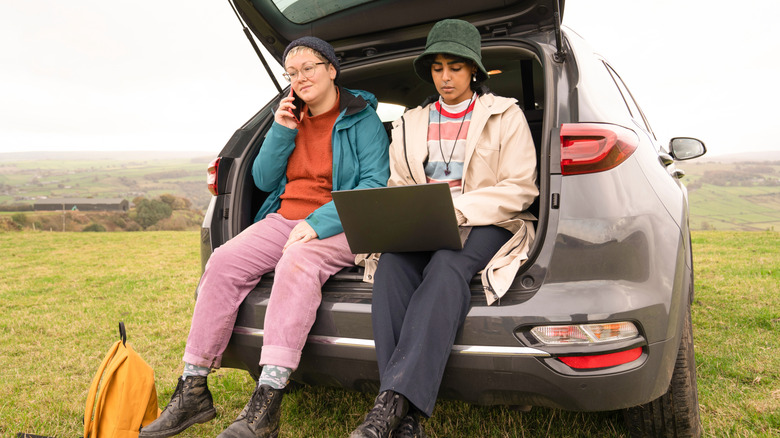
For Lisa Thompson, it's all about knowing the limits of AI when it comes to hiking preparation. While it is handy for quick, basic research, it's still important not to rely on it completely. "AI can be a decent starting point for inspiration or quick research ... But I wouldn't treat it as your main source of truth." And that's especially important advice if you're going to remote areas, tackling difficult terrain, or new to hiking. "It's a helpful tool, but not a decision-maker, and that's an important distinction," she stated.
One of Thompson's biggest concerns is that AI can't really assess you or your surroundings. It can't tell if you're scared of heights, if you've ever hiked through snow, or how well your body can handle altitude. "What's 'easy' for one person can be very risky for someone with less experience or fitness," she says. And unlike an actual human guide or ranger, AI won't spot the subtle warning signs, as that ability comes with years of experience. In her words, AI wouldn't know "whether you're comfortable on steep or exposed terrain, and those details matter."
If you're going to try out AI tools like AllTrails Peak, Thompson suggests using them as a starting point to get ideas rather than the final plan or for in-the-moment choices. You need to double-check information using local resources, and you should always look up the weather yourself and pack for changing conditions. Above all, Thompson recommends that you're "willing to turn around if things feel off – remember that the mountain isn't going anywhere." If you're still thinking of trying out AI for any of your upcoming outdoor adventures, you might be interested in learning how you can actually use AI to plan your next road trip.