

This Unspoken Rule When Fueling Up For Road Trips Will Have RVers & Truckers Thanking You
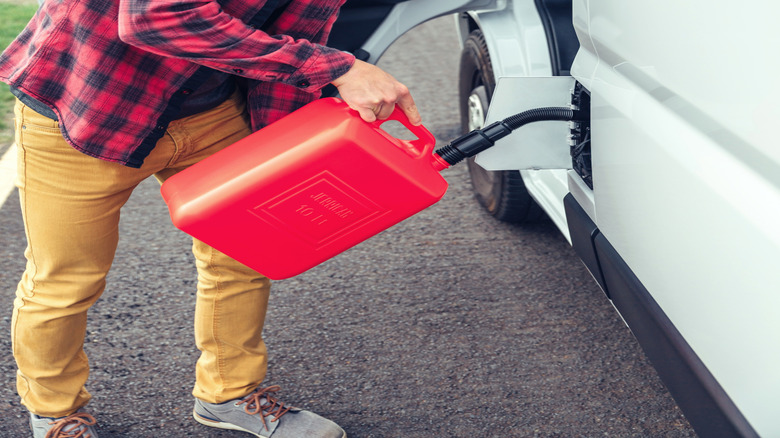
You may have seen situations where gas stations sometimes harbor a little traffic jam, with a line of small and big vehicles awaiting their turns. Among other possibilities, this may happen during specific times when different travelers are trying to fuel up at the same time. In some cases, the reason for such congestion at the station is simply because some gasoline-powered car users are probably inadvertently blocking the lanes meant for diesel-powered vehicles like RVs and trucks. In that case, it would be considerate to avoid diesel pump lanes unless you actually need diesel. This is an unspoken etiquette rule that might sound like a small thing, but it'll certainly make a big difference for truckers and RVers, ultimately saving time and reducing unnecessary stress for everybody.
Let's face it, in fact: There are usually more gasoline pumps than their diesel counterparts at gas stations, perhaps because gasoline is the most consumed one. Diesel pumps can even be limited to just one or two, meaning that drivers of vehicles in this category already have very limited options. So, when a gas driver occupies the diesel pump lane just because it looks empty, they unintentionally block access for diesel users who then become helpless. And you do understand how difficult it can be to maneuver a large vehicle in and out of tight spaces. In short, leaving diesel pumps open for those who truly need them is a good road trip etiquette that every traveler should practice. You might as well consider the otherwise disruptive act as part of the driving mistakes to avoid during a road trip.
Why following this unspoken rule actually matters
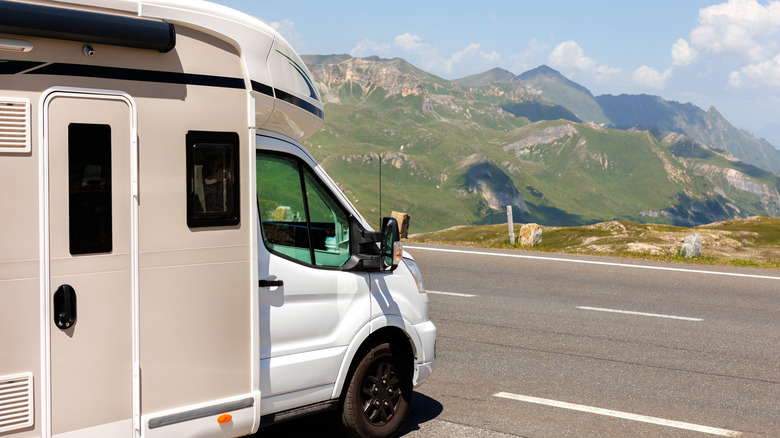
Semis, heavy-duty pickups, RV rigs, you name them. These kinds of vehicles often need specific fueling setups (such as bigger nozzles and faster pumps), which are different from what regular cars need. And this somehow explains the reason for the green-handle pumps' scarcity. In some rural areas, finding a diesel pump at all can be even more difficult, emphasizing the level of inaccessibility that RV and truck drivers ordinarily have to battle with. Gas stations know what it entails to drive these large vehicles, which is why some stations even place these normally rare diesel pumps near the outer lanes for easier access.
Imagine a trucker hauling some time-sensitive goods; you can understand how even a short delay at a diesel pump can have a ripple effect of issues for such a person. Even if you, as a regular car driver, are also in a hurry, it's still not reason enough to selfishly cause a blockage on a lane that's been allocated for bigger vehicles — a lane leading to a very scarce type of pump, for that matter.
Practicing good fueling etiquette as a considerate traveler, plus essential tips
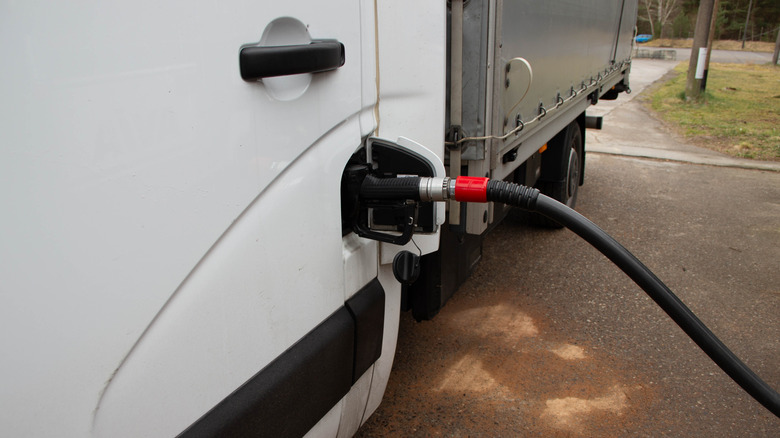
If you think about it, social etiquettes are simply meant to keep things fine and smooth for everyone as we relate with one another in different ways, so that one person doesn't unknowingly act against the other. Accordingly, when you're at the gas station, just keep to the path dedicated to your own pumps even if the lane for diesel vehicles is empty. Needless to say, the pumps with black handles are mostly for gasoline, while the ones with green handles are mostly for diesel, but it's good to always confirm at specific stations. Once you're done paying and fueling, pull forward without delay, so the next driver can easily pull in behind you.
RVers and truckers also have a part to play, though. It would be good to opt for truck stops or stations with RV-friendly lanes like Love's Travel Stops, Pilot/Flying J, or TA/Petro Stopping Centers. These stations, according to CustomSkirting, tend to have dedicated diesel lanes, wider spaces, and specialized RV services, which altogether make it easier to avoid congestion. To further make things easier, you can also make use of apps like iExit or GasBuddy that can help with locating gas stations. At the end of the day, being courteous and mindful at fuel stations might just be all that's needed to keep everyone's experience less frustrating during fueling stops. Indeed, it's always good to be a considerate traveler just as Rick Steves advises against what he calls an "ugly tourist."