

Flight Attendants Always Pay Attention To This Crucial Information Before Takeoff
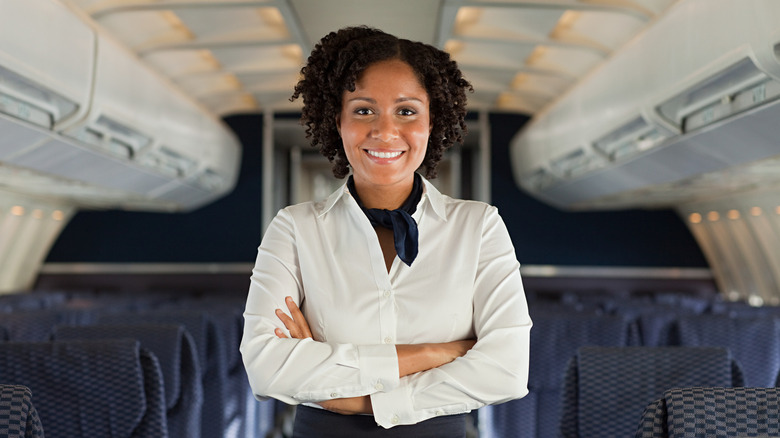
If you're someone who loves to travel, there's a good chance you've experienced a delayed flight at some point. Flight interruptions and delays are quite common, and occur for all sorts of reasons. Staffing issues, bad weather, and maintenance problems are some of the most common issues that can cause flights to be delayed. Passenger count discrepancies also pose a major problem.
Passengers may not realize that flights are not supposed to take off until the correct passenger count is completed. Although most major commercial airlines have an automated system for counting passengers, many also require flight attendants to perform a manual passenger count after boarding is complete. If the manual passenger count doesn't match the passenger manifest, then a flight is usually not permitted to depart until the issue is resolved.
If you've ever witnessed flight attendants walking up and down the aircraft aisle once boarding is complete, there's a good chance they're performing a passenger count. It's crucial that flight attendants always pay attention to how many passengers are onboard for a multitude of reasons. Your flight attendant probably won't tell you this, but if an emergency were to occur, crew members need to know exactly how many souls are onboard. The passengers count is also used to calculate an aircraft's overall weight and weight distribution, so if the numbers are incorrect it could prevent the aircraft from taking off or landing safely.
The passenger count is an important flight attendant duty
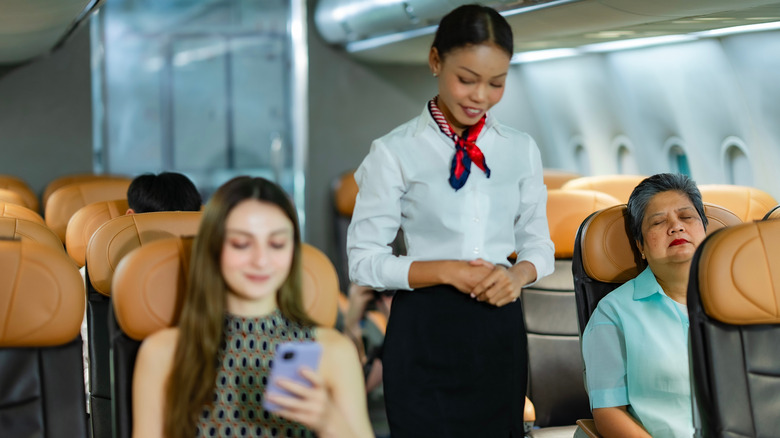
Back when I was a flight attendant, the passenger count was one of our most important job duties to perform after the boarding process was complete. Before we could close the aircraft doors and perform the safety demo, one flight attendant was required to pass through the cabin and count every single passenger onboard — including unticketed babies who sat on their parents' lap instead of in their own designated seat.
Sometimes, our manual passenger counts didn't perfectly match the manifest provided by the gate agents. When things didn't line up, we would repeat the passenger count until we discovered the discrepancy. Occasionally flights were slightly delayed. A few times, we had to ask all passengers to take out their boarding passes and match their names to the manifest. Once, we were even forced to ask passengers to deplane. Usually, the issues were caused by a boarding pass that hadn't been scanned properly or a computer glitch.
Every time the passenger count resulted in a delay, passengers were understandably frustrated — but a correct passenger count is crucial to ensuring the safety of passengers and crew alike. Major issues can arise if flight attendants don't provide accurate information, and the numbers provided by computers can't always be trusted.
An inaccurate passenger count could cause safety issues
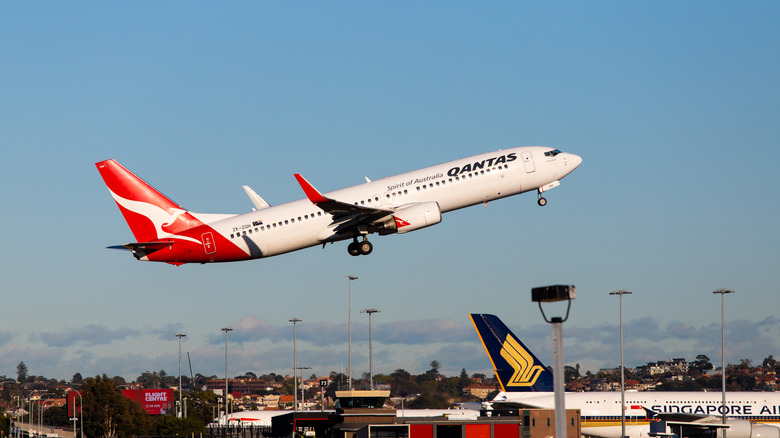
In December 2025, a Qantas Airline flight departed from Canberra, Australia on its way to Sydney, Australia. An airline employee accidentally imported data into the computer system that coded the aircraft as a much smaller aircraft than the plane that was actually departing. The computer automatically removed 11 business class passengers and even more economy passengers.
A simple typo caused the plane to depart with 51 passengers listed as not onboard — even though they were. The weight of the aircraft was calculated as almost 10,000 pounds less than it actually was, which meant that the takeoff speed was calculated for a lighter aircraft. When the takeoff speed isn't calculated for the correct weight of the aircraft, it could prevent the plane from safely lifting off.
The issue also led to a significant fuel underread— meaning that it appeared as though the aircraft had more fuel than it actually did. Luckily, the aircraft took off safely, and the mistake was caught shortly after the aircraft finished taking off. The aircraft was placed in a holding pattern until the error was rectified. Everything was fine, and the aircraft landed safely, but things could've taken a disastrous turn. If there had been an emergency landing on water or land, flight attendants would have relied on the passenger count to ensure that every passenger made it off the aircraft safely. With incorrect numbers, someone might have been left onboard. Next time you're feeling impatient when your flight is slightly delayed due to a passenger count issue, remember that anyone who becomes a flight attendant is trained on important job duties like the passenger count. Everything crew members do is designed to ensure your comfort and safety.