

Canada's Scenic National Park On The Niagara Escarpment Is Ideal For Outdoor Enthusiasts
When thinking of an unforgettable nature vacation in Canada, the mind inevitably goes west and pictures hiking under the towering cliffs of the Rockies with green valleys below. We rightfully imagine gorgeous places like Moraine Lake in Banff, waterfalls in Yoho National Park, or Mount Robson, the highest mountain in the Canadian Rockies with beautiful snowcaps and a turquoise lake. But just like in the United States, it's easy to overlook the Great Lakes region. Canada has thousands of miles of pristine shoreline on four out of the five Great Lakes, and the two nations share Niagara Falls.
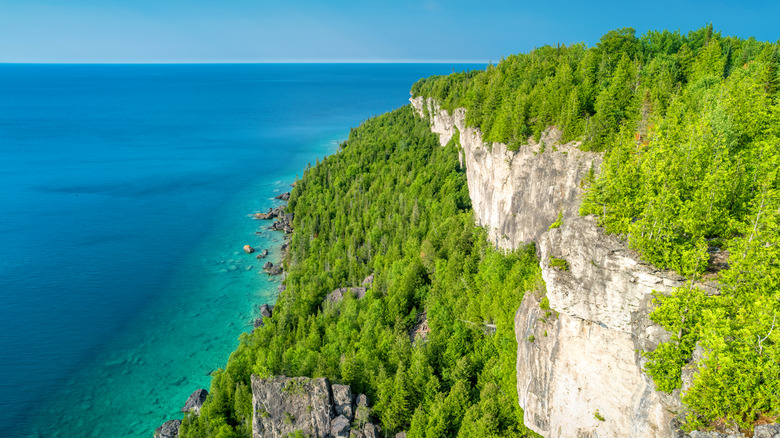
Those famous falls are part of the UNESCO Niagara Escarpment Biosphere Reserve — an escarpment being a geographical feature where elevation changes suddenly due to erosion or faulting. The Niagara Escarpment is an arc of cliffs that starts at Lake Ontario, near Niagara Falls, and goes north into Lake Huron, creating the rugged and picturesque Bruce Peninsula National Park.
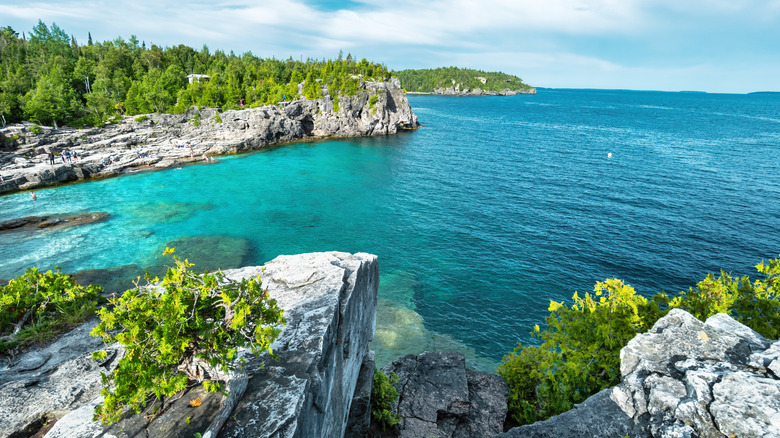
Famous for extensive hiking trails through forests, rocky lakeside cliffs, and little coves with turquoise water, Bruce Peninsula National Park is an ideal destination for outdoor lovers, no matter the season. There are beaches, historic lighthouses, and canoeing opportunities in the summer, while the cold months offer snowshoeing and cozy camping in a winter paradise. It's a sliver of Canadian natural wonder with one of the best towns to visit on the Great Lakes, and it's only a short drive from Lake Ontario and the American border.
What to know about Bruce Peninsula National Park
The Bruce Peninsula stretches 60 miles into Lake Huron, giving the lake its unique shape and creating Georgian Bay. The national park is at the tip of the peninsula, around a 3.5-hour drive from Toronto or about 5 hours from Buffalo, New York. There's also a seasonal bus service from Toronto. Another way to get there is from the north via the Chi-Cheemaun ferry, which embarks from the village of South Baymouth on Manitoulin Island, although that's all even further off the beaten path.
Summer has the ideal weather, but the national park is a popular destination from mid-June to mid-September, so the best time to visit is early spring or late autumn. The nearby Bruce County villages like Tobermory have hotels, motels, hostels, and more, which make it possible to visit the park for a day trip for hiking along the bluffs, stopping at a beach, and checking out one of the iconic lighthouses.
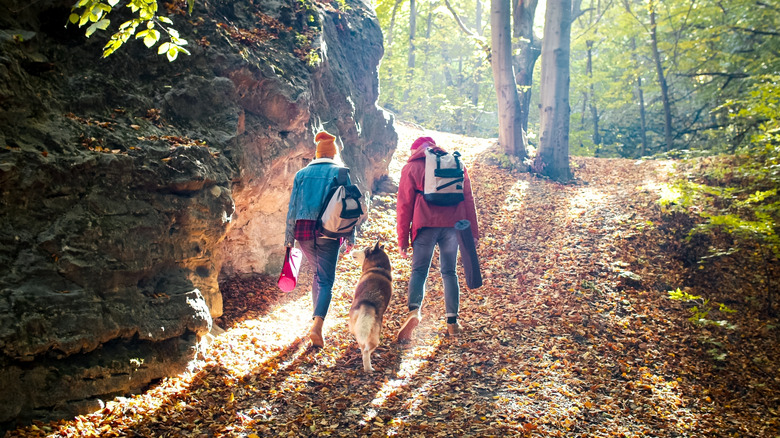
But the best way to enjoy the park is to spend the night at one of the camp sites. There's the Cyprus Lake Campgrounds, which has 232 sites for tent, trailer, and RV camping along a small inland lake — don't forget these hacks to transform your basic campsite into a luxury glamping experience. For a higher level of comfort, there are 10 yurts, each with a large deck, cozy fireplace, and a double bed — they're also available for winter camping. Then there are two backcountry camping areas, both have nine wooden-platform sites and are located along the Bruce Trail, the longest and oldest hiking path in Canada. This 560-mile trail starts at Niagara Falls, weaves through small towns and coniferous forests, passes under 1,000-foot cliffs, and ends here at the Bruce Peninsula.
Year-round adventures for outdoor enthusiasts
Come to Bruce Peninsula National Park to experience the world-class hikes along the rugged coastline of dramatic cliffs, but plan in some time to sit and relax in one of the serene coves with crystal blue water. The Grotto is a limestone cave with an underwater tunnel that, combined with the nearby Indian Head Cove, is probably the most famous coastal destination on the peninsula.
It's popular, so the park only allows a certain number of people there a day via reservations for parking spaces, which are made online well in advance. Or you can walk there if staying at the campground. The coast is a 30-minute hike from the parking lot, and it's well worth the effort. One TripAdvisor reviewer wrote, "We explored the rocky shoreline and peeked into underwater crevices. Though the water was cold, it was crystal clear — perfect for a refreshing dip."
Another great way to check out the lakeshore is in a canoe. For the botanists, the park is home to many unique and sensitive plants, including 30 types of rare orchids. In the chillier months, outdoor enthusiasts can try bouldering, fishing, birdwatching, or snowshoeing through the quiet forest on the famous trails in the winter. No matter the time of year, once the sun sets, the night sky explodes in stars. And you might catch a glimpse of the Northern Lights because the park is a Dark Sky Preserve, meaning there are rules restricting artificial light. The Bruce Peninsula National Park is a dreamy slice of coastal wilderness in Ontario, but even beyond the park, the entire peninsula offers a magical escape with quaint small towns, historic lighthouses, shipwreck diving, craft breweries, and more.