

Rick Steves Says This European City's Once-Vibrant Café Culture Has Made A Comeback
If there's one thing travelers can unanimously agree upon, it's that European café culture is as much a part of life as the morning croissant or an evening stroll (not to mention they make great retreats from the busy crowds). From Parisians sitting outside their favorite café, facing outward to watch passersby, to Spaniards gathering with friends for hours over a single cup of coffee, the ritual of sitting down for a slow, unhurried moment is deeply woven into the fabric of daily life. Although this cultural pastime of gathering with friends over a cup of joe has been popular for centuries, one particular European city saw its unfortunate decline.
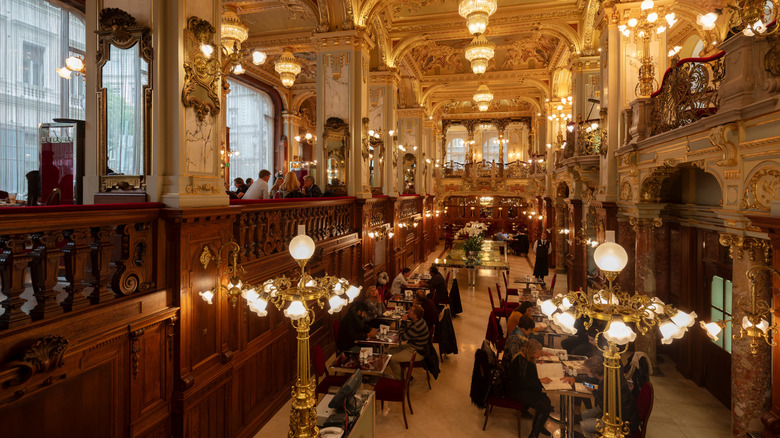
That city was Budapest, once home to one of Europe's most dazzling and intellectual café scenes. At the turn of the 20th century, coffeehouses here weren't merely places to drink espresso — they were the lifeblood of Hungarian society. Writers, artists, and politicians gathered beneath ornate ceilings and glittering chandeliers to exchange ideas, craft manifestos, and dream up revolutions. Cafés like New York Café, Centrál Kávéház, and Café Gerbeaud became legendary — not just for their gilded interiors and rich cakes, but also for the creativity and debate among artists and poets that flourished within their walls. Then came the two world wars laying siege on the city, as well as the 20th century's political upheavals, when these vibrant establishments were seen as dangerous breeding grounds for dissent. During the communist era, many of Budapest's grand coffeehouses were shut down and stripped of their unique character. The once-lively hum of conversation and clinking porcelain cups fell silent, and the soul of the city's café culture seemed to fade with it. Yet, like much of Budapest itself, the city's café culture refused to disappear.
Budapest's vibrant cultural comeback
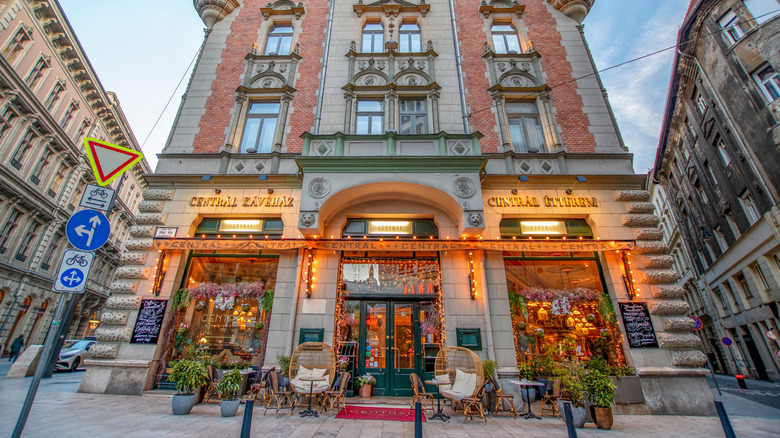
According to travel guru Rick Steves, the "city's once-vibrant café culture has made a strong comeback. ... The old coffeeshops have been restored, with red velvet chairs and doodad-decorated columns dripping with Habsburgian nostalgia." After the fall of communism in 1989, a slow but steady revival began to take shape. The old coffeehouses — some dating back over a century — were lovingly restored to their former glory. Today, stepping into New York Café, often dubbed "the most beautiful café in the world," or Centrál Kávéház, once a gathering place for poets and journalists, feels like entering a living museum. At New York Café, crystal chandeliers glisten above marble tables, incredibly ornate frescoed ceilings sit high above red velvet chairs, and the echo of clinking cups and quiet conversation is a reminder of times past.
But Budapest's café reemergence isn't just about nostalgia — it's about continuity and community. The same spaces that once hosted writers and revolutionaries now welcome locals, students, and travelers alike, each adding a new layer to the city's storied café tradition. At the same time, a wave of modern specialty cafés — like Espresso Embassy, Kontakt, and My Little Melbourne — has emerged, bringing minimalist design and artisan brews into the mix. Together, they form a dynamic coffee culture that celebrates both Budapest's illustrious past and its thriving present. In Budapest, coffee isn't just a drink — it's an experience, a pause in the day that links past and present, tradition and innovation. And as travelers rediscover this vibrant scene, it's clear that the city's cafés have once again taken their rightful place among Europe's most beloved cultural treasures.