

The Popular Romantic Gesture That's Quietly Wreaking Havoc On National Parks
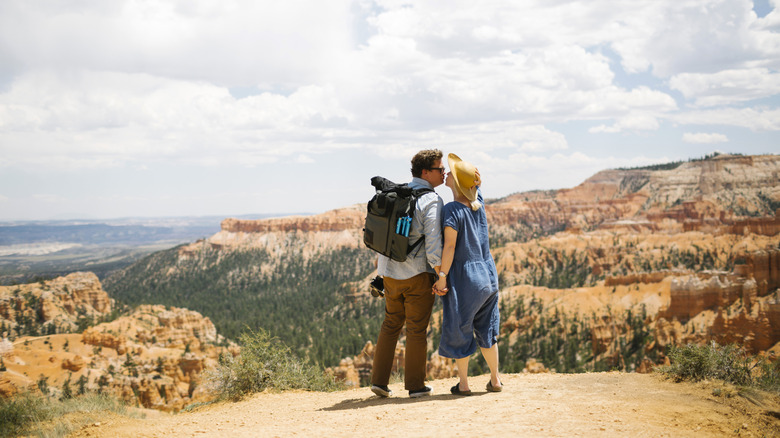
There are many reasons to think that national park locations are incredibly romantic. Stunning views, breathtaking flora and fauna, and natural wonder all make the parks around the country ideal spots for a romantic getaway. And while there likely have been many proposals and declarations of love flowing in these federal spaces, there's one romantic gesture that's become increasingly popular among visitors. And sadly, it's silently wreaking havoc on the parks' natural beauty and poses a threat to the animals that live there.
Even in the years before the days of internet viral-ness, love locks became a popular tradition in romantic spots all over the world. From Venice to Seoul, many destinations had their own version of the practice, however, no spot was as famous as Paris' Pont des Arts, the love lock bridge that for years served as a destination for the romantically inclined. In general to "love lock," visitors buy a lock, write their names on it, lock it in place on the bridge (or other features like fences), and throw the key away, whether it be into the Seine in Paris or off Namsan Mountain in Seoul. It's a metaphor for an unbreakable bond, one that will stand the test of time. National parks visitors have reinvented the tradition, now locking love locks around federal property, attaching them to benches, fences, and other monuments.
Why are love locks so bad in the park?
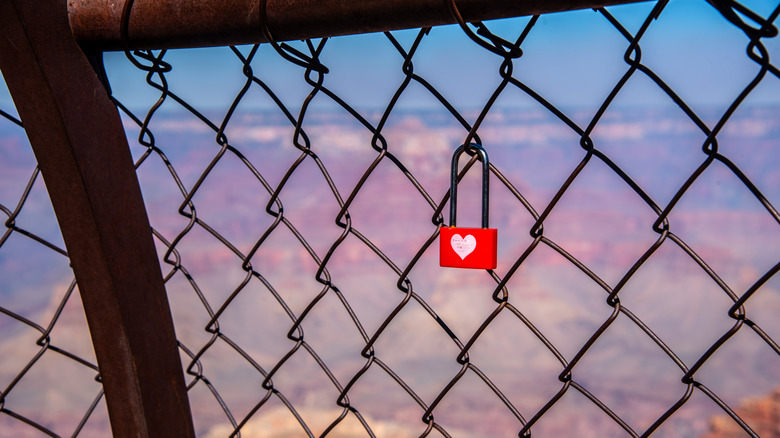
"Love is strong, but it is not as strong as our bolt cutters," a 2023 Facebook post from the National Parks Service quips about love locks. In the post, NPS condemns the practice, likening it to instances of graffiti and littering. The federal organization reminds visitors to avoid littering all together but explains that padlocks and their keys, in particular, spell environmental trouble. In the Grand Canyon, for example, couples will throw their love lock keys into the gorge below. Sadly, shiny keys attract the attention of curious yet endangered animals, like the condor. Condors, specifically, will consume these shining specimens accidentally, and since metal isn't all that easy to digest, it blocks their digestive tracts. Surgery is oftentimes needed to remove foreign objects, and if too many are consumed, it likely spells death for the animal.
Just because your gesture is meant to symbolize an enduring love doesn't make it an exception to the Leave No Trace rule. In fact, many areas in the world that have love lock sites are experiencing their own issues with the tradition. The famed Pont des Arts bridge halted the practice nearly a decade ago, citing structural damage. It is now one of the many things tourists absolutely should not do when visiting Paris. Visitors, instead, will find glass partitions along the sides of the bridge to prevent any lawless lovers from trying to declare their love. Meanwhile, NPS does have the right to issue a ticket for littering, and as love locks are classified as such, you may find yourself at the receiving end of a hefty fine. Don't turn your romantic vacation into a story of criminal activity — there are plenty of things to do in the Grand Canyon that don't involve a run-in with NPS!