

The Weirdest Reasons Flights Have Been Delayed Or Cancelled
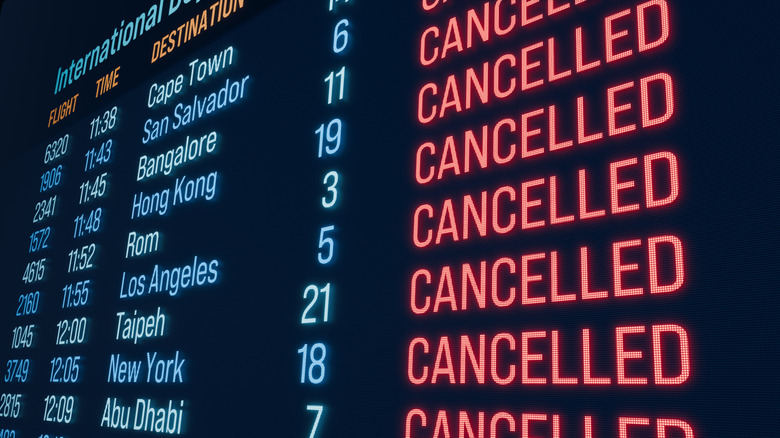
The best laid plans of mice and men often feel like the picture postcard lament of the itinerant soul. Getting from A to B should be easy; it so often is not. That last-minute search for keys, the weather report that turns plans into a tailspin. The backed-up highway, the not-today-you-don't car engine; the alarm clock so predictable with its single-point-of-failure timing that it has become a veritable cliché of modern travel. And yet, for all the roadblocks the universe throws at us, one reigns supreme. The delayed flight. Surely, that must be the king of inconvenience.
Flights are the very definition of an asymmetric loss function: an extra thirty minutes in bed can lead to an eight-hour wait at the airport, a cascade of missed connections or, at its worst, the scuppering of an entire trip. We toss buffers around with generous aplomb; extra time for traffic, a thirty-minute window for parking complications, an assumption of delayed trains that borders on the improbable. The full set of dedicated redundancy extends as far as ensuring we have time to find the correct gate.
But best laid plans are a two-way street. No matter how on-time we are for our underrated tropical vacation, if the flight itself is delayed, we have about as much agency as a mayfly trying to wrangle early retirement. Cancellation notices strike like daggers; the murmur of disgruntled passengers becomes a Gregorian chant without pause; the five stages of grief come and go with alacrity. Because we get it. Ice on the runway, security alerts, technical issues. Safety trumps all other concerns. Still, there are those delays that make less sense to us, the one-in-one-thousand reasons why a plane simply refuses to take off on schedule. Here then, are some of the weirdest ones out there.
Swarm of bees
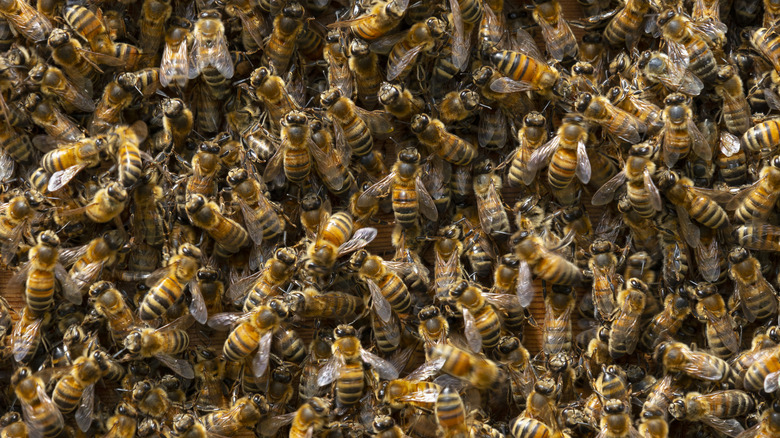
We live in an age of technological marvels, a time when we can communicate with each other over vast distances, cross continents in mere hours, and reach parts of the world once inaccessible to our ancestors. But for all these achievements, we still so often find ourselves at the mercy of the elements. An unexpected weather front can ground thousands of flights in one fell swoop. And, as it turns out, thousands of bees can do the same to a single planned takeoff.
In July 2025, an IndiGo flight making a scheduled flight out of Surat was delayed after a swarm of bees congregated upon the Airbus 320's cargo door and decided to make it something of a permanent home. Attempts to dislodge the insects with smoke proved ineffective, and eventually firefighters were called in to hose the insects off the cargo door. The delay lasted less than an hour, although thankfully no passengers or crew were harmed. Shortly before 5:30 a.m., the plane was able to take off en route to Jaipur, one of India's most vibrant destinations.
Severe diarrhea

During the early days of airline travel, much was made of the comfort and speed of the service. There was a focus on the luxuriousness of travel, a sense that travelers were part of an elite club of redefining the nature of travel, a literal jet-set, who had everyone else gazing at their wake in wide-eyed wonder. Everything had to be just right; the seats had to be comfortable, anxiety over leg room was non-existent, the food was gourmet and, the bathrooms, well, in fairness, they have actually improved since the early adopter years.
The toilet is one of the most indispensable locations on the plane. With no chance of pulling over, and the ever-present specter of post-meal bottlenecks, it's little wonder that the secret to surviving ultra-long flights starts with when and what you eat. Getting caught short on a flight is a disaster of epic proportions.
Sadly, this is exactly what happened to Meghan Reinertsen, a passenger aboard a United Airlines flight heading out of Newark towards Indianapolis in the summer of 2025. The plane took off as planned, but the undercooked burger Reinertsen had consumed the night before began to do its work enroute in the worst possible way. Unable to leave the bathroom, she waited until the plane landed and was emptied of passengers before disembarking. A specialist cleanup crew was brought in, and passengers waiting for the plane to set off for its next destination had to wait until the biohazard was taken care of.
Passenger refused to stow baggage
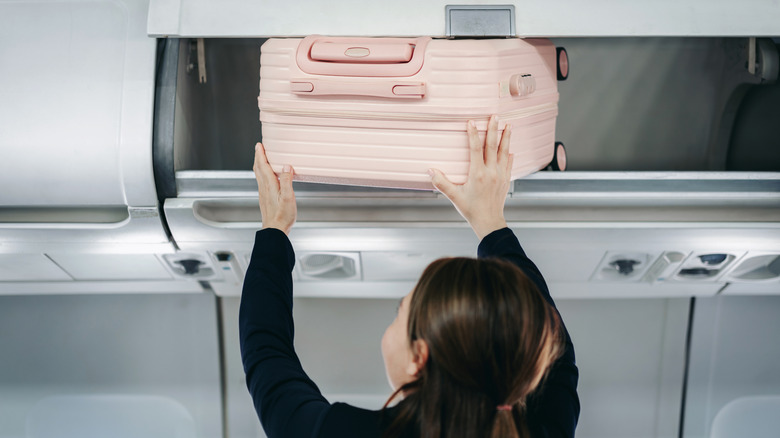
Few people would blame a passenger for delaying a flight due to a medical incident, no matter how scatological it may be, but there are times when flights are cancelled based purely on poor behavior on the part of fellow passengers. There are, of course, rules that passengers must adhere to when flying. In some cases, civil aviation authorities have laid down a gauntlet as to what is and is not permissible. In others, the airlines themselves produce lists of their own dos and don'ts and have trained flight staff to enforce said policy irrespective of customer feelings on the matter.
Such was the case on a flight out of Chongqing, a province in southwest China and home to one of the 50 undiscovered wonders of the world. When a female passenger refused to stow her $3,000 Louis Vuitton handbag under the seat in front of her back in 2024, police had to be called in to escort her off the plane. The incident caused the flight to be delayed by one hour.
Rat stowaway
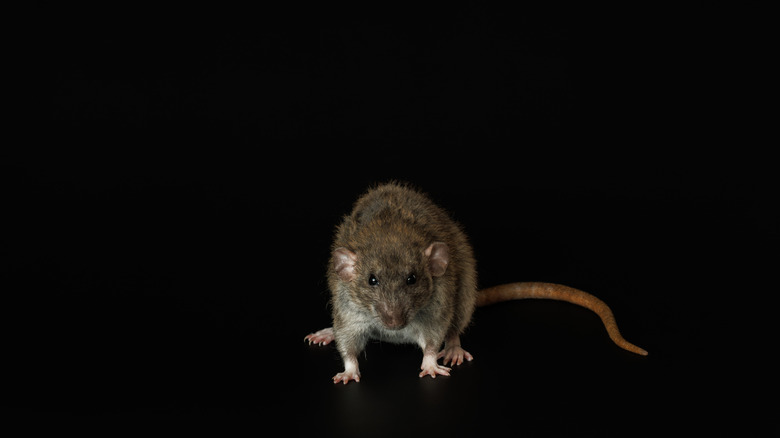
Passengers being escorted off a plane are all well and good, but in most cases, they at least had the decency to buy a ticket before causing a major disruption. Such was not the case with one particular stowaway, who boarded the plane in December 2025. The rodent in question was spotted crawling along a curtain rail, having boarded a KLM flight out of Amsterdam with the seeming intention of seeking a new life in the tropical climes of Aruba. The rat was discovered too late for the pilot to turn the plane around, but upon arriving at Queen Beatrix International Airport (AUA), passengers anticipating a forward flight to Bonaire were left stranded.
The airline was forced to catch the offending character and then perform a deep clean and check of all flight systems. The delay was significant enough to affect passengers waiting for an outbound return to Amsterdam. Still, the 250 passengers bound for Bonaire at least got a chance to spend some quality time in the street art capital of the Caribbean, as KLM scrambled to make alternative arrangements.
Scary Airdrops
If the early days of passenger airline travel were defined by a deliberate commitment to all things debonaire, then its latter years focused on ways to pass the time. On board live performances gave way to in-flight movies, which were in turn replaced by back-of-the-seat video screens equipped with multiple channels, video game classics, and built-in Spotify distractions. Still, passengers working through tips for surviving long-haul flights were often made aware that bringing entertainment of their own was often preferable to leaving themselves at the mercy of less-curated lists.
Of course, downloading films prior to a flight and making sure you have an e-reader close to hand is one thing: opening yourself up to the machinations of other passengers is quite another. The ability to share photos, files, and links between phones and tablets via Airdrop might seem like a fantastic way to pass the time, but on a flight, leaving yourself open to such an intrusion carries the risk of receiving unsolicited material of a most disturbing nature. Such was the case with a 2021 Delta Airlines flight heading out from Atlanta to Seattle. Passengers received a message stating that a plane jacking was set to occur, even going so far as to state what time it would occur and what aisle the attack would commence from. Law enforcement officers were notified, and the plane was evacuated, leading to a delay of several hours.
Turtle migration
The impact the aviation industry has on the environment is a complicated issue. There is air pollution, of course, and the unavoidable habitat destruction that comes with every runway built. Birds are scared away from flight paths to prevent collision with air traffic, while noise and light pollution often frustrate local residents daily. Thankfully, when it comes to protected species, rules have been put in place that airlines are keen to abide by.
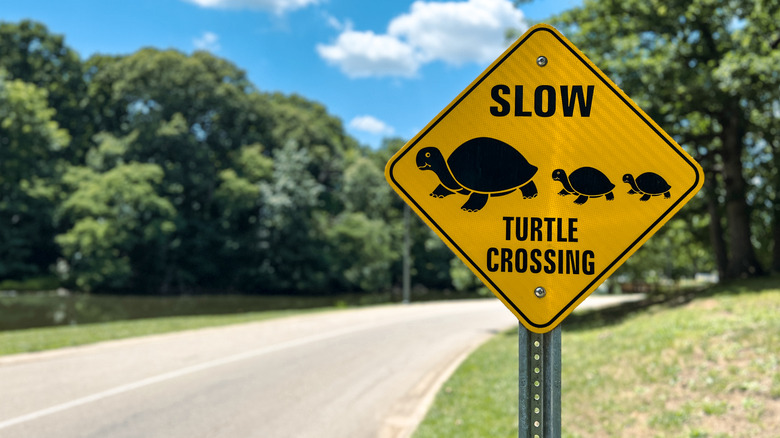
Take animal migration, for example. With so many vacationers searching for family-friendly destinations for turtle-loving adventures, airports have to go out of their way to accommodate the little critters as they make their way towards ancestral breeding grounds. Such was the case in 2011, when 150 turtles decided to use a runway at JFK airport as a thoroughfare. The diamondback terrapins were given something of a speed boost across the tarmac by airline staff, allowing the runway to return to functionality and the delayed flight to leave without so much as trampling a flipper.
Toilet paper shortage
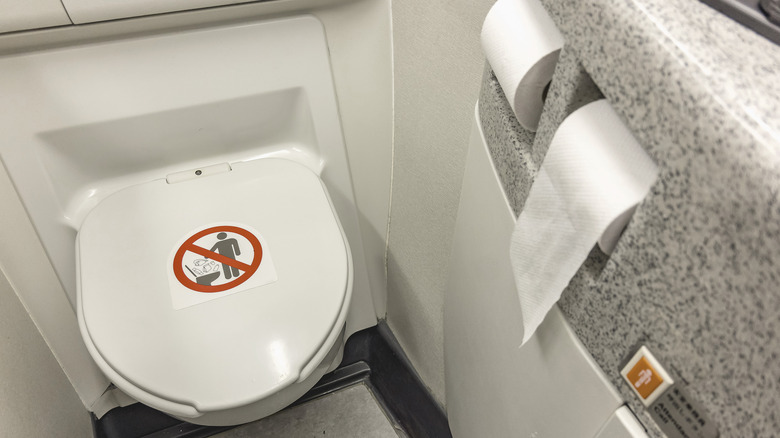
Few people have the time to go through every single rule and regulation that airlines have to adhere to. Some are well-rehearsed — prohibitions on vaping, the need to stow luggage, the non-optional use of seatbelts during takeoff and landing, and of course the need to set all electrical equipment to flight mode. Others are more obscure – pilots are, for example, forbidden from engaging in idle chat during some of the more intense periods of flight. There are minimum staffing requirements for how many flight attendants need to be on board, beards are mostly forbidden (they can interfere with the use of oxygen masks), and, apparently, if there isn't enough toilet paper on board, the plane isn't allowed to take off.
Actually, that last one is more good practice than a fixed rule. In 2017, a British Airways flight out of Gatwick heading to the bachelorette party paradise island of Barbados found itself caught short in the worst possible way. When cabin crew discovered that they were carrying an inadequate supply of loo rolls, a hard-to-fathom five-hour delay ensued.
Pigeon in cabin

Rodents running around inside a plane make for some obvious safety concerns. The furry critters act as vectors of a number of unpleasant diseases, but are also known to chew through electrical cables. For aviation authorities, their presence requires two points of action. First, the aircraft requires a deep clean, and second, a maintenance crew needs to be called in to ensure nothing vital has been given a nibble or two. The presence of a runaway bird is less pernicious, yet still presents a set of issues that simply must be dealt with.
Birds are mercifully unlikely to set their beaks to an all-important hydraulic cable mid-flight, but they do like to poop on the wing. To make matters worse, indoor birds, once panicked into a series of desperate wing flutters, are famously difficult to catch. In December 2025, a pigeon boarded an IndiGo flight out of Bengaluru bound for Vadodara. Cabin staff were forced to duck as the bird flew up and down the aisle, triggering enough of a ruckus to cause at least one passenger to have to cover her ears. Preflight checks were put on hold while staff struggled to coax the bird out of the plane. Still, the footage — which did, of course, go viral — showed that the majority of the passengers saw the funny side of the situation.
Volcano in Iceland
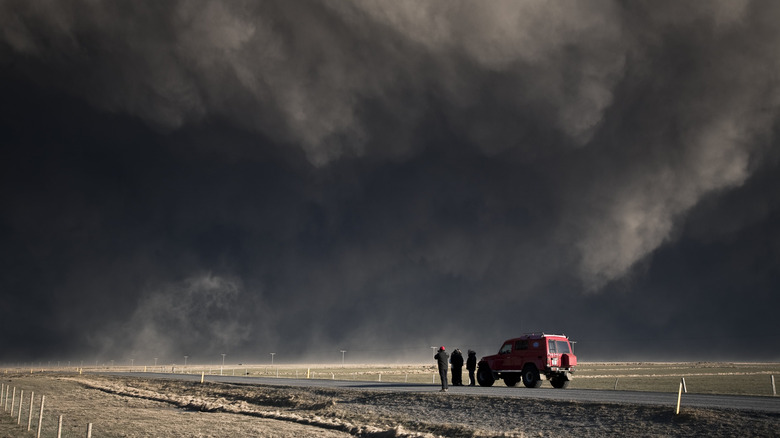
A lack of hot coffee and toilet paper can cause delays, sure. But few things can spell disaster for the aviation industry quite like an active volcano. Volcanic ash is, after all, the worst thing an aircraft can encounter mid-flight.
Jet engines run hot; some parts of the turbine reach a blistering 3,600 degrees Fahrenheit. As volcanic ash is drawn through the turbine, particles of glass within it melt and, as they do so, the risk of a sudden catastrophic failure increases exponentially. Meanwhile, the rest of the plane's fuselage has to endure a sandblasting severe enough to scour the pilot's windscreen opaque. Air traffic servicing passengers keen to visit Europe's tallest and most active volcano, or hoping for a tour of the most dangerous volcanoes in the world, steer well clear of any expected plumes. There are times, however, when such things are unavoidable. Which is exactly what happened in 2010.
On April 14th of that year, an Icelandic volcano called Eyjafjallajökull sent huge columns of ash into the airspace around the small island. The prevailing winds, rather unhelpfully, took it upon themselves to send the ash Europe's way. The result was a disaster like no other. Heathrow, Europe's busiest airport, closed for an entire day, and in total, some 100,000 flights were cancelled. Over the course of eight days of virtually no air traffic, the airline industry lost close to one and a half billion dollars.
Actual snakes on a plane
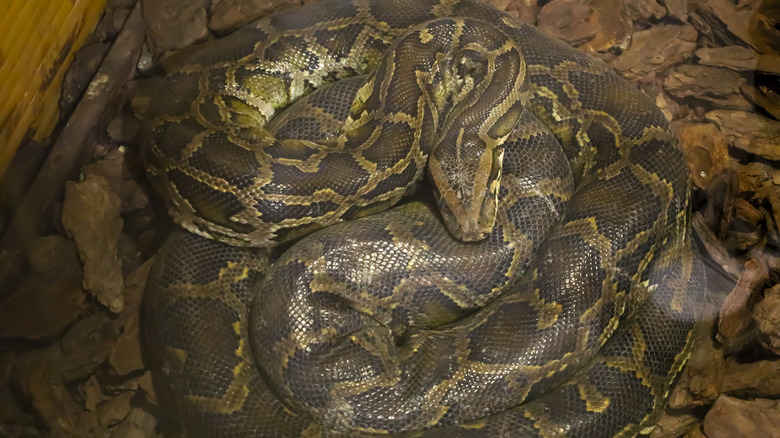
The running theme of unwanted creatures attempting to traverse the globe at hitherto unheard-of speeds rarely makes for a good movie plot, but for passengers onboard a Malaysian flight out of Kuala Lumpur, back in 2022, an exception was made. The snake was spotted as the plane made its way to Tawau, a city located on the southern tip of Borneo, famed for being one of the absolute best destinations to experience noctourism. Panic ensued.
Thankfully, the passenger histrionics were more or less uncalled for; the snake was later identified as a spotted python, a small, nocturnal snake that poses no danger whatsoever to humans. Still, the plane was forced to reroute to the city of Kuching — an underrated and bucket-list worthy tourist destination some distance from the intended destination. The snake was removed, and after fumigation, the plane returned to full service with only a few disgruntled passengers to account for in terms of damage done.
Pilots MIA
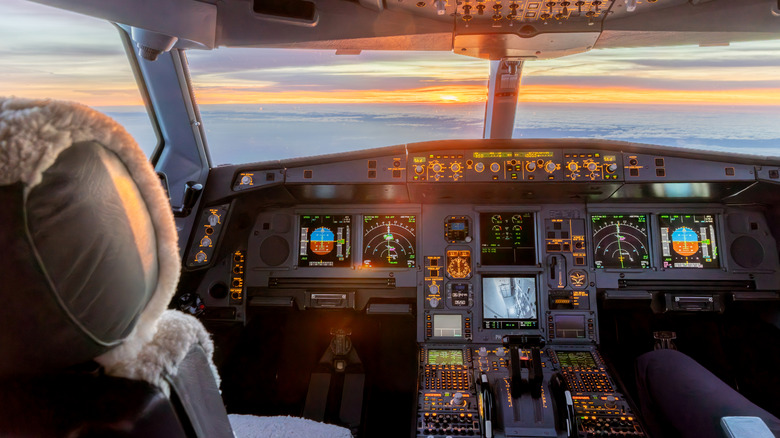
By the time passengers board an aircraft, untold numbers of people have been working hard to get everything ready. Baggage handlers have filled the cargo hold with a Tetris of luggage, support staff have loaded up the craft with aviation fuel, and teams of maintenance crews have performed a multitude of safety checks, checklists, and last-minute repairs. Agents have helped get ticket holders to the appropriate gate; cleaners have spritzed the cabin to lemony freshness, and air traffic controllers have worked miracles as holding patterns relevé in the never-ending ballet of the sky. And then there are the pilots, so responsible for the safety of all on board, that no plane can ever take off without them, which is why it sucks when they don't show up. An IndiGo flight was delayed for five hours in December 2025 for that very reason.
Missing pilots are more common than you might think. They are as susceptible as anyone to the whims of traffic, and yes, they too sometimes have to call in sick. Indeed, aviation authorities have strict guidelines when it comes to pilots and illness. At the first sign of a sniffle, pilots are expected to consider themselves unfit to fly, leaving airlines scrambling to find a replacement at short notice.
Pigs cannot fly, confirmed.
The best way to prepare a pet for a long-distance road trip is something of a fine art, but when it comes to taking your furry friend up in the air, things tend to get a bit more complicated. If traveling domestically, different airlines have different policies. If your eventual destination is overseas, however, there are numerous hoops to jump through, including proof of vaccination, breed restrictions, and, in some cases, mandatory pet passports for dogs, cats, and even ferrets.
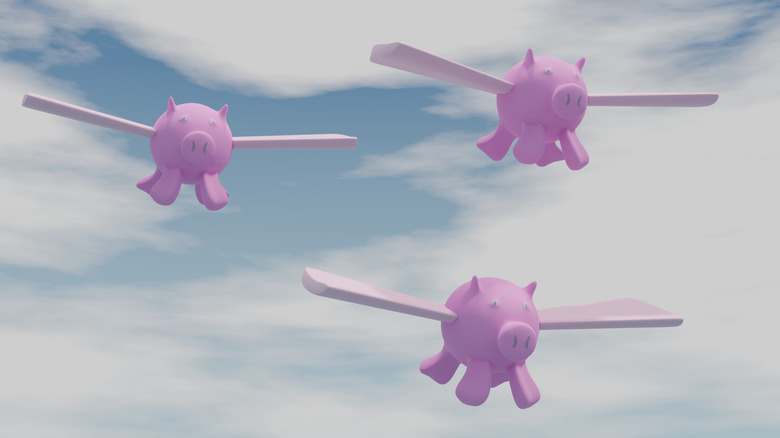
In most cases, pets have to be checked in as baggage. Service animals are, of course, still permitted, but they too must meet certain definitional requirements. In 2020, the U.S. Department of Transportation tightened up legislation that had previously allowed emotional support animals to count as service animals. The new rules stated that only dogs could be treated as such, and even then, only if they had been trained to help people with recognized disabilities. Even prior to this ruling, airlines had been struggling with passengers and their unusual demands. In 2011, a woman was removed from a US Airways flight heading out of Bradley because the owner's 70-pound pig began to make a nuisance of itself.
Malfunctioning coffee machine
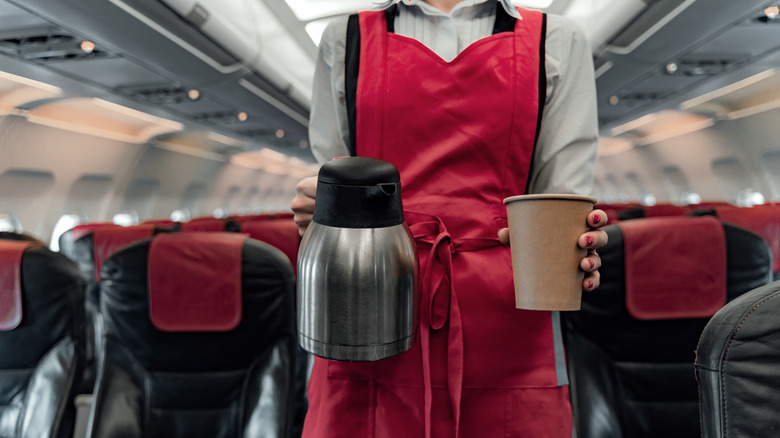
Coffee is one of the most popular beverages in the world, eclipsed only by water and tea, the former of which has something of an unfair advantage. More than 60% of American adults drink at least one cup of coffee a day; for many, even a short flight without a cup of Joe seems unthinkable. Such a possibility, however, remains unlikely; if the onboard coffee machine malfunctions before takeoff, it can actually ground the whole plane. At least two flights were delayed for want of coffee in 2016 alone.
The issue is not, as you might expect, due to cabin crews fearing some kind of passenger revolt if the coffee round comes up short. Few things are as dangerous as a fire onboard an aircraft, and even relatively basic equipment, such as a coffee maker, is equipped with circuit breakers to ensure nothing goes awry. If it malfunctions in any way, a maintenance crew must come on board to identify and neutralize any potential fire hazard. Naturally, delays ensue.
How we compiled this list
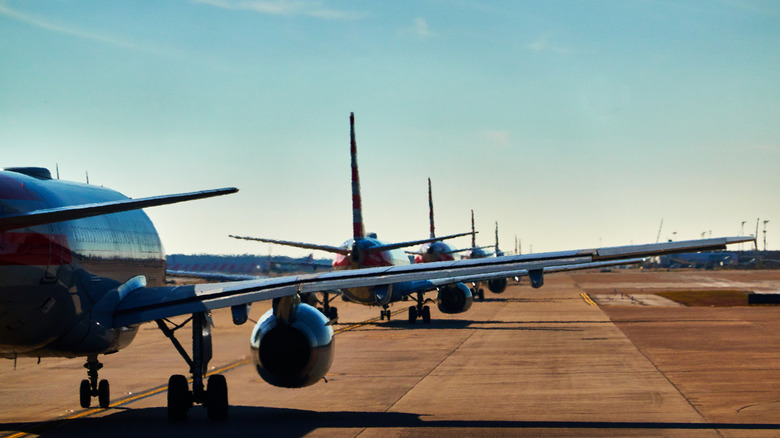
Flight delays generally act as an opportunity for people to bemoan the trials of modern life, and with plenty of time on their hand they often turn to social media to wax lyrical about their woes. The more unusual the delay, the more likely such news is to find its way into mainstream media. We looked at many such stories published in newspapers such as the Guardian, Mirror, and the Daily Mail. Meanwhile, when it came to checking hard-and-fast rules relating to flight safety, we consulted details posted by various airlines and aviation authorities.