

What Tourists Need To Know About Island-Hopping In Hawaii Without A Ferry System
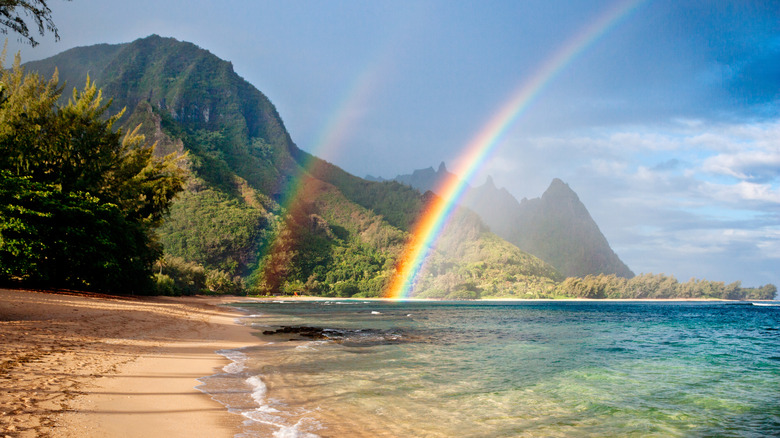
Each Hawaiian island has its own personality. O'ahu is the densely populated home of Hawaii's state capital, Honolulu. Maui is renowned for its beaches, biodiversity, and close-knit community. The biggest island is naturally known as The Big Island, and it's home to vast national parks, 266 miles of coastline, and the most authentic and picturesque Japanese garden outside of Japan. Hawaii is famous for its many climates and dramatic topography; to even begin to understand this Polynesian wonderland, you have to spend time on different islands.
"Cool!" you think to yourself. "All I have to do is hop a ferry, right? Head down to the dock, buy a ticket, and away we go!" Just like the islands of the Mediterranean, or Indonesia, or parts of the Caribbean, Hawaii must have its own passenger boats that connect each island. And the islands look so small and close together on a map, so surely the ride couldn't be more than a couple hours, right?
Nope. The only ferries that exist in this archipelago run to the smaller islands, like Lānaʻi and Molokaʻi. But the larger Hawaiian islands don't have a consistent ferry service. You can't just drive your car onto a floating parking lot like you can to Nantucket or Santa Catalina; there's no "fast ferry," which can easily shoot across the water at 30 knots. There's no backpacker-friendly "deck class" rate, a budget option in Europe that Rick Steves recommends to true adventurers. The truth is, the ocean around Hawaii is considered much too rough for old-fashioned ferries. The odds are good that passengers would spend the whole ride sick to their stomachs — or fearing for their lives.
Flying around the Hawaiian islands
If you can't take a boat, take a plane. Hawaii is one of the few states in the U.S. where flying from one part to another is absolutely normal. The larger islands have airports — even sparsely populated Molokai — and Hawaiian Airlines schedules about 170 flights per day between them. The prices for these flights are pretty wide-ranging, depending on timing and other factors, but you can usually book a one-way ticket between islands for $100 or less.
Hawaiian Airlines is the most popular carrier for this kind of short-distance travel, but Southwest Airlines also operates flights, as well as Mokulele Airlines, which specializes in small craft. Finding deals for these networks is an essential travel hack when visiting Hawaii.
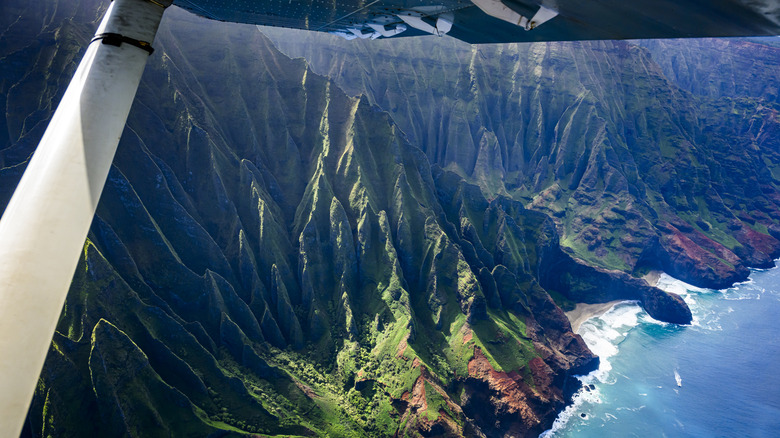
Flying also offers travelers a fantastic view of the islands. These corrugated mountains are spectacular at sea level as well, and many people hike for hours to take them in. Yet there's nothing quite like surveying this dynamic geology from thousands of feet up; through an airplane window, you can study the cliffs and coves that make up Hawaii's coasts, the forests draped over rocky chevrons, and the volcanic craters that shaped these islands. As convenient as a ferry system might seem, flights are faster, more stable, and arguably more scenic than a traditional passenger boat could ever be, so you might as well take advantage.
Getting out on the water (in small doses)
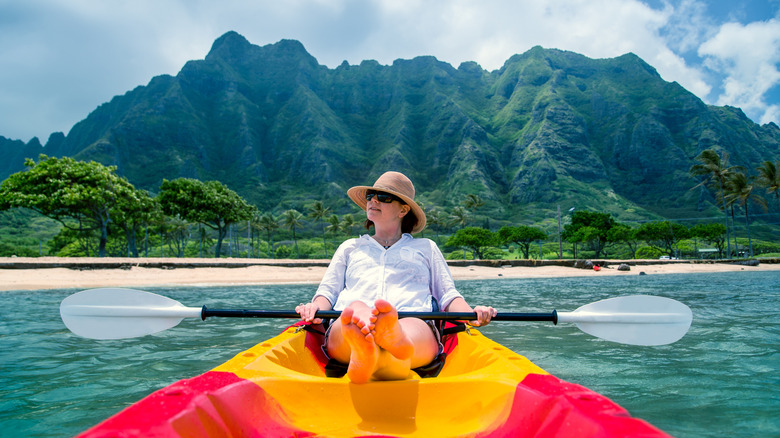
Despite the ornery seas, there are plenty of ways to get out on the ocean, and traveling over water from one island to another is still possible. Again, you can ride a few ferries to smaller islands; places like Niihau Island are only accessible by boat. There are many options for fishing boat charters or catamarans, including decadent "party cruises." Snorkeling and scuba are popular pastimes among the surrounding reefs, and masked swimmers may observe a wide range of turtles, Galapagos sharks, and even whales.
Kayaking and stand-up paddle boards are popular across Hawaii, and native Hawaiians literally invented the concept of surfing. You probably can't paddle from one island to the next, but any of these crafts is a great way to explore calm local waters.
The most traditional means of island-hopping is the Hawaiian outrigger canoe. These vessels use a special float to keep them buoyant and balanced in the water — a necessity in the wave-prone central Pacific — and basically look like the boat in the Disney film "Moana." Native Hawaiians have been paddling outrigger canoes for nearly 2,000 years, and ancient versions could support up to eighty crew members. Travelers can't expect to take these vessels between islands, but they can try their hand at paddling outrigger canoes, thanks to several local tour companies.