

Hiking With Your Dog? Here's When Search And Rescue Will (And Won't) Provide Aid
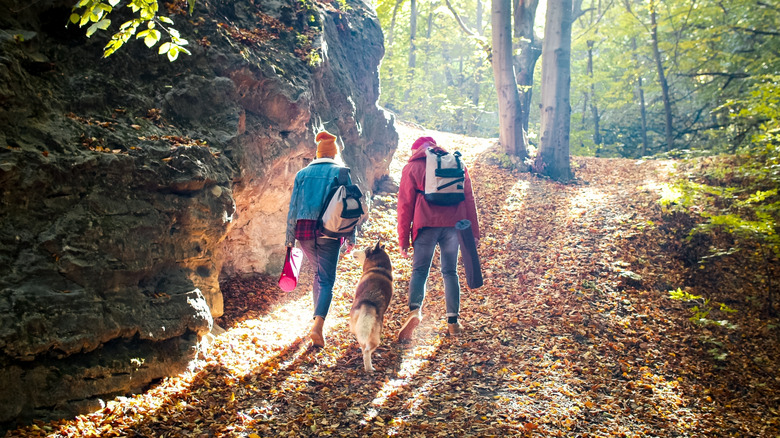
Dog lovers know that going anywhere without your pup is downright painful, which is why it makes sense that so many avid hikers choose to bring their furry friends along with them. After all, dogs were made to be adventurous! However, while they do descend from wild wolves, they are far from being self-sufficient in nature by themselves, and sometimes even the best dog owners forget their dogs' hiking limitations. For instance, in Vail, Colorado, some search and rescue groups reported local teams received an uptick in rescues for overexerted dogs on hiking trails over the summer of 2025, totalling four doggy rescues in June.
Search and rescue groups are not inherently designed to recover exhausted pups that their owners are not able to carry. In fact, one Colorado group, Park County Search and Rescue, said in a Facebook post: "Please remember: Search and Rescue teams are here to help people in emergencies, not to carry out tired, dehydrated, or injured dogs." While many organizations will answer the call to rescue your pup if they end up needing assistance, others have restrictions, like only recovering dogs with a known location. These policies vary from organization to organization, so it's in your — and your dog's — best interest to put preventative measures in place in case you need to evacuate your dog from a hiking trail.
How to safely hike with your dog

With the proper precautions, hiking is a great way for dogs to get some exercise and outdoor enrichment. Just make sure you're familiar with your pet's limits before you hit the trail. If your pooch is a certified couch potato, they may need to be trained with gradually increased exercise before taking the leap to hiking trails. However, if your dog is already accustomed to high activity and walks that are several miles long, they should be ready to try a scenic beginner hiking trail. Depending on the weather and your animal's breed, you may have less walking time on some days than others. On really hot, humid days, it's best to take it easy and do half of the trail distance you'd normally do. To get specific advice for how to hike with your dog based on their unique needs, have a conversation with your vet.
Similar to planning a successful camping trip with your dog, bring all of the water, treats, and doggie hiking gear you need for a successful day on the trail. Consider investing in hiking-specific products like dog backpacks, trail booties, and even an evacuation harness if you ever need to carry your pup off a trail. Be sure your pet also knows how to properly behave around other people and animals. They should know to stay close to you and not chase every squirrel that crosses your path to avoid getting lost or injured.
What to do if your dog is injured
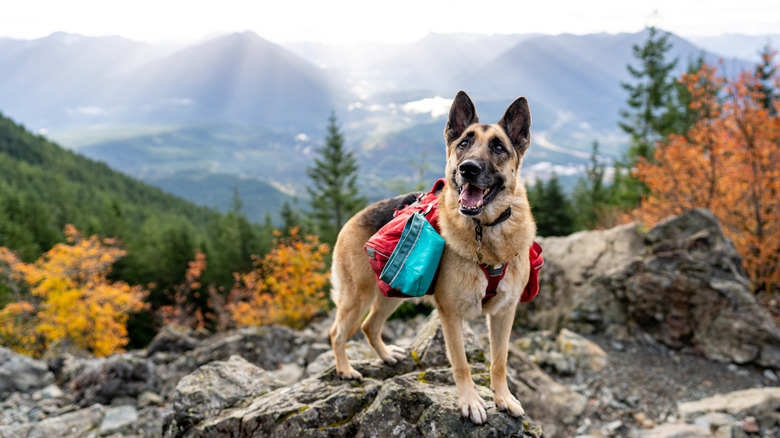
While you hope it will never happen, hiking trails have more hazards than a neighborhood sidewalk. Dogs on hiking trails are susceptible to stray thorns, sharp rocks, and heat exhaustion, and while you can take the proper precautions, accidents do happen. Bringing a dog first aid kit is a great idea to handle small injuries on the go until you can get your pup to the vet for proper treatment. According to the Veterinary Specialists of the Rockies, you can treat cuts, bites, and thorns on the trail with the right materials.
Have a plan in case your pet ends up needing evacuation from a trail. If they're small enough to carry, that automatically works in your favor. If you have a larger pup, bringing an evacuation harness in your bag is one of the best ways to prepare for emergency situations. This way, you don't have to worry about calling your local search and rescue team just to find out they don't do dog recoveries. Be sure you test it out with your dog before going outside to make sure the plan works for you and your pup.