

The European Supermarket Quirk Tourists Should Know Before Going Grocery Shopping

When you are off on your European adventure, you may expect to tackle a few obstacles: the language barrier, cultural differences, and even the unspoken etiquette rules to get a gelato or order pizza in Italy. What you may not expect, however, is one tiny yet perplexing quirk that could trip you up right from the get-go: the supermarket shopping cart.
Besides being a necessity to stock up on snacks or toiletries, grocery shopping abroad is a window into local life. The quiet thrill of discovering different brands, figuring out unfamiliar packaging, and working out currency conversions and prices makes a humble run to the store feel like a cross-cultural ritual. It's everyday life with a twist—familiar, but just different enough to remind you that you're not in Kansas anymore. Sometimes, part of the fun is in the little surprises, such as how to get your hands on a shopping cart.
At first glance, the carts don't look much different: they are similar in size, have a pull-out seat for the little ones, and a kick-shelf for bulky items or bottles. But there's a catch. When you try to retrieve one, it doesn't budge — it's attached to a long daisy chain of fellow contraptions. The only way to free it is to insert a coin, which leaves travelers digging through their pockets with a puzzled look. Once bitten, twice shy. From this day forward, these tourists will obsess about having a dedicated supermarket coin available at all times.
How the coin-operated shopping cart system works
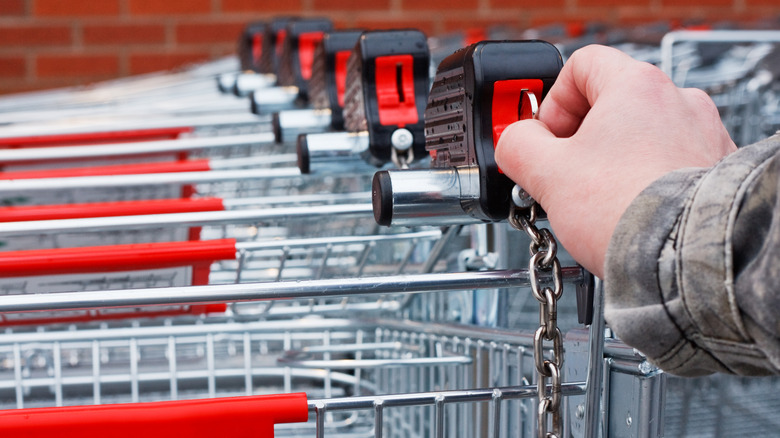
Instead of just pulling out a cart as you would do in your local Target or Walmart, in European supermarkets, you must insert a coin in the little slot on the handle —usually a smaller denomination of the local currency, such as one euroor even a plastic token molded for this purpose. This will free up the cart from the chain that connects it to the next one, but will lock the coin or token in the slot.
When you're done shopping and return the cart, as you slot it into the end cart on the line, you just hook the chain back in and the coin pops back out. The cart doesn't cost you anything; the coin serves as a sort of deposit to motivate customers to tidy up the carts instead of releasing them out in the wild. You may already be familiar with the system, as a number of store brands in the U.S. have adopted it, although it may not be as widespread. On the r/todayilearned subreddit, one user said they have them in New Jersey using a quarter, and another added that they also have them in Aldi in Wisconsin.
It's a simple method, and for Europeans, it is second nature, part of the collective responsibility for keeping things organized. Some people even have a token attached to a keychain so they'll never be caught out without one. If you are not planning a big haul, most European stores will have very small hand baskets next to the entrance, no token required. In a pinch, if you find yourself already at the store without a coin, you can ask the checkout clerk if they happen to have a plastic token available.
Other quirks tourists should know about European supermarkets

There are, of course, a number of other quirks that are part of everyday European supermarket etiquette. You will notice that shoppers tend to bring their own reusable shopping bags, as plastic or paper bags usually cost extra. Shoppers are also expected to bag their own groceries, and clear the decks at speed – which is easier said than done when you are not familiar with the system.
Tourists may also encounter different food safety practices and pasteurization methods, which vary across Europe. For example, fresh eggs and milk are not necessarily kept chilled and are displayed in the regular shelves next to the dry goods. Tourists may find they need to buy groceries more often on an extended stay in Europe. You will rarely see people getting their supplies in bulk. Locals tend to go shopping in smaller quantities and more often, both because, in large cities, the size of apartments means compact kitchens and small refrigerators and also owing to the emphasis on fresh ingredients and reducing waste.
So when you're planning that big European trip and juggling exchange rates and train schedules, you can add this little item to your list: always keep a coin and your sense of humor at hand. The best travel stories don't always come in the form of famous landmarks or epic landscapes; sometimes they are just waiting for you at the grocery store.