
Why Some Campers Absolutely Refuse To Share Their Favorite Spots
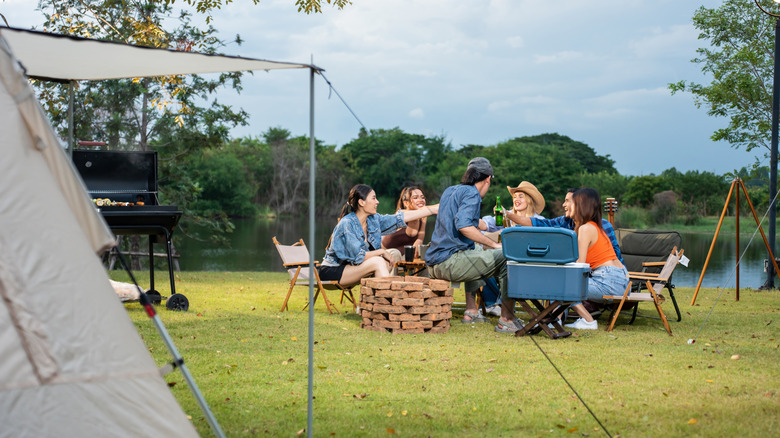
Camping is one outdoor activity that took off during the Covid-19 era, and the momentum hasn't stopped. According to The Dyrt, a popular camping app, more than 81 million Americans left their homes to spend a night under the stars and in the wilderness in 2024. While visitors can camp at some of the most beautiful places in Yosemite National Park, a growing number of campers are seeking something entirely different — reconnecting with nature in its most quiet, untouched form. But where are these quiet places, and how do you find them?
Your first thought might be to check some internet forums popular among campers and ask seasoned hikers to share their favorite spots, but brace yourself; your harmless question might be met with silence or outright refusal. Disheartening? Perhaps. But this act is common among campers, and the reasons aren't entirely selfish.
Over time, some campers have complained about how certain campsites become littered and overcrowded after going viral, leading to the destruction of protected natural areas as well as the wildlife that call the site home. For those who prefer to preserve their favorite spots, not disclosing them might be the best option to avoid them getting shut down. Take San Carpoforo Beach in California, for example — the only free public camping site in the area will remain closed until April 2026 due to reckless human activity, from waste dumping to overcrowding.
What happens when campers share their favorite spots?
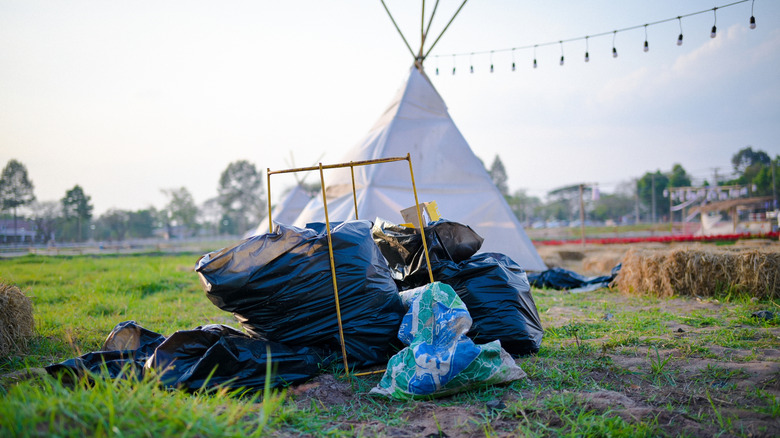
The bitter reality is that most campers don't practice the Leave No Trace principles to help minimize their impact on the outdoors. A Reddit user shared, "Last time I told someone about my favorite primitive spot, they trashed it. So I no longer tell people my favorite spots." Instead of following proper waste disposal protocol, some campers will leave their garbage, animal waste, and food debris, creating conditions that attract wildlife scavenging for scraps as well as destruction of the natural environment. What was once someone's sanctuary becomes a hazard zone for the next person who shows up.
Another Reddit user who refused to share their favorite camping site online wrote, "And post it here to have it become an overcrowded, unusable place to go camping? Pass." Overcrowding brings its own problems. Campgrounds are supposed to be solitude spaces, and that's why many parks enforce quiet hours from 10 p.m. to 6 a.m.. But when too many people descend on a spot, you get portable speakers blasting at midnight, drunk groups yelling across campsites, and someone inevitably treating the place like a backyard party venue.
These incidents reveal a troubling pattern and explain why some campers refuse to share their spots, as too many people treat nature like a dumping ground. But here's the thing: You don't need to rely on someone to share their incredible campsites with you. You can set up your own tents at some of the most beautiful places in America's state and national parks that offer hundreds of maintained sites, adequate facilities, and jaw-dropping views. The only question that matters is whether you'll respect the place or leave it worse than you found it.