

Yellowstone Warns Travelers To Avoid Wearing This Type Of Fabric To The Park During Winter
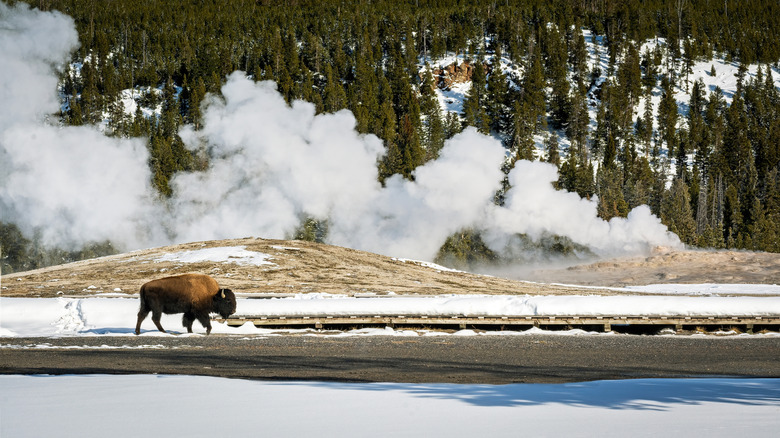
Winter in Yellowstone looks dreamy in photos, but in reality, it's a whole different story when you arrive. The National Park Service (NPS) has made it known that temperatures sometimes drop way below freezing. You can expect highs of 30 degrees Fahrenheit during the day, and lows of up to -30 degrees Fahrenheit at night. Not only that, but the wind can also be intense and violent, and snowstorms aren't rare either. These natural occurrences are regular and occur from December through March.
While you might already know that the dumbest mistake a tourist can make at Yellowstone is touching the hot springs, another one the NPS and outdoor experts have consistently warned against is wearing cotton during winter. As explained by REI editor emeritus Ken Knap, "When cotton gets wet, it takes a very long time to dry, which can leave you feeling damp, cold and miserable." In other words, cotton takes in moisture from sweat or snow and holds on to it. Once your clothes become wet, your body loses heat quickly. In sub-zero weather conditions, that trapped moisture is a segue to feeling excessively cold, even when you might think you are already dressed warmly.
For this reason, layering is such a big deal. "Synthetic and wool layers dry much faster and will move perspiration away from your skin." It's also important to choose layers you can easily adjust. Synthetic and wool fabrics pull moisture away from your skin rather than trap it. When you layer them the right way, they help your body stay at a good temperature. This way, you'll stay warm and simultaneously prevent overheating while hiking.
What you should wear if you want to stay warm and actually enjoy the park
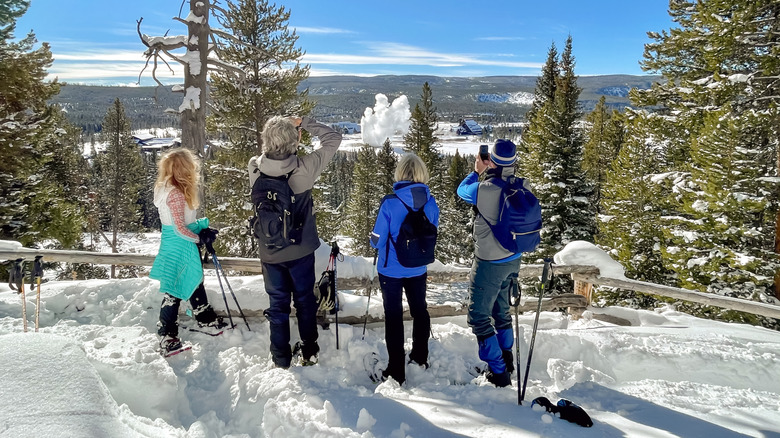
If you want to be warm and actually enjoy Yellowstone in the winter, knowing what to wear is one of the most important things. The NPS emphasizes the need for a windproof, hooded shell on top of everything else. Note that wind chill can make an already cold day feel significantly more brutal. As such, wearing a tough outer layer is your first defense against icy gusts and swirling snow. If you skip it, even the best gear underneath won't save you.
One key note is that you need not worry about looking trendy when visiting Yellowstone in the winter. Based on NPS rangers' advice for winter visits, dressing smart is basically what you need. Just don't forget other winter essentials to make your experience more comfortable. Wear thermal base layers, a warm clothing item in the middle like fleece or down, and then a waterproof jacket capable of blocking wind. Likewise, remember to go with good gloves, insulated boots, and a wool hat.
With the right layers, you'll focus on spotting bison, watching steam roll off geysers, and savoring all the beautiful and serene experiences Yellowstone has to offer without distractions from the cold. In other news, you might be interested in learning about the most dangerous activity to do in Yellowstone.