

The Big Difference American Tourists Will Notice While Taking A Shower In Europe
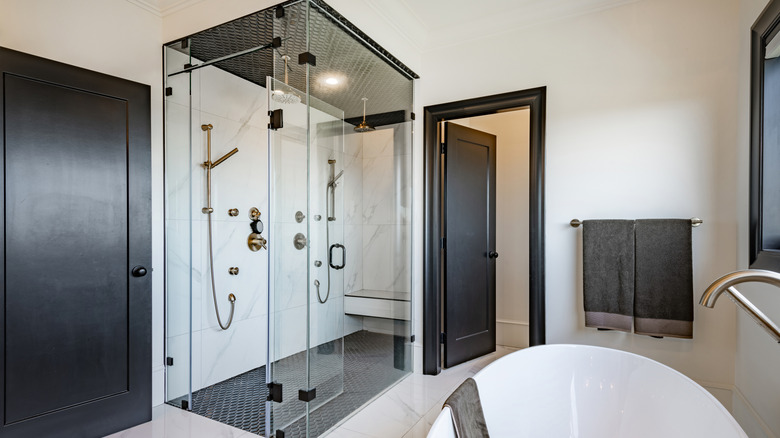
Engineers of the Roman Empire were pioneers of both indoor and outdoor plumbing, as shown by their many fountains and aqueducts that still stand even far outside of present-day Rome. Then there are the ornate fountains in the Palace of Versailles gardens that put on intricate water shows with their fountains. However, showers in Europe come with fewer frills, perhaps even in swanky hotels.
In general, Americans might not be impressed with their shower experiences while visiting Europe, especially because the water pressure tends to be lower in Europe. If you're not used to this, it could feel like it takes longer to wash off your soap and shampoo. And if you do take longer, you might find that the water turns cold quicker than it usually does in the U.S. Thankfully, the hot water supply does replenish quickly. Even still, have your products at arm's reach so you don't spend any time looking for them with the water running, and maybe prepare to shorten your usual shower routine by leaving some items at home. This could be a positive thing, as packing fewer shower products, along with using the right packing techniques, will save extra space in your suitcase.
Europeans use less water to be eco-friendly
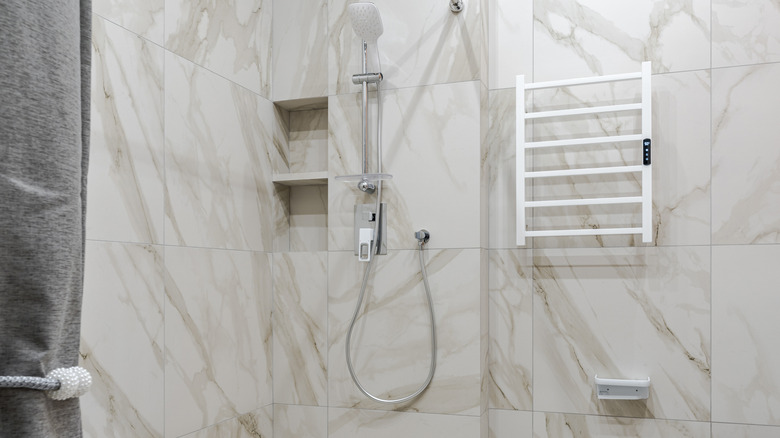
Lower water pressure does not mean there is an issue with the pipes in Europe. Europeans, and European hotels, often encourage conserving water by taking short showers with less water pouring out every second. You might see signs in your hotel asking guests to reuse bedding and towels rather than letting them go to the hotel laundry service each day. After all, water is a finite resource, and some places around the world, like Mexico City, Johannesburg, and Cairo, have faced frighteningly severe shortages of usable water over the last couple of decades. Europe as a whole is rather eco-conscious, turning off lights and producing less harmful gases than the United States, despite having cities of comparable size.
Showers and bathrooms might be smaller than what Americans are used to at home as well. Europeans remodel the interiors of their buildings, converting some into hotels. But room sizes remain as small as they were when these old buildings were first built centuries ago. Small spaces — including small showers — are a small price to pay in order to keep the charming and historic structures intact.