

Situated Between Fort Myers & Naples Lies A Gorgeous Florida Barrier Island State Park
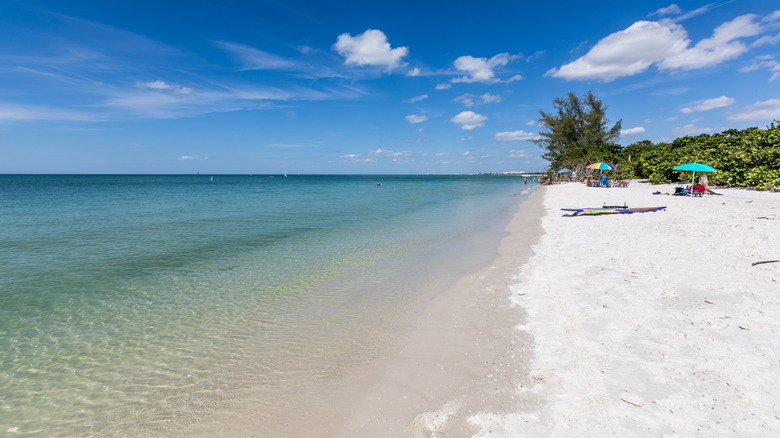
While Florida's Gulf Coast is famous for its bustling beaches, there are some hidden gems that are uncrowded and almost untouched. Whenever you want to escape the crowds of Miami, swing by Delnor-Wiggins Pass State Park, a beautiful sanctuary between Fort Myers and Naples. This park promises endless adventures, from swimming to discovering rare coastal ecosystems and wildlife. The state park features unspoiled stretches of white, sandy beaches with crystal-clear waters, making it perfect for those seeking a Florida beach for a more relaxing, sandy vacation. In addition, its strategic location makes it a fun detour, whether you are coming from Fort Myers or Naples.
Named after Joe Wiggins, a homesteader who once traded with the Seminole people, the park has long been a place of rich history and natural beauty. The first part of the name gives a nod to Dellora Norris (Del-Nor), the park's land donor. In 1964, Collier County acquired the land, and the state took ownership in 1970, formally opening it as a state park in 1976. Today, the park is an exciting destination for relaxing and offers various facilities to ensure comfort. You'll find parking areas, drinking fountains, restrooms, picnic tables, and boardwalks through the mangroves.
Spend the day at the beach and enjoy water adventures
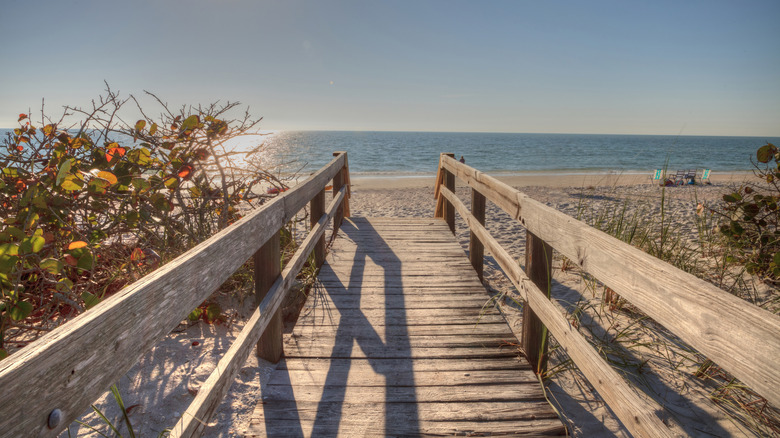
Start your adventure at Delnor-Wiggins Pass State Park along its mile-long stretch of sandy beach. You can play volleyball, build sand castles, sunbathe or lounge with your favorite book on the undeveloped gulf shoreline. This sandy expanse provides unobstructed views of the coastal hammocks and maritime dunes. Late afternoons are perfect for relaxing on the beach while soaking in the stunning sunset vistas. If you want to take a dip, head to the southern end of the beach where the water is calm and the waves are gentle. There are designated swimming spots in the area, although there are no lifeguards on duty. So be careful, and kids should be supervised. Also, note that swimming near Wiggins Pass is prohibited due to strong currents.
Besides swimming, travelers can snorkel at Delnor-Wiggins at the hard-bottom reef, just a few yards off the beach. The rocky formations are accessible from Parking Area 2 and are home to marine life such as colourful crustaceans, mollusks, fish, and occasional sea turtles. The best time to snorkel is early morning or on calm days when the water is clear. Snorkelers can bring their own gear or rent it at Dick's Sporting Goods, about 5 miles away, or at the Walmart near Immokalee, also a few miles away. In addition, Delnor-Wiggins Pass State Park has an undeveloped shoreline, gentle tides, and its position along the Gulf makes it one of the top shelling beaches. On your laid-back strolls along the beach,you can find lightning whelks, fighting conchs, olives, and scallops, while lucky beachcombers occasionally spot rare Junonia shells. The best time for shelling is at low tide and early mornings when new treasures are washed ashore. Just remember to be a mindful beachcomber and follow all the regulations.
The living barrier island ecosystem
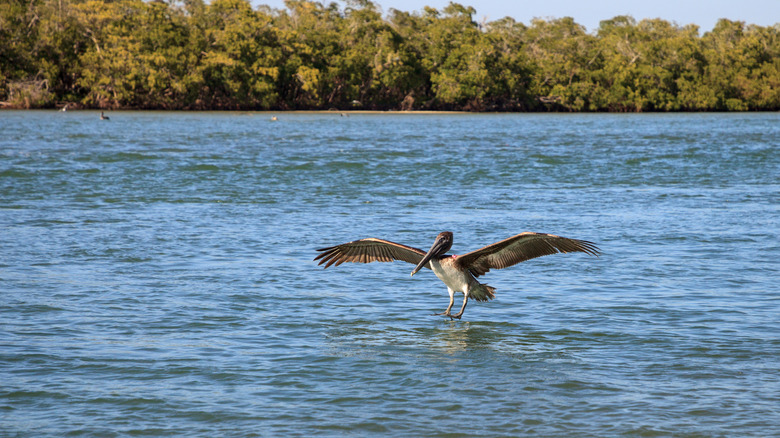
Delnor-Wiggins Pass State Park is a living barrier island ecosystem that plays a significant role in nurturing rare wildlife and supporting various marine habitats. On the eastern edge of the park, the tropical hammock transitions into mangrove swamps and tidal wetlands. It not only hosts different types of fish and crustaceans, but also serves as a stopover for various migratory shorebirds. Visitors have opportunities to spot manatees, tortoise burrowing in the sandy uplands, or raccoons along the hammock edges. In summer, sea turtles are common, with loggerhead nests marked along the beach.
For Birdwatchers, Delnor-Wiggins Pass State Park is also a fantastic birdwatching destination to visit in America. This park is part of the Great Florida Birding and Wildlife Trail, which attracts a variety of migratory and resident bird species. Birdwatchers can expect to see ospreys diving for fish, while bald eagles occasionally nest in tall pines inland. Wading birds such as roseate spoonbills, snowy egrets, and yellow-crowned night herons frequent the tidal wetlands. In winter, piping plovers and least terns are easy to spot, and if you are lucky, you will see rare species like Franklin's gull. You can clearly watch the feathered friends from the elevated boardwalks with an observation tower, constructed to provide better views of the birds with minimal impact on the sensitive habitats.