

The Unexpected Reason Most Airplane Seats Are All This Color
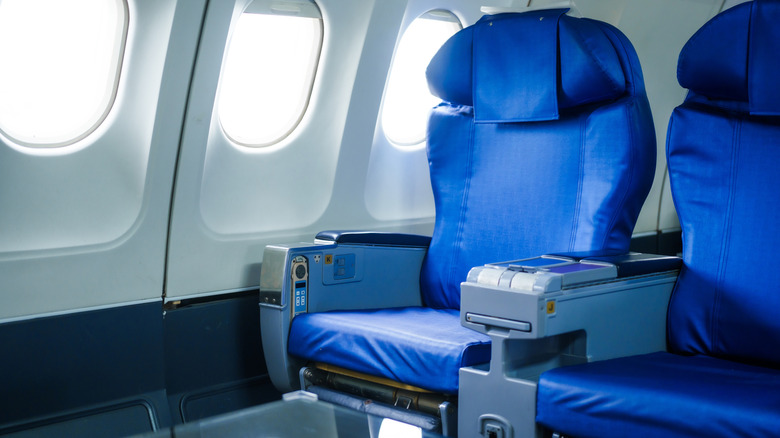
One color you'd most likely find on airplane seats is blue. As a regular globetrotter, it's possible you've once wondered why this is even so. Actually, airplane seat designers often opt for this color because, in psychology, it's considered one of the most calming colors. As much as you might not expect that, blue does give off an atmosphere of peace and stability, which is the kind of feeling you'd want when you're spending hours several feet in the air. Experts confirm that blue helps people to relax easily and brings down anxiety levels in the cabin, making it one of the things that can help nervous flyers.
As a matter of fact, you may have noticed that blue is a common color used in many company logos and their overall branding. This is because the color is also linked to trustworthiness — which no airline would want to joke with. You'd agree that there are some things airlines have stopped doing. But even as airlines continue to invest in upgrades over the years, bringing in newer features like mood lighting, slimmer seats, and quieter, more fuel-efficient engines, the blue seat color has persisted as a top choice. Undoubtedly, the benefits this color offers both the airline and the passengers is why it's still the favorite.
Perhaps its practicality when it comes to avoiding stains also makes it an easy pick. And let's face it: airplanes can't exactly be considered the cleanest of places to be in, as airlines deal with thousands of passengers on a daily basis. As a result, it's necessary to avoid bright or warm colors that can look dirty too easily. With the use of blue (especially darker shades), stains can be masked more easily, keeping the seats presentable without a need for constant deep cleaning.
Why blue remains an important color for airplane seats
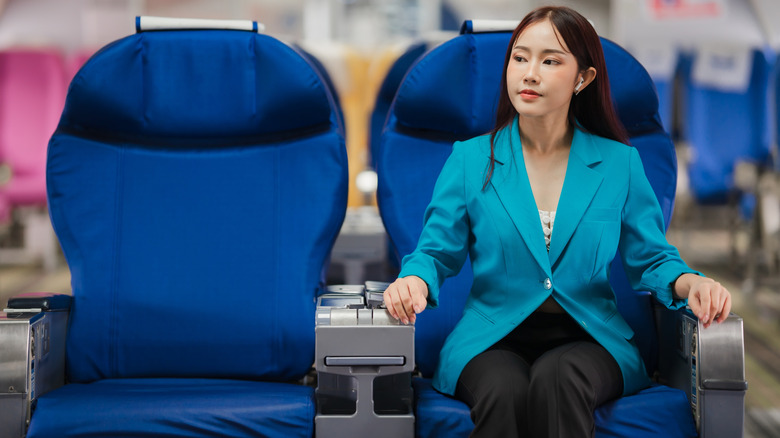
One of the great things about the color blue is that it works harmoniously with other aspects of modern aircraft interiors. Specifically, it blends well with LED cabin lighting, especially the purple ones and the cool white that are used to minimize jet lag. With this combination, the cabin feels more cohesive and less overwhelming under different lighting settings that create comfort by mimicking night and day. It also gives a sense of larger space, serving as a win for people who might be claustrophobic.
Another thing about blue is that it's hardly offensive across different cultures. As we know, colors can carry different meanings in different places (like red often connotes danger, or even luck and prosperity in some Asian countries). But blue is one color that's associated with a positive or neutral meaning almost everywhere, and that's exactly more of a reason why it's preferred by airlines. It helps to avoid cultural misinterpretation or misrepresentation, the sensitivity of which design teams understand quite well.
Lastly, blue's is perhaps also among the reasons it has remained a top go-to color for airplane seats. Of course, it goes well with pretty much any material you use it for. Whether an airline chooses fabric, leather, vinyl, or recycled composite materials, blue still looks good and appealing. It just fits well. And it feels fresh, clean, and classy without being over the top. Meanwhile, if you're planning to get some work done on your next airplane trip, read up on the best seats to book for a comfortable flight.