

This Stunning European City On The Danube River Boasts Eclectic Shops & Medieval Charm
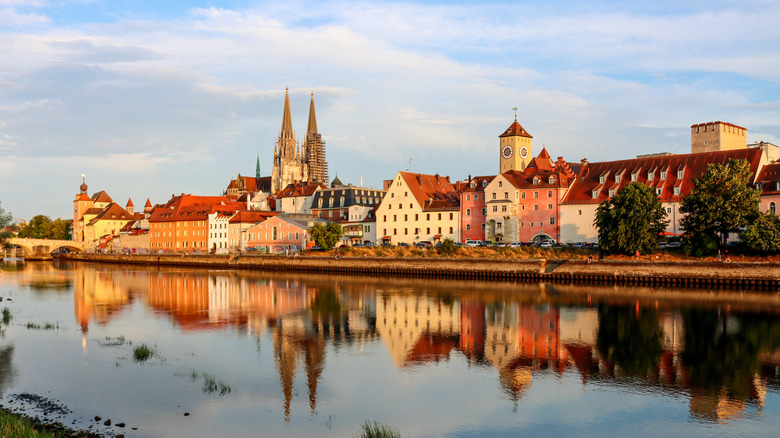
Germany sometimes gets overlooked on European travel itineraries. While its incredible Christmas markets are world-famous, to some travelers, it might be perceived as less exciting than hotspots like Italy, Greece, Spain, and France. However, Germany is home to fairytale towns and historic destinations that are worth uncovering, with a huge variety of fascinating history, amazing culture, and stunning landscapes to discover. One place that should be high on any German bucket list is Regensburg, the ancient capital of the state of Bavaria.
Regensburg is overshadowed by its bigger, brasher neighbor, Munich, but it's filled with wonder. As one of the oldest cities in the country and a UNESCO World Heritage site, Regensburg boasts ancient ruins, a picturesque medieval center, and some wonderful examples of architecture from the Holy Roman Empire through to the 19th century. The majestic Danube River winds its way through the heart of the town. Alongside its historical gems, it offers eclectic shops, boutiques, and a lively, vibrant atmosphere thanks to its large student population.
Regensburg is located in Bavaria in southeastern Germany, the state best known for its huge Oktoberfest celebrations, as well as being the region where you'll find many of Germany's must-see castles. Regensburg is around 70 miles from Nuremberg and around 77 miles from Munich, making it an easy day trip from either city. Both Nuremberg Airport and Munich Airport are easily reachable by car in about 1 hour and 15 minutes.
Once the heart of the Holy Roman Empire, Regensburg brims with medieval charm
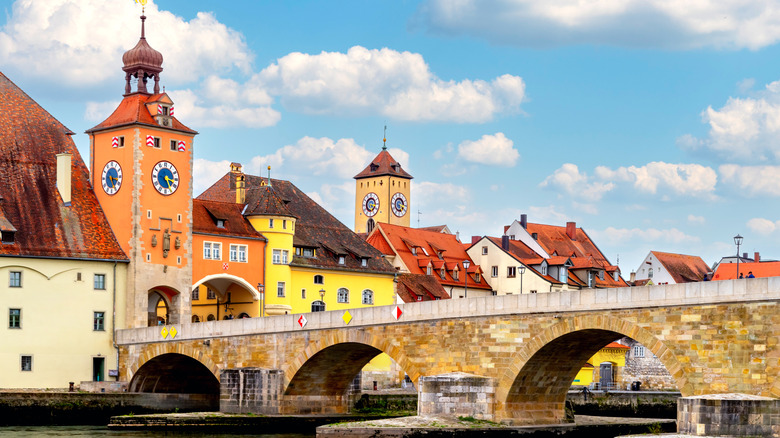
Regensburg was founded by the Romans on the banks of the Danube in 179 A.D. It was one of the most important cities in southern Germany for much of its history, from its seat as the capital of the dukes of Bavaria in 530 A.D. to its status as the home of the Imperial Diet (the government of the Holy Roman Empire) from 1663 to 1806. It was a regional capital for the Carolingian Empire of Charlemagne, and its historical importance remains etched on the face of the city in the form of its remarkable ancient and medieval architecture.
The best way to start a visit in Regensburg is by wandering the tangled alleyways and narrow cobbled lanes of Old Town. Here, Roman walls and stunning Gothic churches rub shoulders with brightly-colored medieval houses. Ancient stone bridges stretch across the River Danube. The Dom St. Peter (St. Peter's Cathedral) is a must-see. It's one of the finest examples of Gothic architecture in Germany, with towering spires and an ornate interior. The Old Town Hall dates back to 1245, while the Princely Palace of St. Emmeram to the south is the largest privately inhabited building in the world, as the home of the 12th Prince of Thurn und Taxis.
Another one of the city's most delightful historic monuments is Villapark, the 19th-century Gothic villa of the king of Bavaria. Set in a public park on the banks of the Danube, it is an oasis of calm offering a moment of quiet reflection. During the summer months, it's also a wonderful venue for live music.
Discover Regensburg's unique shops, nearby nature, and wondrous monuments
Beyond Regensburg's incredible historic charms, there's plenty more to see and do. It is a fabulous shopping town, with eclectic boutiques and charming little artisan craft stores tucked away in the alleys of Old Town. Bürsten Ernst, for example, has been selling handmade brushes (of all kinds) since 1894, while the aroma of handmade soaps from Einseifer can practically be smelled from the other end of the street. Perhaps the most famous shop in Regensburg is Hutkönig, a master hat maker who has created headgear for celebrities, European royalty, and even a pope! Top off a day of shopping by sampling some traditional German food. The Historic Sausage Kitchen, dating back to 1146, claims to be the oldest continually operating restaurant in the world! Locals and tourists flock here to sample wurst, Krautwickerl, and sauerkraut.
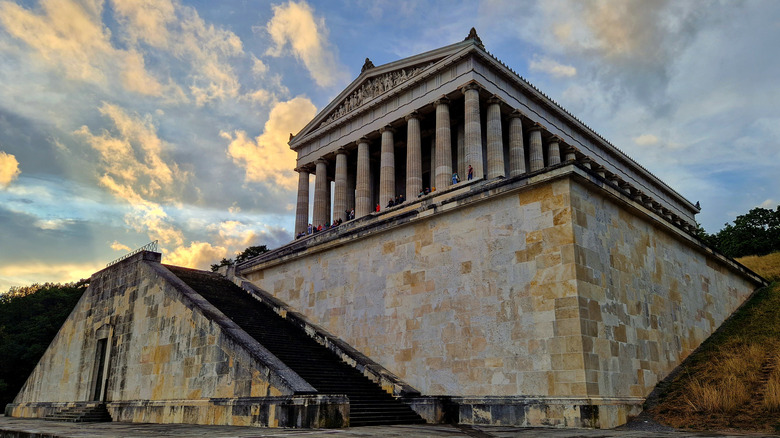
Regensburg is also a great base for exploring southern Germany's deep pine forests, where it feels as if the darker elements of Grimm's fairy tales are still lurking. The Bavarian Forest National Park is just a short drive away and makes an excellent day trip filled with natural beauty. Some other interesting attractions just outside the main city are the classical edifices built by King Ludwig I of Bavaria as a celebration of German national pride. Walhalla is a near-exact replica of the Parthenon of Athens — not something you would expect to see in the valley of the Danube. The Befreiungshalle, slightly further away, is an unusual round structure that stands out from the landscape as a monument to the war heroes of 1813. Both sites are bizarre and brilliant, and well worth visiting.