

This Camping Essential Is Easy To DIY And May Even Work Better Than Store-Bought Versions
What if someone told you that some of the best backpacking gear doesn't have to come from a store? You don't have to buy the fanciest oven to upgrade your cooking while camping, especially if you tend to make simple dishes. With a simple-to-make "cat food can alcohol stove," you may not even need a store-bought stove on your next outdoor adventure. The cat food can stove — also known as the "Fancy Feast stove" or "super cat stove" — was originally designed and popularized by a hiker known as Roy "TrailDad" Robinson. Simply built from an empty 3-ounce cat food can, this ingenious DIY stove has proven incredibly efficient, and has become a favorite among ultralight backpacking enthusiasts and legends like Andrew Skurka.
The key benefit of this essential camping tool lies in its simplicity, in addition to the little or no cost involved in making one. Hikers love it because it actually works well — boiling two cups of water in less than six minutes, and without using as much fuel as many commercial models. On his blog, Skurka, who's known for his ultralight backpacking expertise and long-distance hiking achievements, put the design to the test against other stoves, including both DIY and store-bought ones. The result was easy to see: The cat can stove came out on top in terms of speed, efficiency, and lightness. This means you may not even need to think of getting flashy gear to cook a nice meal on the trail — whether you're planning a thru-hike or just trying to lighten your load.
Why the cat food can stove is a better choice for camping
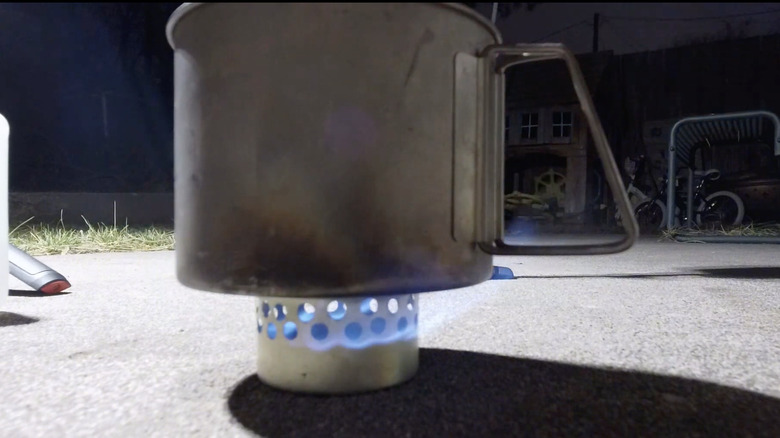
The cat food can stove is a great camping option based on several considerations, such as its heat distribution. The stove transfers heat directly and evenly (provided your pot isn't too big), as the flames it produces circle tightly around the base of your pot. Combined with a simple aluminum foil windscreen, this stove gives you quick boiling, cost-effective fuel use, and protection from unexpected gusts of wind. All of these are important qualities that any backcountry traveler would especially appreciate. And indeed, being able to make this DIY stove is a key skill that no backcountry explorer should do without.
Furthermore, durability is another noteworthy feature of this DIY stove, especially as it has no moving or fragile parts. There's very little that can go wrong — and even if it gets damaged, making a new one is a breeze. In less than 10 minutes, you can build this stove with basic tools such as a pocket knife, "church key" can opener, or hole punch. Beyond this, the stove can easily fit inside your cook pot, giving you a chance to save more room in your pack: The stove and windscreen add little to no weight, at less than two ounces. All of these make it a perfect item for backcountry trips.
How to build and get the most from a cat food can stove
Building your own cat food can stove is quite straightforward. Get a clean 3-ounce can, such as with Fancy Feast. Then, just below the rim, use a hole punch to create a row of small holes around the can. Below that row, create another line of holes offset from the top row. These holes serve as air vents and burner ports. If you wish, you may nest the can inside a larger 5.5-ounce can to function as a windscreen or snuffer lid.
When you're ready to cook, add about 20 ml (two to three tablespoons) of denatured alcohol or a similar fuel — or just enough to fill the stove without spilling through the holes. Then light the stove, and place your pot on top of it. After a short delay (about 30 seconds), the flame will pressurize and rise through the side holes to form a steady ring.
After cooking, put out the flame using a lid, an empty pot, or the snuffer — or you might just let it burn out completely. Remember that the stove can get really hot after use, so make sure that the can has cooled down before you pack it. You can store it directly in your cook pot, or alternatively, wrap it in a bandana, as this helps to avoid spreading soot onto other items. A proactive way to avoid soot is to be sure you always use real denatured methyl alcohol, rather than isopropyl or rubbing alcohol. Generally, there's no denying that it's essential to find the best ways to make your camping experience easy and less intimidating, and the cat can stove helps add to that ease.