

Can You Be Fired For Calling In Sick To Go On Vacation? Our Expert Spills The Details

If travel is your passion, you're probably always in the middle of planning your next trip — even if you've just returned home. Unfortunately, traveling can be an expensive hobby, so eventually you're going to have to return to work. Plus, it often seems like there isn't enough PTO available to visit all of the bucket list destinations around the world. If you've ever found yourself debating whether or not to call in sick so that you can stretch your vacation for a few extra days, or embark on a last minute getaway over a long weekend — you may want to consider the risks. According to employment attorney Ron Zambrano, partner and Employment Litigation Chair at Los Angeles-based West Coast Trial Lawyers, you could lose your job if you call in sick to go on vacation.
Ron Zambrano told Explore in an exclusive interview that while it might not necessarily be illegal to use sick time for vacation, it's usually against the rules to lie to your employer. You might end up without a job to go home to if you try to skirt company policies.
Use your paid time off for vacations, and your sick days when you're actually sick

There are certainly people who use sick days in order to take a vacation and get away with it, but that doesn't mean it's something you should attempt if you value your job. Ron Zambrano told Explore that there are no state or federal laws that prohibit people from using sick time to take vacation. "Rather, the employer is allowed to condition use of sick time only when you are actually ill," he said. So, while it's not technically illegal, you'll probably still be breaking company rules.
"From a practical standpoint, as long as you aren't lying to your employer, you may be able to use sick time for vacation. Inversely, if you tell your employer you're sick, miss work and they find out you were on vacation, you can be fired or disciplined for lying," said Zambrano. If you post a selfie on your trip when you're supposed to be sick your employer could easily catch you in a lie.
Instead, you should try to use your paid time off. "Most employers have paid time off or vacation pay which is meant to be used that way. Also, most employers don't care if you use up either," Zambrano told us. If you don't have any paid time off left, and you have built a good repertoire with your employer, you might want to try negotiating for more, or consider asking for additional PTO instead of a raise during your next annual review. If you have an important trip or an event you can't miss, you should try requesting unpaid time off before risking your job by calling in sick.
If you're actually sick you should provide proof
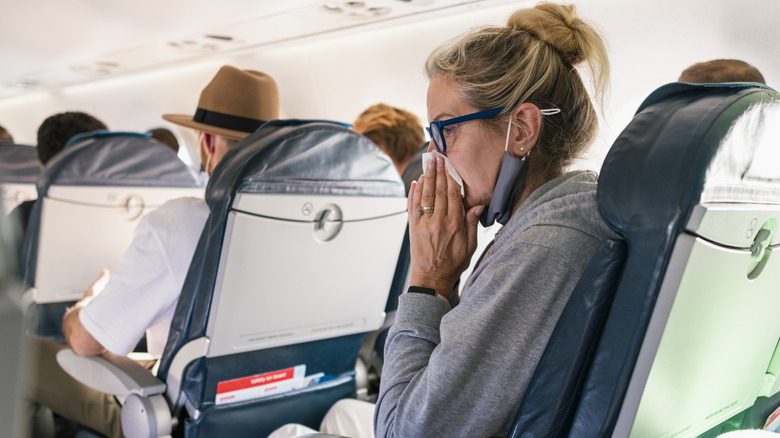
Ron Zambrano made it clear to us that calling in sick to go on vacation is a bad idea as it could cause you to get fired, but what happens if you actually do fall ill? Traveling has bizarre effects on the human body and can wreak havoc on your immune system. When you travel on commercial flights or public transportation you run the risk of being exposed to all sorts of germs. If you end up getting sick while traveling, you may need to extend your trip until you feel better. Flying home on a packed airplane while you're contagious isn't a good look, and it could put your fellow passengers in serious danger if they're immunocompromised. Similarly, you could catch something on your flight home which would require an additional day or two off work to recover.
If this happens to you, Zambrano suggests reviewing your employee handbook for best practices. "Read your employee handbook. Most employers require some form of medical documentation such as a doctor's note if you're out for three or more days. If the handbook doesn't require a note, I would still provide one if you're out for more than a couple days. Use common sense," he advised.
The worst days of the COVID-19 pandemic may be behind us, but some companies require that employees be fever free for 24 hours before returning to work. You may feel tempted to play the COVID card, but Zambrano says you shouldn't do so without testing positive. "If you call out for Covid, it's probably a good idea to have a picture of that positive test to send to your employer, for instance," he told Explore.