

Avoid Getting Weighed Down While Shopping In Tokyo With A Useful Luggage Storage Solution
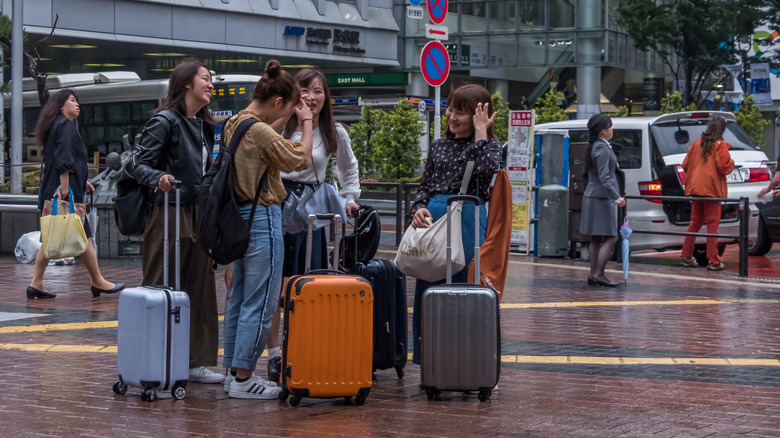
Tokyo's train stations have at least one thing going for them that those in other major cities don't: namely, the presence of convenient luggage lockers. These coin-operated lockers are a common feature of stations all across Japan, and they form part of the regular backdrop for the capital's world-class public transportation system. Some stations in Tokyo double as shopping centers or are directly connected to department stores, and many of them have lockers with English-friendly touchscreens and scanners that accept prepaid transportation cards, too. Those can be a lifesaver if you need somewhere to stow your bags before check-in or after check-out at your accommodation. It will probably be easier shopping in the world's most populated city without wheeling around a suitcase or getting weighed down by an overloaded backpack.
Like the long-nosed, aerodynamic bullet trains speeding in and out of Tokyo every day, station lockers might be different from what you're used to seeing stateside in cities like New York or Chicago. As a security measure, New York's two busiest train hubs, Penn Station and Grand Central Terminal, removed all their lockers back in the mid-1980s. Tokyo did something similar with its public trash cans, which is why tourists visiting Japan might have trouble finding this common object. Tokyo's self-service lockers range from 400 yen ($2.60) for small to 1,000 yen ($6.50) for extra-large. They're not the only option you have in the city for lightening your luggage load, either.
Tips for using Tokyo's train station luggage lockers
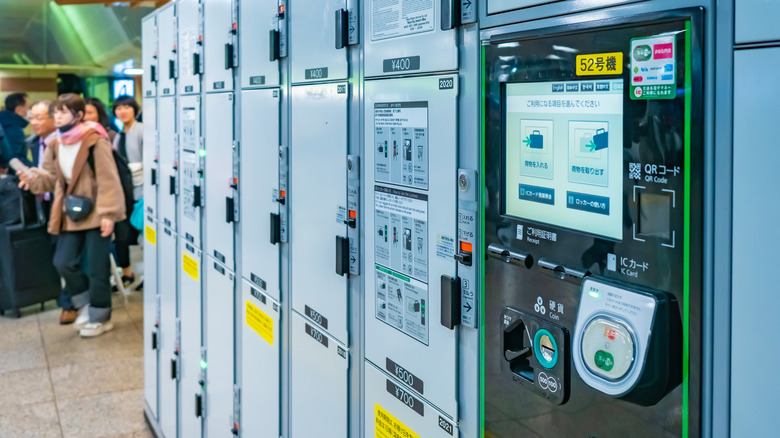
In Tokyo, rechargeable IC cards like Suica and Pasmo can help cut down on the time you'd otherwise spend buying a new ticket every time you transfer train lines. Such cards also make it easy for you to scan yourself into a locker without needing to dig around in your pockets for 100-yen coins. When the time comes, hold your card over the IC reader, and you should hear the door to your locker click open. Some old coin lockers have a key you'll need to hang onto for later, but Tokyo's touchscreen-enabled lockers usually spit out a receipt with your passcode printed on it. Since a receipt is arguably easier to lose, you'll want to tuck yours away somewhere safe until you come back to retrieve your bags.
Be mindful not only of your locker number, but of your locker bank's location as well, since it's easy to get lost in labyrinthine hubs like Shinjuku, the world's busiest train station. If you're not planning to leave via the same subway or train line, you may also want to look for lockers outside the ticket gate. Different lines owned by other railway companies will have their own separate ticket gates, but they all accept the same transportation cards.
Speaking from personal experience, finding an open locker isn't always a sure thing in stations near major tourist centers. Depending on where you are in Tokyo, you may need to follow a station map to the next available locker bank if the one you're eyeing is full. In especially crowded tourist spots, don't be surprised if you catch someone hovering behind you like a vulture, ready to swoop in the minute you empty your locker.
Other options for luggage storage and delivery in Japan
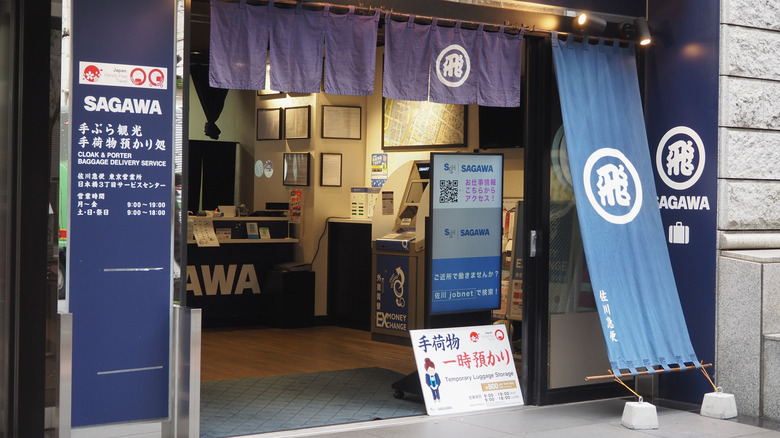
Outside the train station in Tokyo, you have plenty of options beyond automated lockers for storing your luggage. Tokyo Tourist Information, for example, has service desks across the city offering baggage deposit or delivery. One of them is in Asakusa on a street behind the famous Senso-ji Temple. The transportation company Sagawa Express has a luggage storage center that's closer to Asakusa Station and Senso-ji's "Thunder Gate," a popular photo spot.
Sagawa maintains several other service centers like this around town, including one across the river in the Tokyo Skytree shopping complex. Another branch operates out of the Tourist Information Center in the Shinjuku Expressway Bus Terminal (the largest such terminal in Japan, known as "Busta Shinjuku" among locals). If you want to send your bags ahead to your hotel or Haneda Airport, that branch can deliver them for you. Forwarding them to your hotel is also an option with Yamato Transport, which lets you drop them off at convenience stores like 7-Eleven and Family Mart. You can even send your luggage to other prefectures outside Tokyo, which helps to circumvent the size limit on bags that the Tōkaidō Shinkansen bullet train introduced in 2020.
Tokyo is also in the network of global services like Bounce and Radical Storage, which connect travelers with local businesses where they can deposit their luggage short-term. Radical Storage charges a daily flat rate of 1,100 yen ($7.50) per item, plus 250 yen for a required guarantee on each item up to 425,000 yen ($3,000). Whether you go with a station locker or one of these other options, having fewer bags to lug around might free you up to enjoy sightseeing in Tokyo better.