

Brown Vs. Black Bears, And Why Knowing The Difference Could Save Your Life
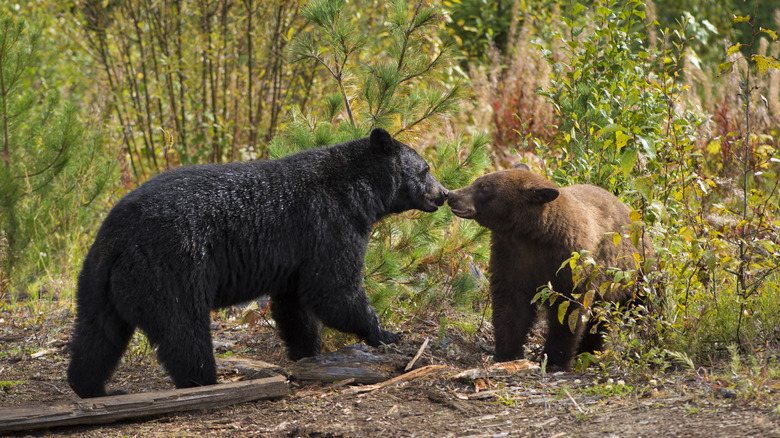
When exploring the great outdoors you're extremely likely to come in contact with wildlife. For some nature lovers witnessing animals in their natural habitat is a major highlight. Some people even plan entire trips around viewing wildlife. That being said, encountering animals in the wild is not the same as visiting a zoo, and you certainly shouldn't interact with them in the way you would with domesticated animals.
Wild animals are unpredictable, and every single time you encounter one you should use caution. Even the most gentle creatures can be dangerous when they feel threatened, and some encounters could quickly become life threatening. Out of the many species you may encounter during your travels, there are few that ignite a prickle of fear in the hearts of even the most experienced explorers. Bears are one such species.
Bears are large solitary creatures that can be found in North America, South America, Europe, and Asia. There are eight subspecies of bears around the world, and American black bears are one of the most common in North America. While they can occasionally attack when provoked, but aren't overly aggressive. Whatever you do, don't confuse them with brown bears – they're much larger cousins who live in parts of Canada, Alaska, and the northwestern United States. Brown bears, also known as grizzly bears, are one of the most dangerous predators on earth. If you end up in a violent confrontation with a bear, you'll need to respond differently depending on the type of bear. Knowing the difference between black bears and grizzly bears could save your life if you run into a bear while hiking.
Brown bears vs. black bears
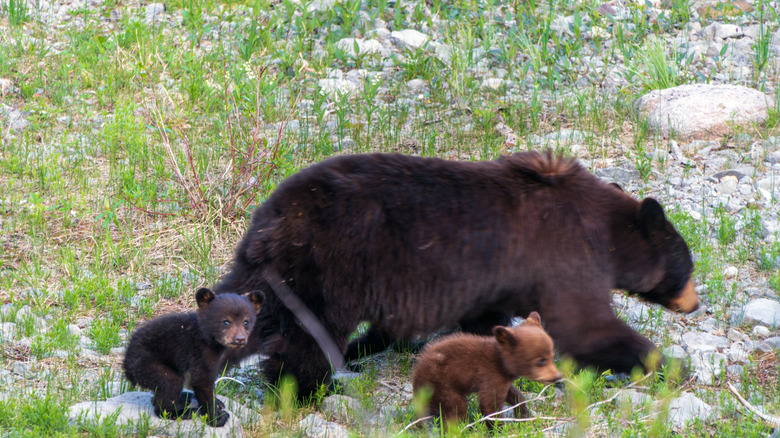
Brown bears and black bears have a lot in common, and they sometimes share the same territories. You'll find isolated populations of black bears all across North America including the Pacific Northwest, Canada, Alaska, the Rocky Mountains, the upper Midwest, the Appalachian Mountains, the Southern United States, and Mexico. Grizzly bears used to be much more prevalent around the country, but their population dwindled due to habitat loss and hunting. There are about 55,000 grizzly bears left in North America, and most live in Alaska. About 1,500 brown bears live in the northwestern United States.
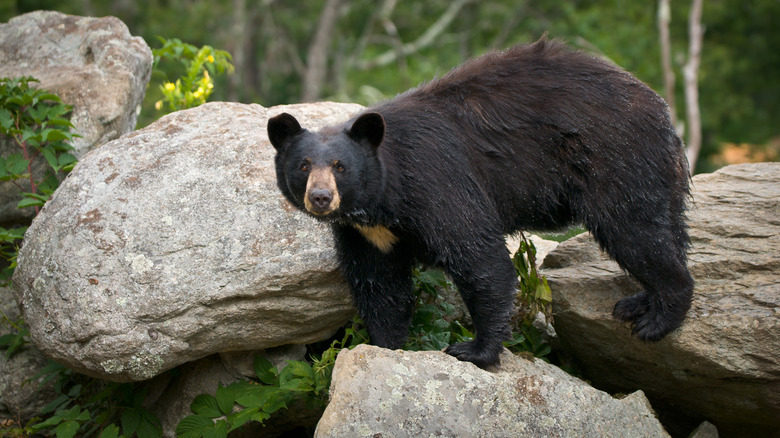
Grizzly bears are usually lighter in color, but can occasionally be shades of dark brown that look almost black — so don't rely on color alone for identification. Black bears can range from cinnamon brown to bluish grey. The other major difference is size. Black bears usually weigh 200-500 pounds whereas grizzly bears weigh anywhere from 500-1,400 pounds. A full grown male grizzly bear can reach a height of 5 feet on all fours, and tower at 9 feet when standing on their hind legs. Since size can also be confusing, take note of their body shape. Grizzly bears will have a large shoulder hump that is higher than their rump. Black bears do not have a shoulder hump and their rump is higher than their shoulders. You might not want to get close enough to see the details of a bear's facial features, but the grizzly has rounded short ears. Black bears have a straight snout and tall pointy ears. Grizzly bears are significantly more aggressive than black bears and have longer claws.
What to do if you encounter a bear in the wild
Spotting a bear in their natural habitat is an incredible experience. They're beautiful and majestic creatures, but they're also unpredictable so it's important that you know how to act in order to avoid a dangerous confrontation. Use caution if you encounter a bear in the wild – regardless of whether it's a black bear or a grizzly.
When exploring bear country, avoid attracting bears to your campsite by properly storing your food and try to be a little louder than normal while hiking. Bears will usually keep their distance if they hear you coming. When you see a bear, try not to startle it which could prompt an attack. Begin speaking in a calm voice to identify yourself. Don't make any sudden movements or try to run. Running can trigger a bear's instinct to chase. Do not scream. Pick up small children or animals quickly.
Try to make yourself look as large as possible. Gather in a group if other people are present, or climb up on a rock or higher ground. Keep your backpack on if you have one, as it can help protect you if the situation escalates. If the bear isn't moving, begin to move away slowly and sideways without taking your eyes off the bear. If you can, get inside a building or car. If the bear follows you, stop moving away and stand your ground. Whatever you do, never get in between a mama bear and her cubs. If you follow these tips, you'll likely be able to escape your close encounter safely, but if you feel that a bear is stalking you — be prepared for a potential attack.
How to respond when bears attack
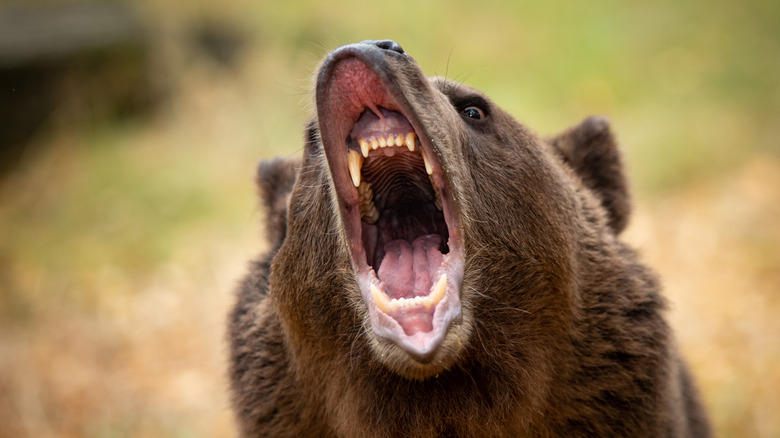
If a bear begins to show signs of aggression the situation could quickly take a deadly turn. There are two types of bear charges — bluff charges and aggressive charges. If you have bear spray use it as soon as an aggressive bear is within range. Keep in mind that there are few national parks in America where bear spray is completely banned.
Bluff charges are intended to scare you off. The bear will usually keep its head up and its ears up and forward during a bluff charge. Keep calm and back away while speaking calmly. Do not run. Bears can reach a top speed of 40 mph so you will not outrun them. The bear may charge towards you in big leaps and then stop or change course. Stand your ground, but be ready for a bluff charge to become an aggressive charge.
During an aggressive charge, the bear's intention is to harm or kill you. If the bear is a black bear, get ready to fight back with all your might. Punch that bear right in the face. Aim repeated blows at the bear's face and try to grab rocks or sticks to make your blows more powerful. Escape to a safe area as soon as possible. A tree is not a safe place. Both types of bears can climb. If the bear is a grizzly, play dead. Lay on your stomach and spread your legs wide to make it more difficult for the bear to flip you over. Cover your neck and head with your hands. Remain still and be quiet. If you fight back the attack will likely get worse, but if the bear doesn't stop — fight for your life.