

This Unexpected National Park In The Midwest Is Rated The Safest In America
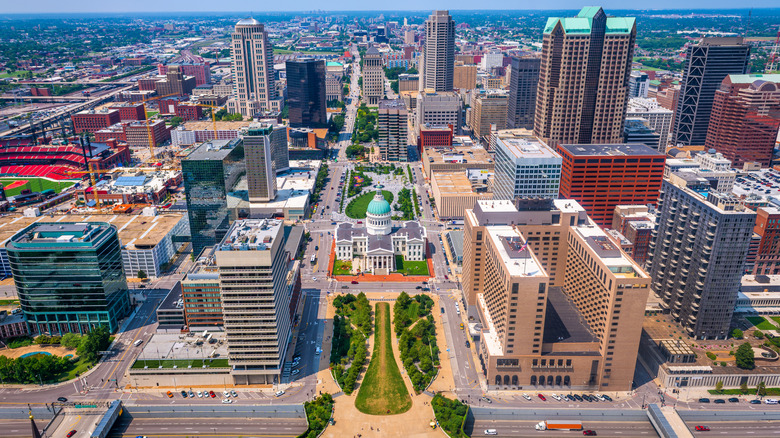
Missouri's Gateway Arch is the safest U.S. national park, according to a 2024 analysis by the outdoor clothing company Kühl. The urban park, formerly called Jefferson National Expansion Memorial, changed its name in 2018 to reflect its central landmark, the Gateway Arch in St. Louis. That landmark is also the state's most-visited tourist attraction. It was designed by architect Eero Saarinen to be the centerpiece of a holistic landscape, encompassing 91 acres in downtown St. Louis. However, as the National Park Service notes, the Arch has become so famous that it's eclipsed the surrounding park in public awareness. Some may think of it as a city landmark without realizing it's also part of one of America's 63 national parks.
What makes Gateway Arch National Park's rating in Kühl's new safety index so unexpected is that, just five years ago, St. Louis ranked as the murder capital of the U.S., based on national crime data from the FBI. The city rang in the 2020s with its worst homicide rate in 50 years, and an annual report by MoneyGeek (via Forbes) pegged it as the most dangerous U.S. city in both 2020 and 2021.
For many travelers, the image of a national park might be somewhere in the great outdoors, where you can escape the hustle and bustle of the city and not have to worry about crime. Yet Gateway Arch's urban location puts it near city hospitals. That's one of the very things that gives it an edge in the safety index.
Why Gateway Arch rates safer than the Grand Canyon
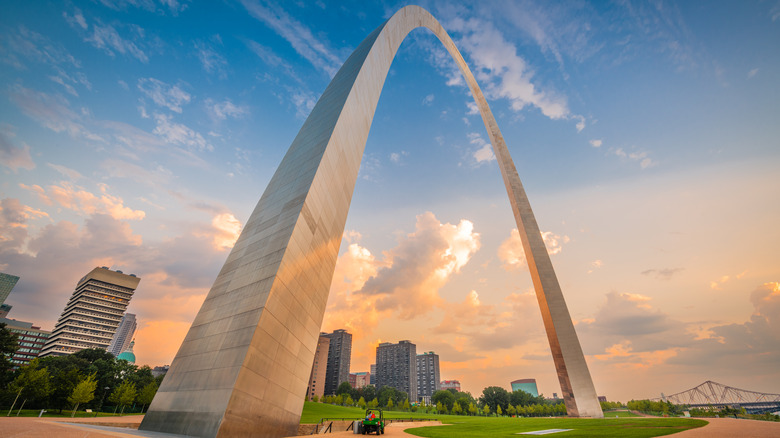
A high ratio of park rangers to visitors and a low number of deaths and missing persons are among the other factors that help Gateway Arch National Park rate safest in Kühl's index. The grounds of the Arch itself cover just over 60 acres, with the other 30-plus acres being dedicated to adjacent facilities like the Old Courthouse (currently closed for a multimillion-dollar renovation). Contrast this with America's second most-visited national park, the Grand Canyon, which doubles as the most dangerous park in the index. The Grand Canyon occupies over 1.2 million acres in Arizona, so it's spread out across a much wider area than the Gateway Arch.
Simply put, there's much less ground to cover around the Arch for both tourists and emergency personnel. Frequent trail closures and search and rescue missions — two factors contributing to the Grand Canyon's rating — aren't as much of an issue when you're dealing with under 100 acres in St. Louis. Per the analysis, falls are also the leading cause of death in national parks, followed by medical issues, drownings, and vehicle crashes. While the Grand Canyon's natural features are undeniably beautiful, its steep trails and the waters of the Colorado River can also be hazardous for hikers and rafters. The Ferris wheel-style tram ride up to the observation deck in the 63-story Arch might feel vertigo-inducing, but there are windows at the top, so you don't have to worry about falling from an open-air height.
Why Gateway Arch is worth visiting
For those still on the fence about visiting Gateway Arch National Park, it's worth noting that St. Louis began 2024 with its lowest crime rate in 10 years. It's no longer the nation's murder capital or even its most dangerous city. The safety index also puts the odds of a fatality happening on the Arch grounds or in any U.S. national park at 1 in 664,099. Citing National Safety Council statistics, it stresses that you're more likely to fall off a ladder or get hit by a car while walking than to die in a national park. What's more, you have a greater chance of being among the 1 in 3,407 people who live to be 100 than dying in a national park.
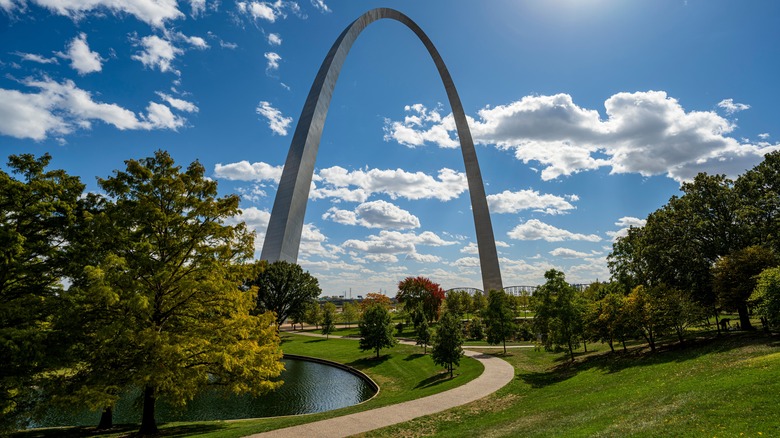
Even if you just stick to the surrounding downtown area, the Gateway Arch could be an essential stop-off on a riverside road trip route across 10 states. Peaking at 630 feet, the Arch is considered America's tallest monument when distinguished from buildings. It's meant to symbolize the city as a gateway for expansion into the West after the Louisiana Purchase.
You can learn more about the park's history in its free museum. When the Old Courthouse reopens in 2025, you can also see the historic site where the enslaved Dred Scott started his legal fight for freedom. If nothing else, your chances of getting lost or hurt in the middle of nowhere are way lower in Gateway Arch than in other national parks.